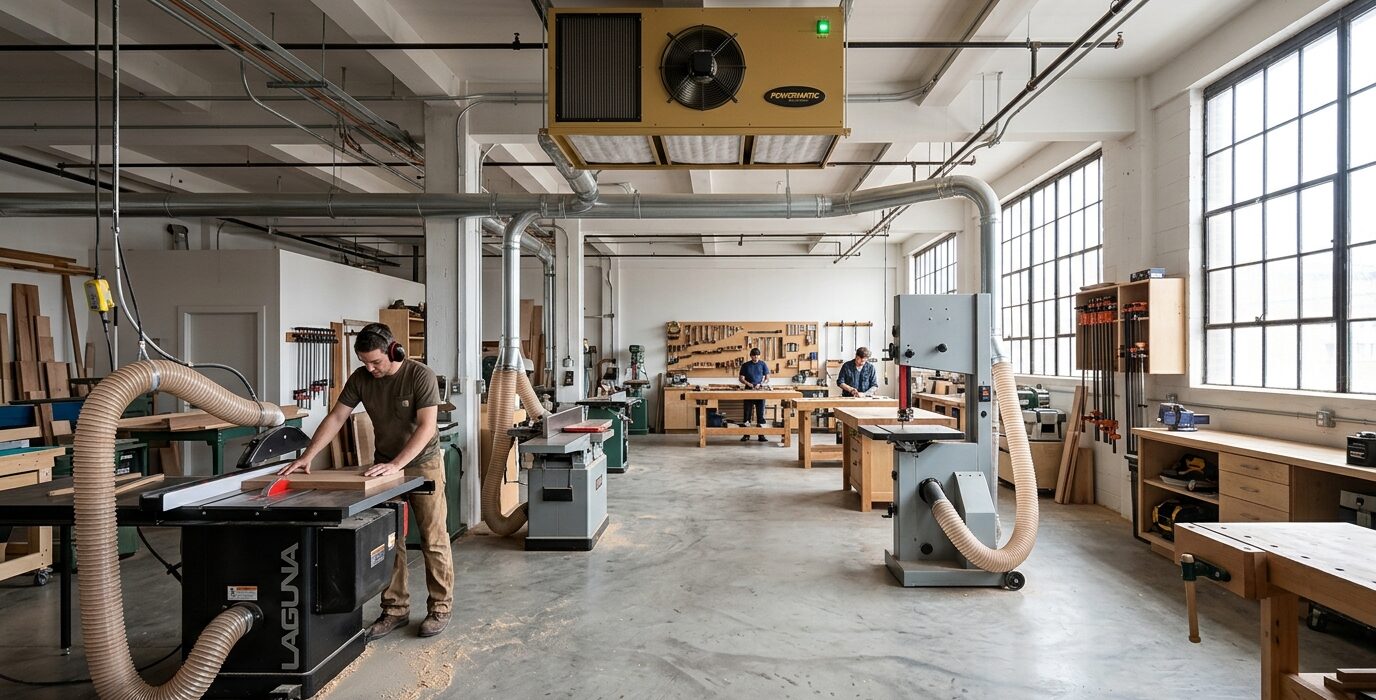
Setting Up a Basement Workshop – Dust, Noise, and Safety
A basement workshop has real advantages: year-round climate control, concrete floors, good security, and often significant square footage. It also has real challenges: no natural light, sound transmission to the living space above, dust that follows the HVAC into the rest of the house, and egress constraints. Setting up a basement shop well means addressing all of these systematically – not discovering them problem by problem after the shop is full of tools and furniture.
The Dust Problem
This is the most important issue to solve before anything else. Without proper dust control, wood dust spreads through the HVAC system into the living space. Beyond the mess, this is a health issue – fine wood dust in living areas affects air quality significantly. The solution: seal the HVAC return in the shop area, run the shop with the HVAC off during dusty operations, and install a dedicated exhaust fan with a HEPA-rated filter.
Step 1: Isolate HVAC

Install a damper in the basement HVAC supply and return duct to the shop area. Keep the damper closed during shop operation. This prevents sawdust from entering the HVAC system and distributing throughout the house. Run a separate mini-split for the shop area if climate control is needed year-round – a mini-split has no ductwork connection to the house system.
Step 2: Install a Dedicated Shop Exhaust
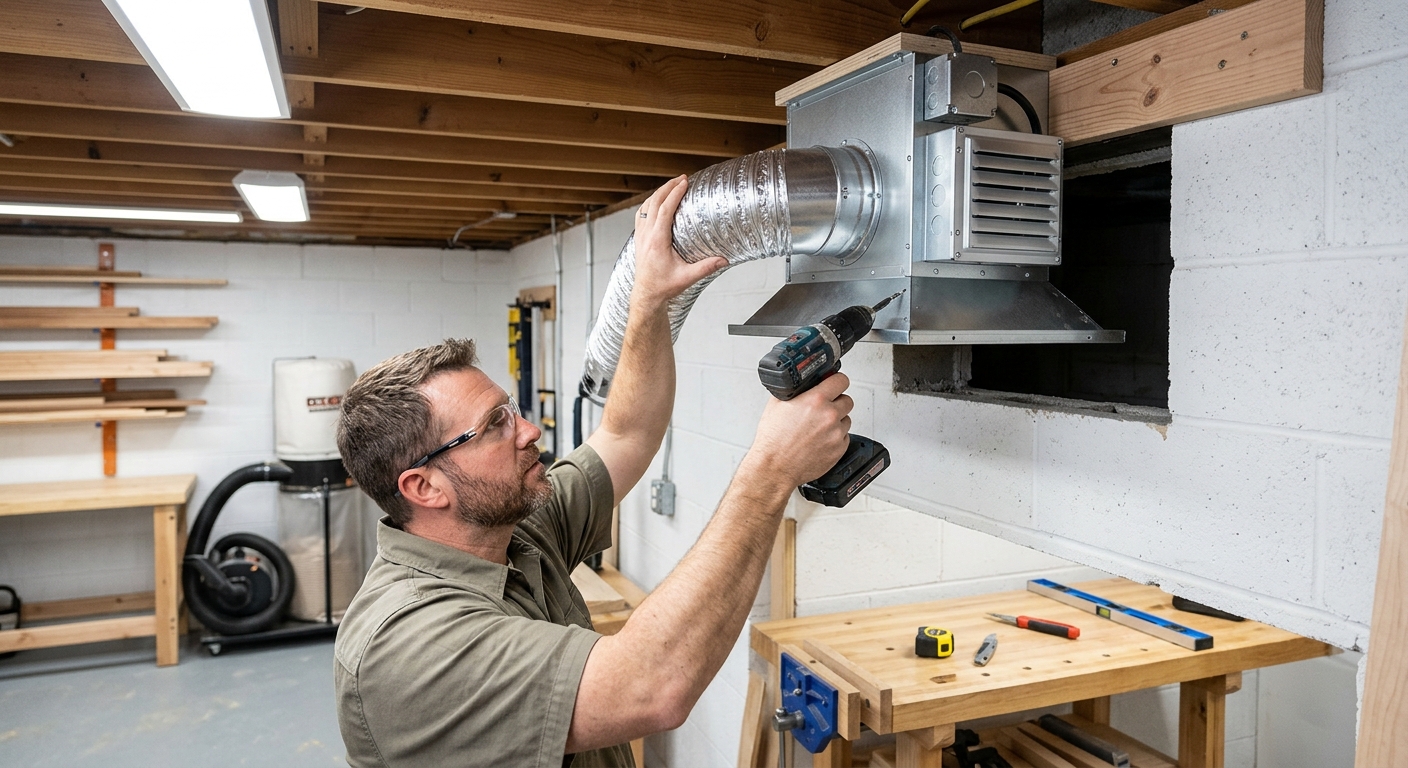
A through-wall exhaust fan (8-10 inch diameter, 400-600 CFM) provides fresh air exchange and removes residual dust from the shop air. Install it on an exterior wall with a motorized damper that closes when the fan is off (prevents cold air infiltration in winter). Connect a MERV-13 or better filter housing on the interior side to capture particles before they exhaust outside.
Step 3: Address Sound Transmission
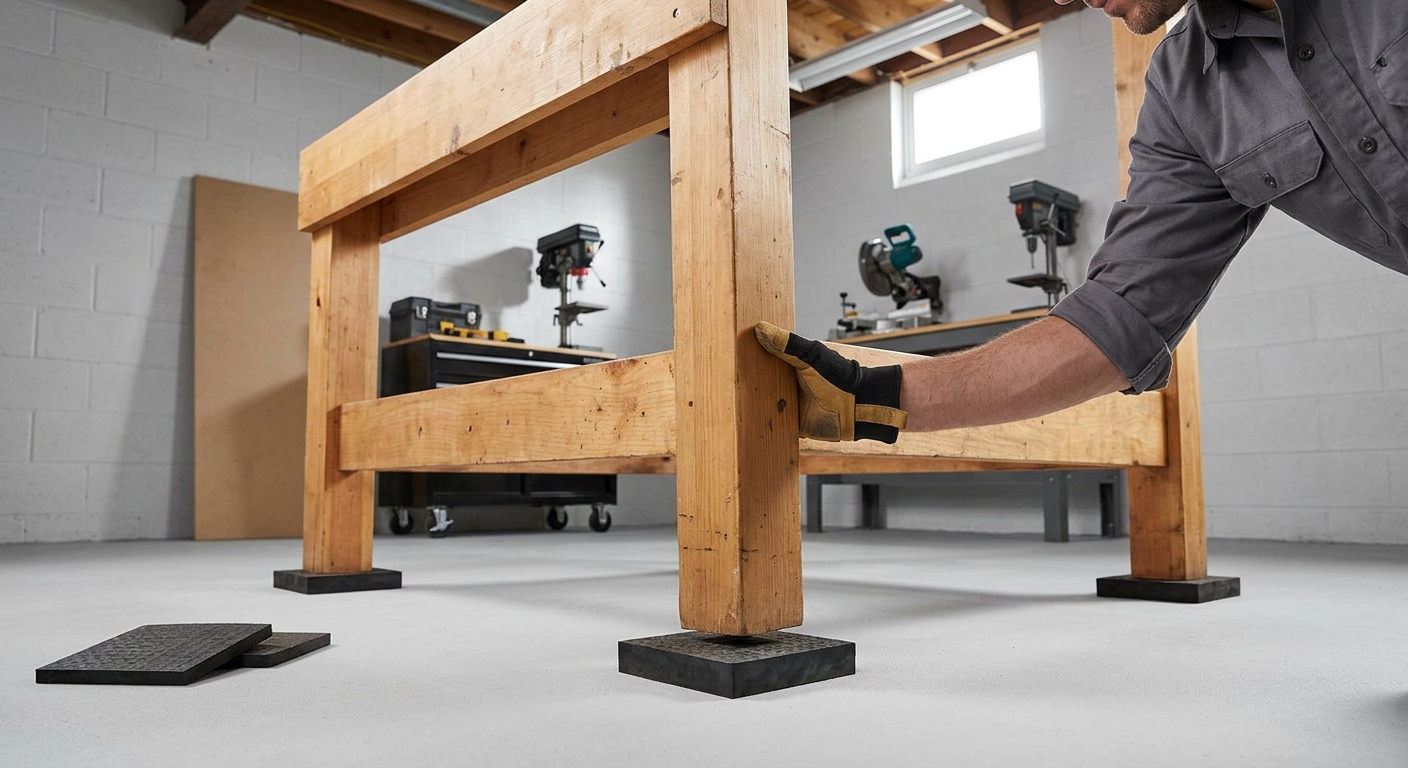
A table saw running in the basement is clearly audible in the kitchen above it. The primary sound paths are: structure-borne (vibration through the floor framing) and airborne (through gaps and thin floor sections). Floating the machine on anti-vibration pads reduces structure-borne sound significantly. Filling the floor joist bays above the shop with rockwool (sound-damping insulation) reduces airborne transmission.
Step 4: Handle Egress and Safety
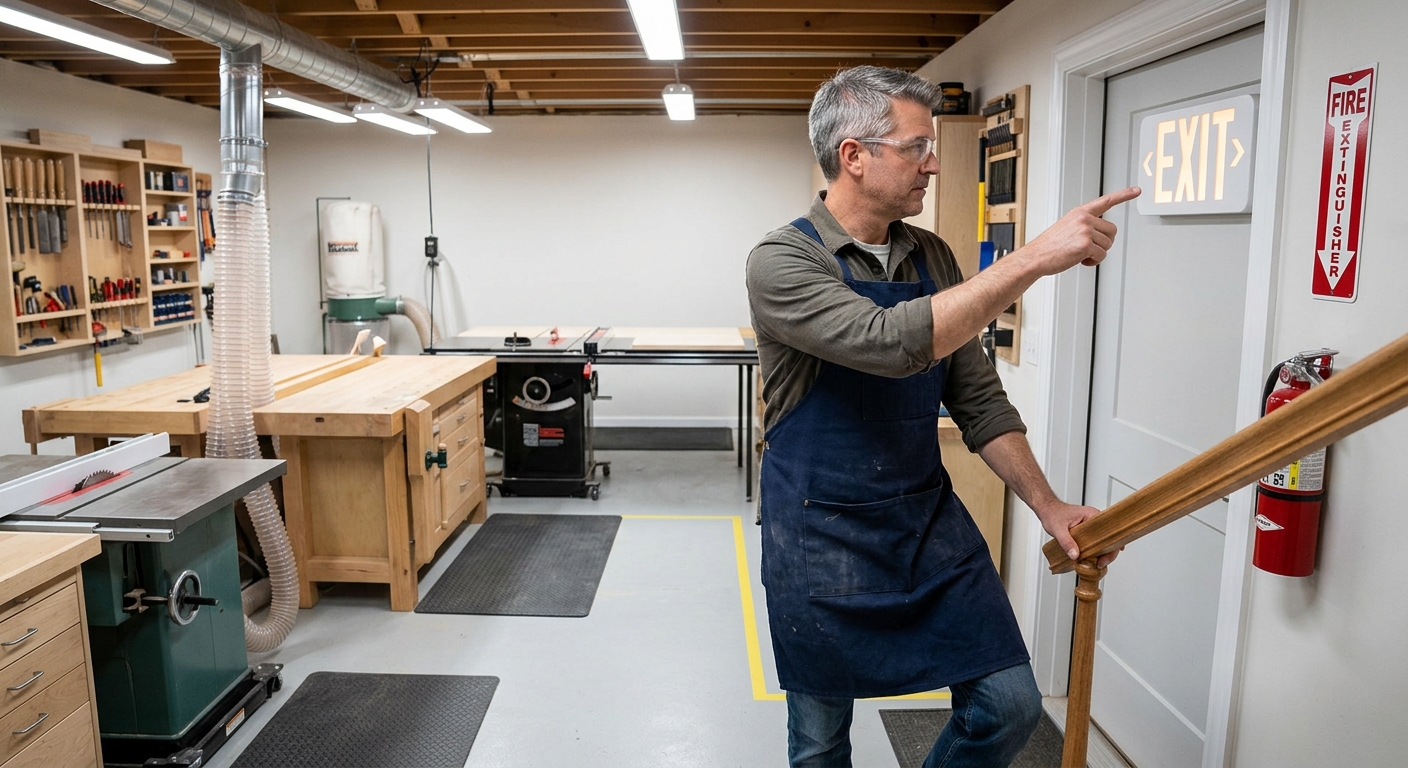
Local codes typically require egress windows in habitable basement spaces – check whether your basement shop requires this. More practically: ensure you have two ways out of the shop in case of fire. Keep a fire extinguisher at each exit. Install battery-backup smoke and CO detectors. A basement finishing shop often uses solvent-based finishes – ensure adequate ventilation and store finishes in a UL-listed flammable storage cabinet.
Step 5: Manage Moisture
Basements are more humid than above-grade spaces in most climates. Running tools without moisture management can cause rust on machine tables, swelling of wooden jigs, and dimensional movement in stored lumber. A dedicated dehumidifier keeps the basement at 45-55% relative humidity year-round – the right range for wood storage and tool longevity.
FAQ
Can I spray finish in a basement?
Solvent-based spray finishing in a basement is extremely dangerous without a dedicated spray booth with rated explosion-proof exhaust fan, proper grounding, and Class I electrical fixtures. Water-based spray finishing has lower fire risk but still requires adequate ventilation. For a basement shop without a spray booth, use wipe-on or brush-on finishes and save spray finishing for an above-grade area with proper setup.