
Finishing Supplies – From Random Shelves to a Real System
Finishing supplies are expensive, chemical-dependent, and often incompatible with each other. Storing them randomly on shelves means reaching past half-empty cans of the wrong product to find what you need, and occasionally discovering that incompatible finishes got mixed up. A properly organized finishing storage system makes every product findable, keeps incompatibles separated, and ensures you know exactly what’s in stock before starting a project.
The Organization Hierarchy
Organize finishing supplies in this order of importance:
- By finish type: Oil finishes together, water-based topcoats together, oil-based topcoats together, primers together, stains together. Never mix these groups.
- By application method within type: Brush-applied vs spray within each finish type.
- By project color or species within stains: Stains for oak projects separate from stains for pine.
Materials
- Metal shelving unit with solid shelves (not wire – cans tip through wire shelving)
- Labeling system – paint markers or printed label sheets
- Inventory card holder for each shelf section
- Small bins for brushes, applicators, and mixing sticks
Step 1 – Do a Full Finishing Supply Inventory

Pull everything out and line it up on the bench. Check every can for remaining quantity (shake it to estimate, open any that feel empty). Discard any finish that has skinned over or congealed. Note expiration dates. Most finishes have a 2 to 3-year shelf life from opening – anything older that has changed in consistency is probably compromised.
Step 2 – Dedicate Shelves by Finish Type

Use separate shelves for water-based and oil-based products. Never store them on the same shelf where a spill could mix them. Label each shelf clearly. The separation prevents chemical incompatibility accidents and makes it easy to verify what you have before starting a project.
Step 3 – Store Partially Full Cans Upside Down
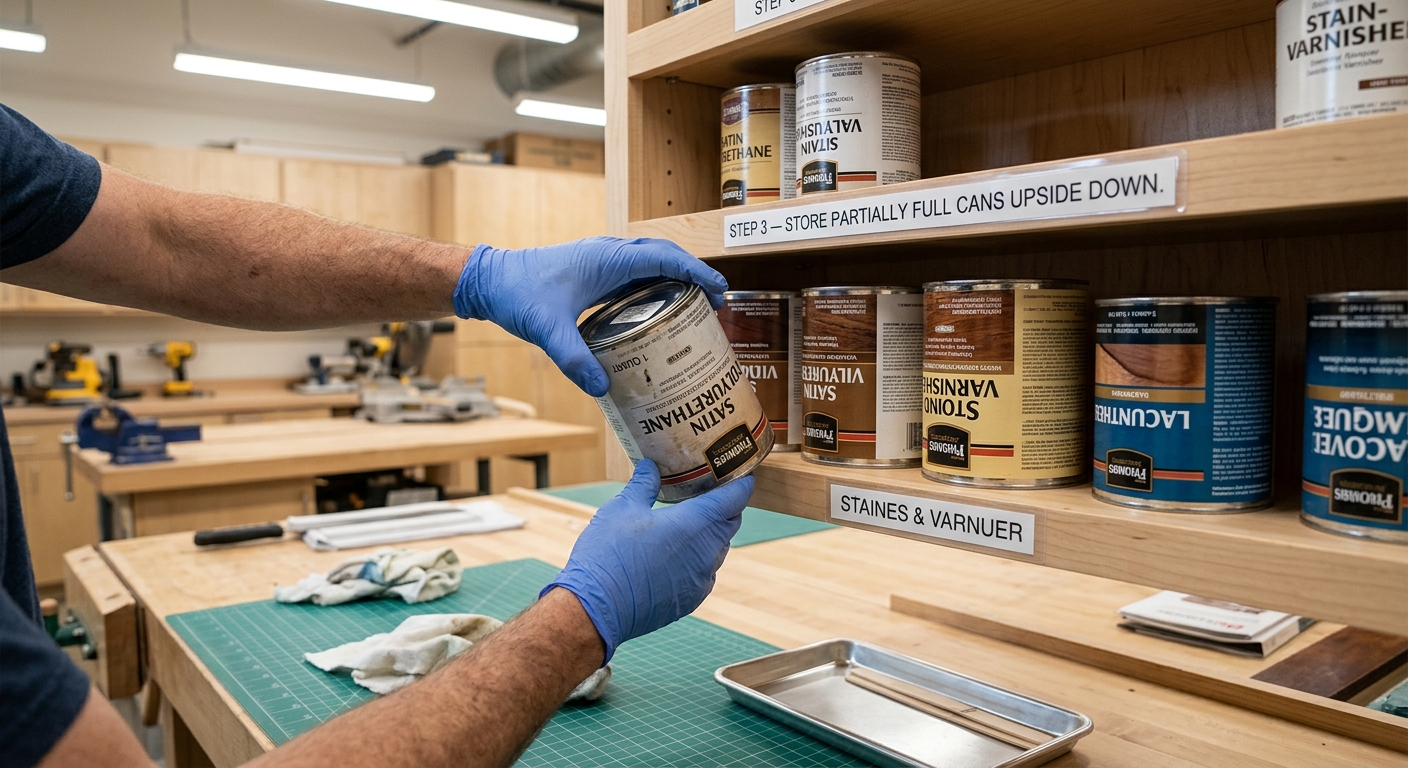
Oil-based finishes (varnish, polyurethane, oil stains) stay fresher longer when stored upside down after the first use – the finish forms a seal against the lid rather than against the can bottom. Make sure the lid is on tight before inverting. Store water-based finishes right-side up to prevent the water from forcing through the lid seal.
Step 4 – Create a Brush and Applicator Station

Keep brushes and applicators with the finishes they’re used for. A dedicated brush for oil-based products and separate brushes for water-based prevents contamination between product types. Store cleaned brushes hanging (bristles down) or laid flat – never stand them on their bristles.
FAQ
How do I dispose of old or bad finish products? Never pour oil-based finishes down the drain. Contact your local municipality for hazardous waste disposal options. Most areas have periodic hazardous waste collection days where these products can be dropped off safely.
Should I transfer finish from cans to smaller containers? Yes – transferring to Mason jars or small glass jars for project-specific colors reduces the amount of air in the storage container, extending shelf life and preventing skinning.