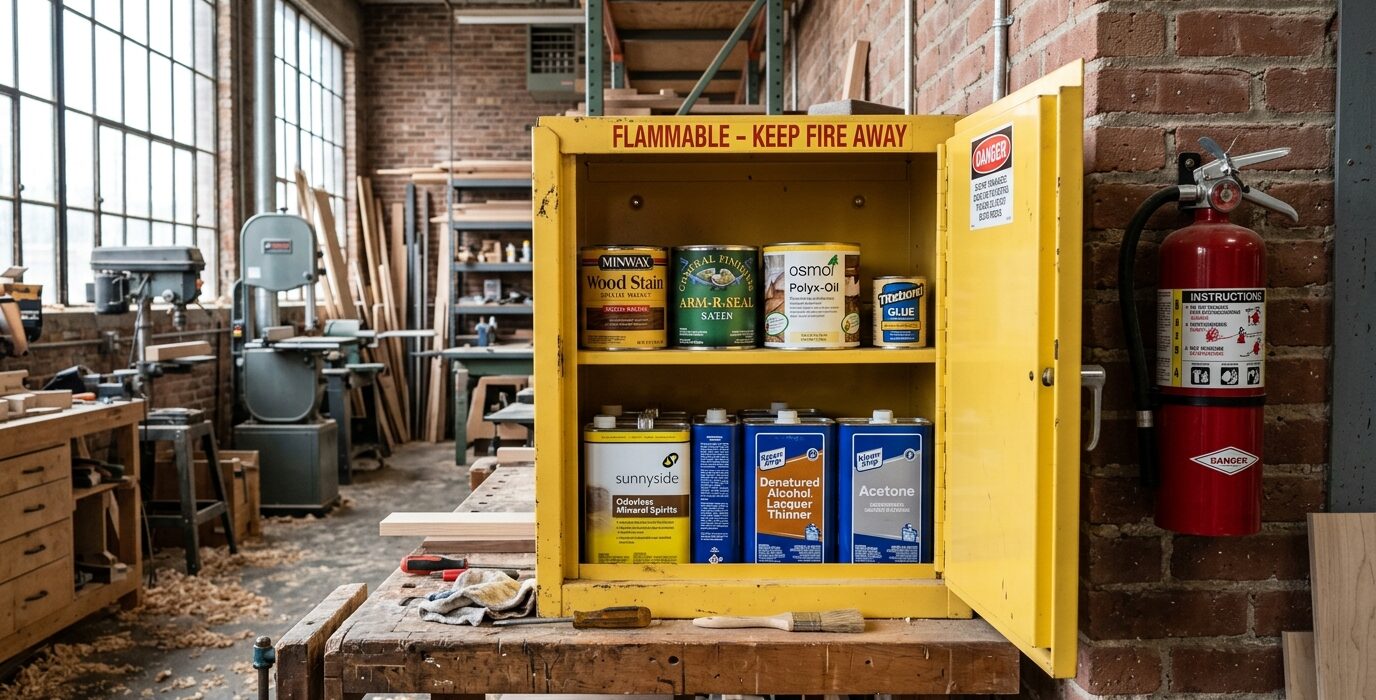
Chemical Storage Safety in the Shop
Many finishing products, solvents, and shop chemicals are flammable, toxic, or both. Storing them safely is not just about organization – it’s a critical fire safety and health protection measure. This guide covers the legal requirements (where they apply), the practical safety measures, and how to set up a chemical storage area that meets professional standards in a home shop environment.
What Counts as Hazardous in the Shop
- Flammable: Lacquer thinner, naphtha, acetone, denatured alcohol, oil-based varnish, oil-based stains, mineral spirits, turpentine
- Combustible: Linseed oil (and oil-soaked rags – a significant spontaneous combustion risk), paint, most finishing oils
- Toxic: Methylene chloride (in some paint strippers), certain wood stains, most spray finishes in aerosol form
Step 1 – Get a Metal Cabinet
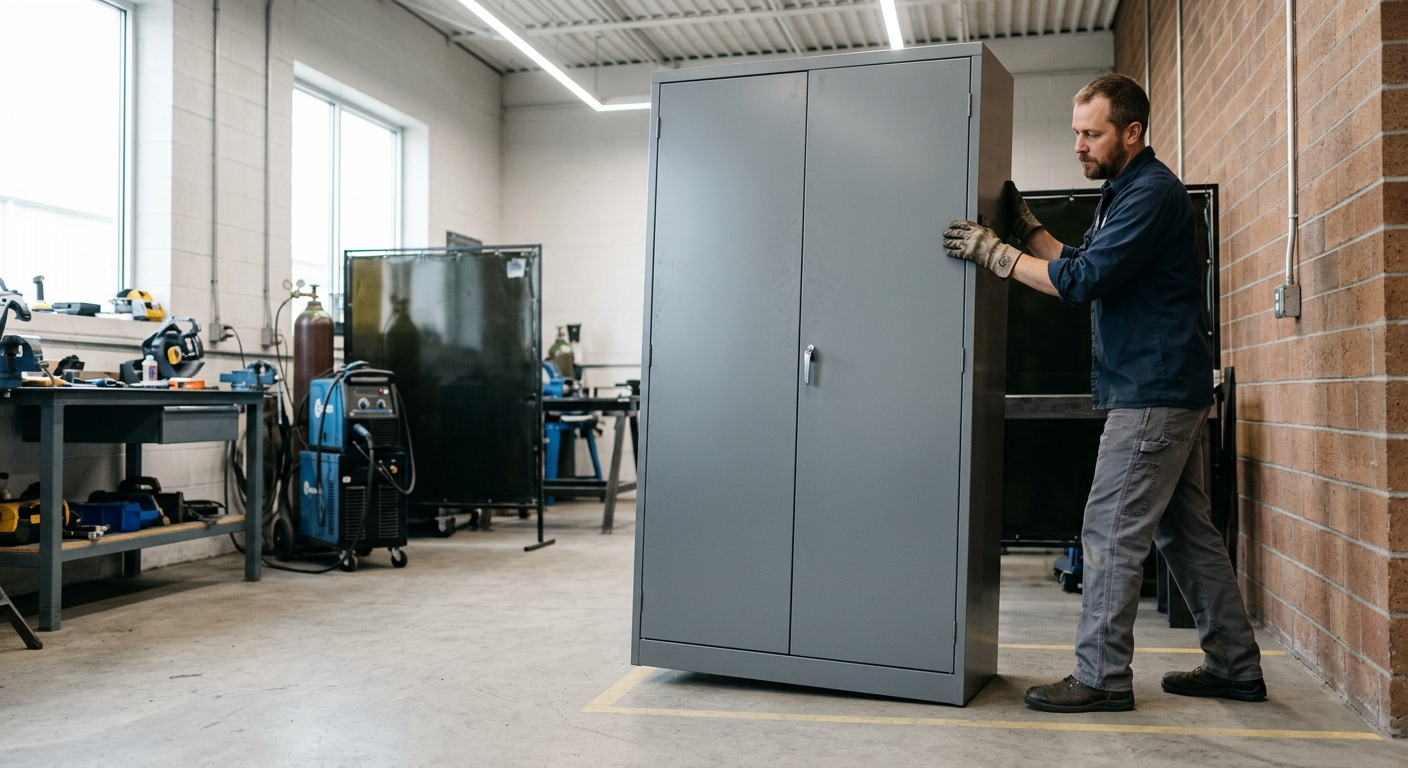
The gold standard for flammable chemical storage is an FM-approved metal safety cabinet with a self-closing door. These are available new for $100 to $400, or used from industrial surplus suppliers for less. The cabinets are rated to contain fire for 10 minutes – enough time for the fire department to respond. This is what professional shops use and what many insurance policies require.
Step 2 – Separate Flammables from Combustibles
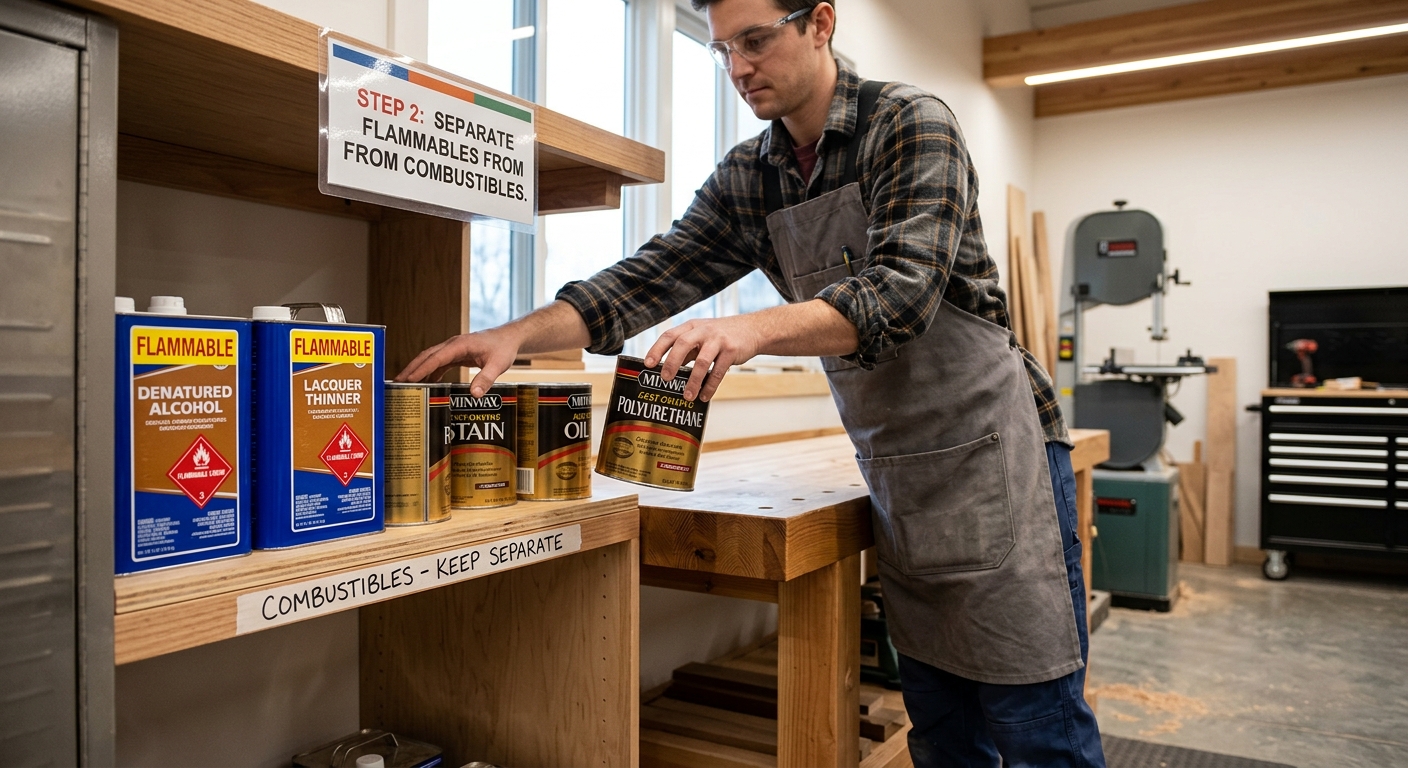
Flammable liquids (flash point below 100 degrees F) should not share a cabinet with combustible liquids (flash point 100 to 200 degrees F) in large quantities. In a home shop where quantities are small, a single metal cabinet works for both, but keep quantities limited to what you’ll use in a few months.
Step 3 – Manage the Spontaneous Combustion Risk
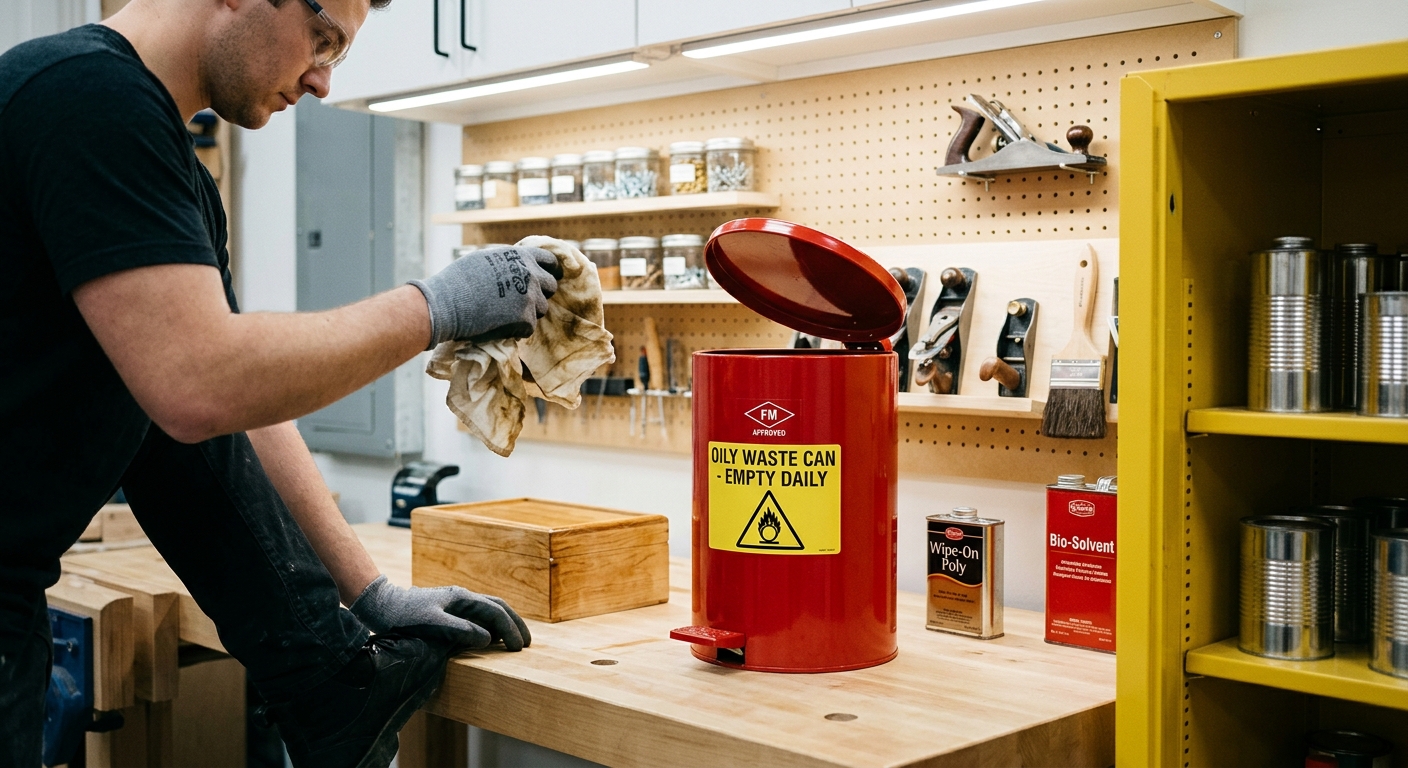
Oily rags are the most common cause of shop fires. Linseed oil in particular generates significant heat as it oxidizes (dries) and a pile of oily rags can reach ignition temperature without any external flame source. Store all oily rags in a metal can with a tight-fitting lid, or spread them flat to dry completely before discarding. Never pile oily rags in a corner or a trash can without a lid.
Step 4 – Ventilate the Storage Area

Even tightly capped chemicals off-gas small amounts of solvent vapor. The chemical storage cabinet or area should be in a corner of the shop with cross-ventilation – near a window or exhaust fan. Never store chemicals in an enclosed, unventilated space like a closet or sealed cabinet.
Step 5 – Maintain an Inventory
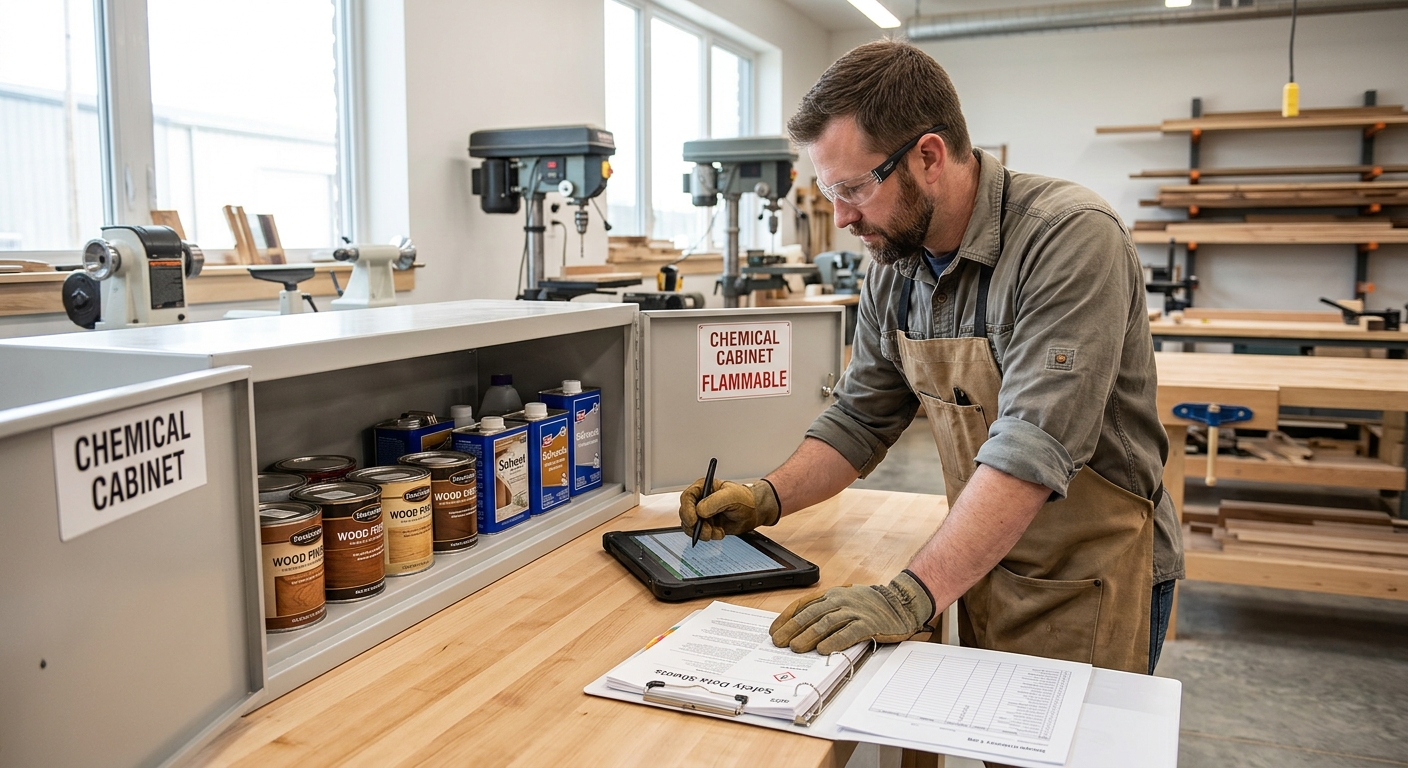
Keep a handwritten or printed inventory on the door of the storage cabinet. Update it when you add or use chemicals. The inventory should include product name, quantity, and date opened. This serves two purposes: it tells you what you have before a project (preventing redundant purchases), and it tells first responders what is in the cabinet in an emergency.
FAQ
Do I need a fire extinguisher near the chemical storage area? Yes – a 2.5 or 5-pound ABC dry chemical extinguisher within reach of the storage area. Mount it on the wall in a visible location and make sure anyone who uses the shop knows where it is and how to use it.
What’s the maximum quantity I should store in a home shop? Many fire codes limit residential storage of flammable liquids to 10 gallons. Keep your shop quantities to reasonable working amounts rather than stockpiling.