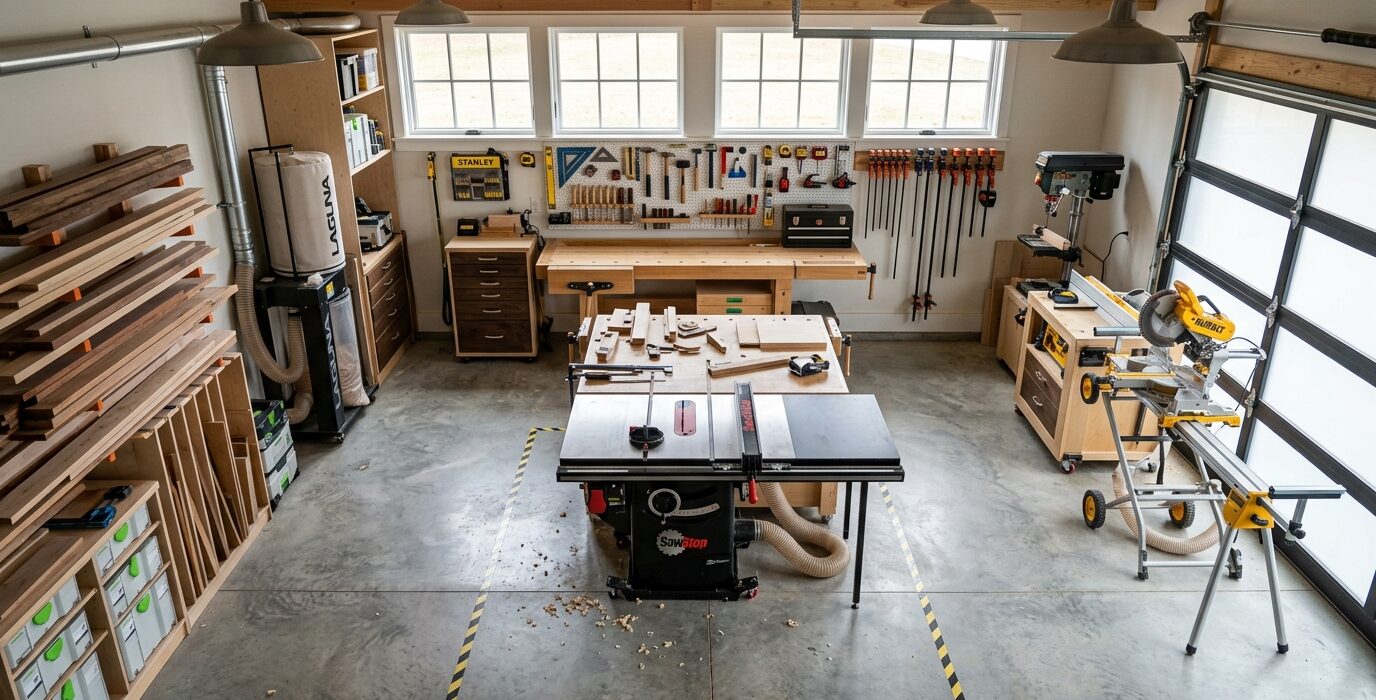
Extension Cord Management in the Shop
Extension cords strewn across the floor are the number one tripping hazard in home workshops and a significant fire risk when coiled and loaded with current. A proper cord management system keeps cords off the floor, organized by the machine they serve, and easy to deploy and stow. This is one of the fastest and most impactful safety improvements in any shop.
Why Floor Cords Are Dangerous
- Tripping hazard – particularly dangerous near running machinery
- Coiled cords under heavy current load can overheat and start fires
- Cord damage from rolling casters, foot traffic, and tool drops
- Disconnection at inopportune moments (mid-cut power loss)
Materials
- Retractable cord reels – ceiling-mounted (one per machine, or shared)
- Cord hooks or J-hooks for wall mounting
- Cable management clips for routing cords along joists
- Strain relief boots for cord ends
Step 1 – Map the Power Requirements

List every machine and tool that needs power, and note the cord length needed to reach the nearest outlet from the machine’s normal position. This determines how long each extension cord needs to be and where overhead cord reels should be mounted. Cords should be just long enough – not 25 feet of cord coiled on the floor for a machine 8 feet from the outlet.
Step 2 – Install Ceiling-Mounted Cord Reels
Ceiling-mounted retractable cord reels are the ideal solution for frequently moved tools. The reel mounts to the ceiling joist above the machine location. When you need the machine, pull the cord down to length; when done, the reel retracts the cord automatically. These reels cost $30 to $80 each – worth every dollar for the floor space and safety improvement they provide.
Step 3 – Route Fixed Cords Along Joists
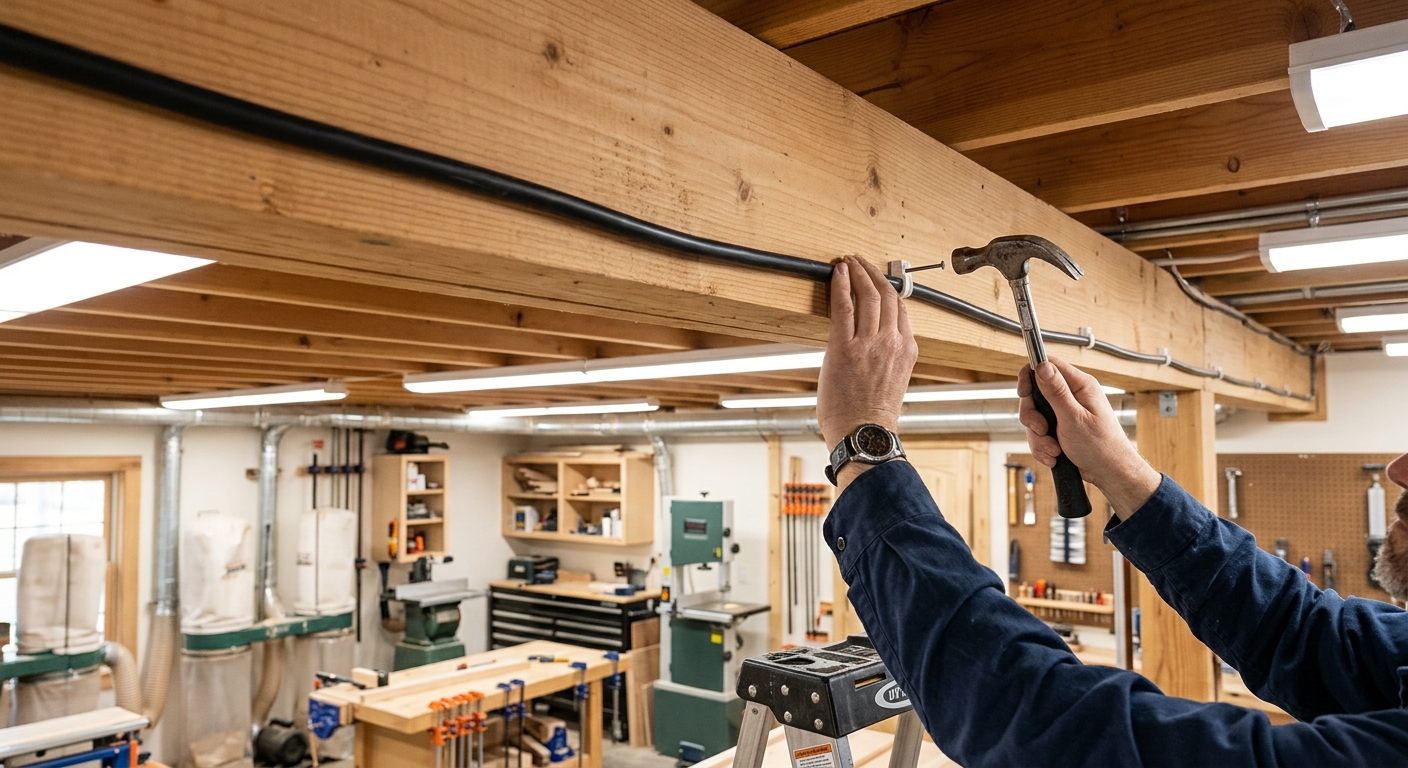
For machines in fixed positions (bench-mounted grinder, drill press), route the cord along the ceiling joist from the machine to the outlet using cable management clips. The cord runs above head height and out of the way permanently. This turns a static machine’s power cord from a floor hazard to a non-issue.
Step 4 – Use Shorter Cords

Most woodworkers use 25-foot extension cords for everything out of habit. A 25-foot cord for a machine 10 feet from the outlet leaves 15 feet of cord on the floor. Cut cords to useful lengths and terminate them properly, or simply coil excess carefully and hang on a hook rather than leaving on the floor.
Step 5 – Label Every Cord
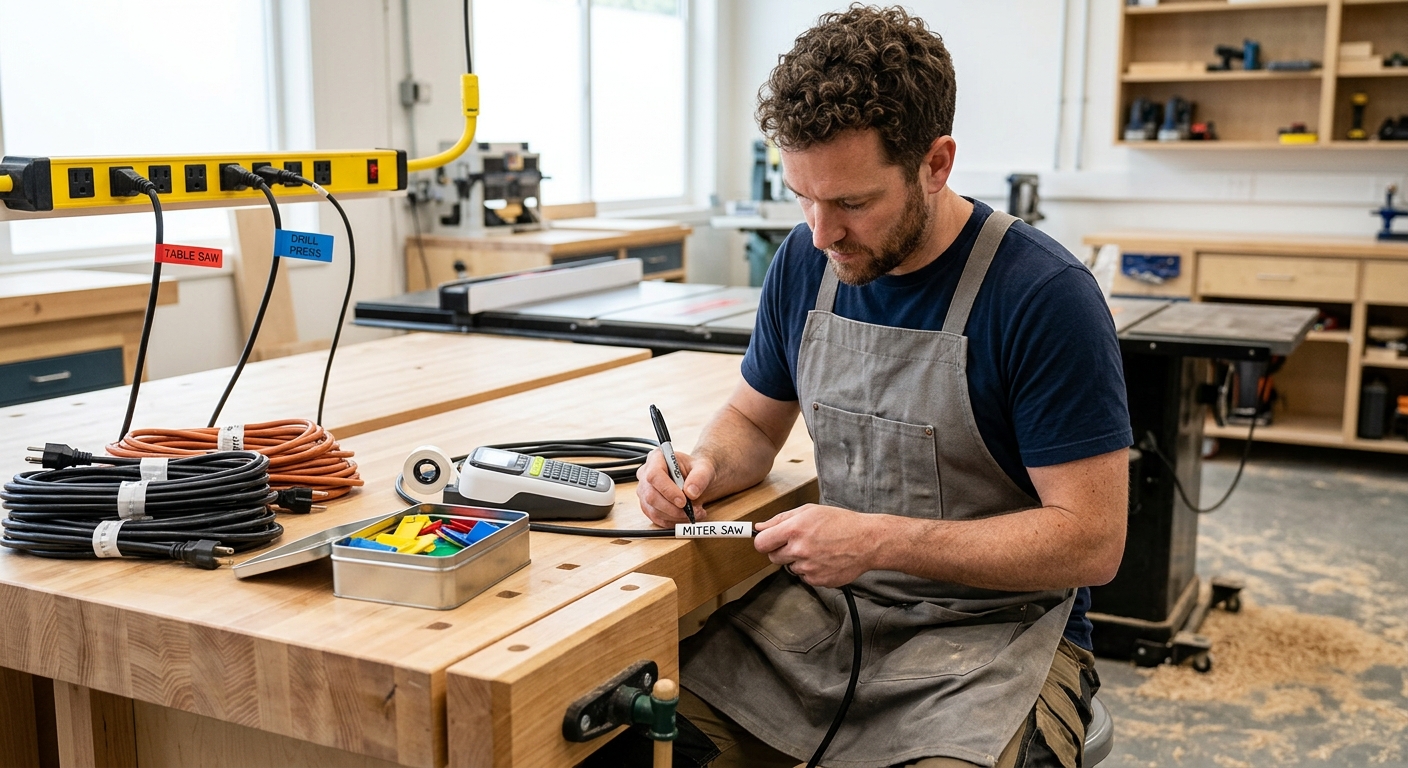
Label each cord with its machine and amperage rating. Wrap masking tape around the cord near each end and write the machine name on the tape. This makes it obvious which cord belongs where and prevents using a 16-gauge cord on a 12-amp power tool (a fire and performance risk).
FAQ
What gauge extension cord should I use for my table saw? For a standard 120V table saw running on a 15-amp circuit, use a 12-gauge extension cord – never 14-gauge or lighter. For a 240V saw, hardwire it to the outlet rather than using an extension cord.
Can I use a power strip as an extension cord? Not for shop tools. Power strips are designed for electronic equipment, not high-current power tools. Use extension cords rated for the tool’s amperage.