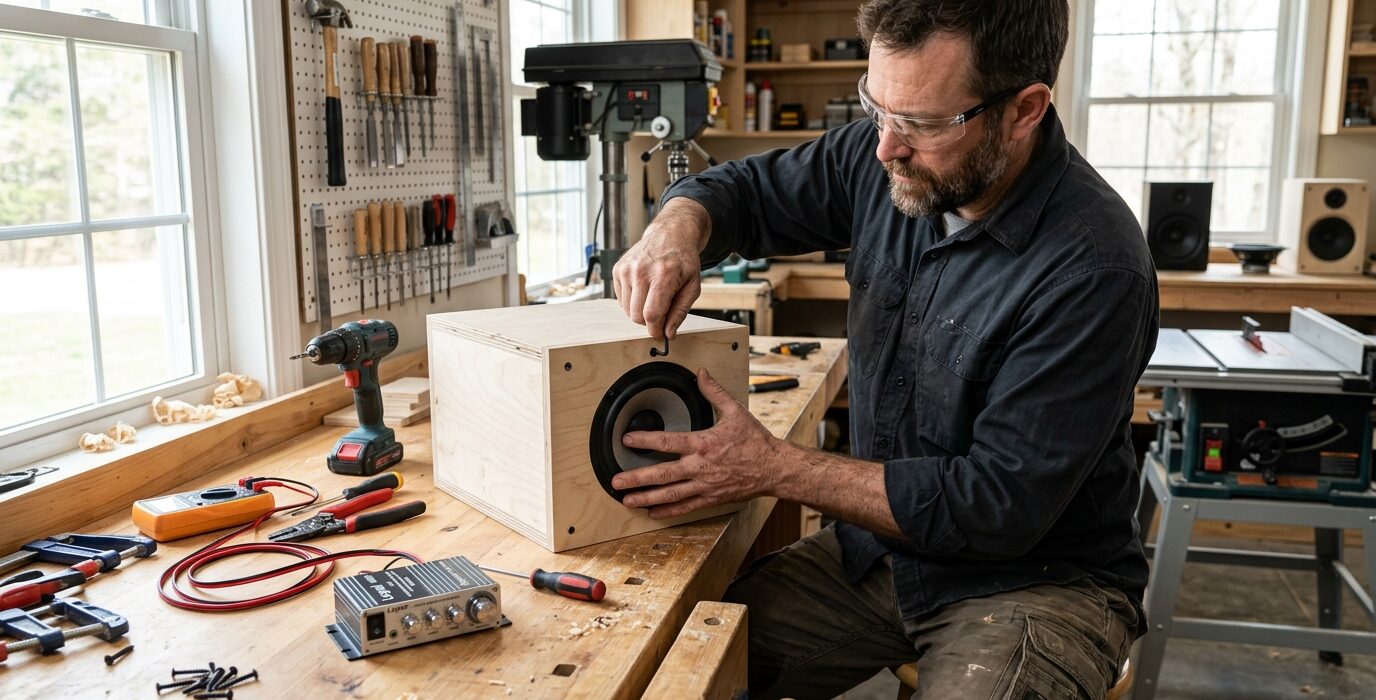
Music Makes the Shop Better – Here Is How to Do It Right
Most woodworkers work with music playing. The right sound system in the shop makes long days more enjoyable, improves focus, and is one of the most affordable shop improvements you can make. A good shop stereo is different from a home stereo: it needs to be dustproof or dust-resistant, loud enough to compete with machine noise, and positioned where it’s heard clearly without being in the way. This guide covers building or assembling the right shop audio system.
Choosing the Right System
There are four practical approaches to shop audio:
- Bluetooth speaker: The simplest solution. A rugged, water-resistant Bluetooth speaker (like the Turtlebox or JBL Xtreme) pairs with your phone. Portable, affordable ($50 to $200), and requires no installation.
- Internet radio with an old tablet: Mount a used tablet or phone on the wall and use a streaming app. Add a small powered speaker for volume. Cost under $100 total if you have an old device.
- Dedicated shop radio: Milwaukee, DeWalt, and other tool brands make job-site radios that charge tool batteries and play AM/FM/Bluetooth loudly. Rugged and dust-resistant. Cost $100 to $200.
- Built-in wired speakers: The audiophile option – mount speakers in the walls or ceiling, connect to a small amplifier, and stream from a phone. Best sound quality but requires installation effort.
Step 1 – Choose the Speaker Placement
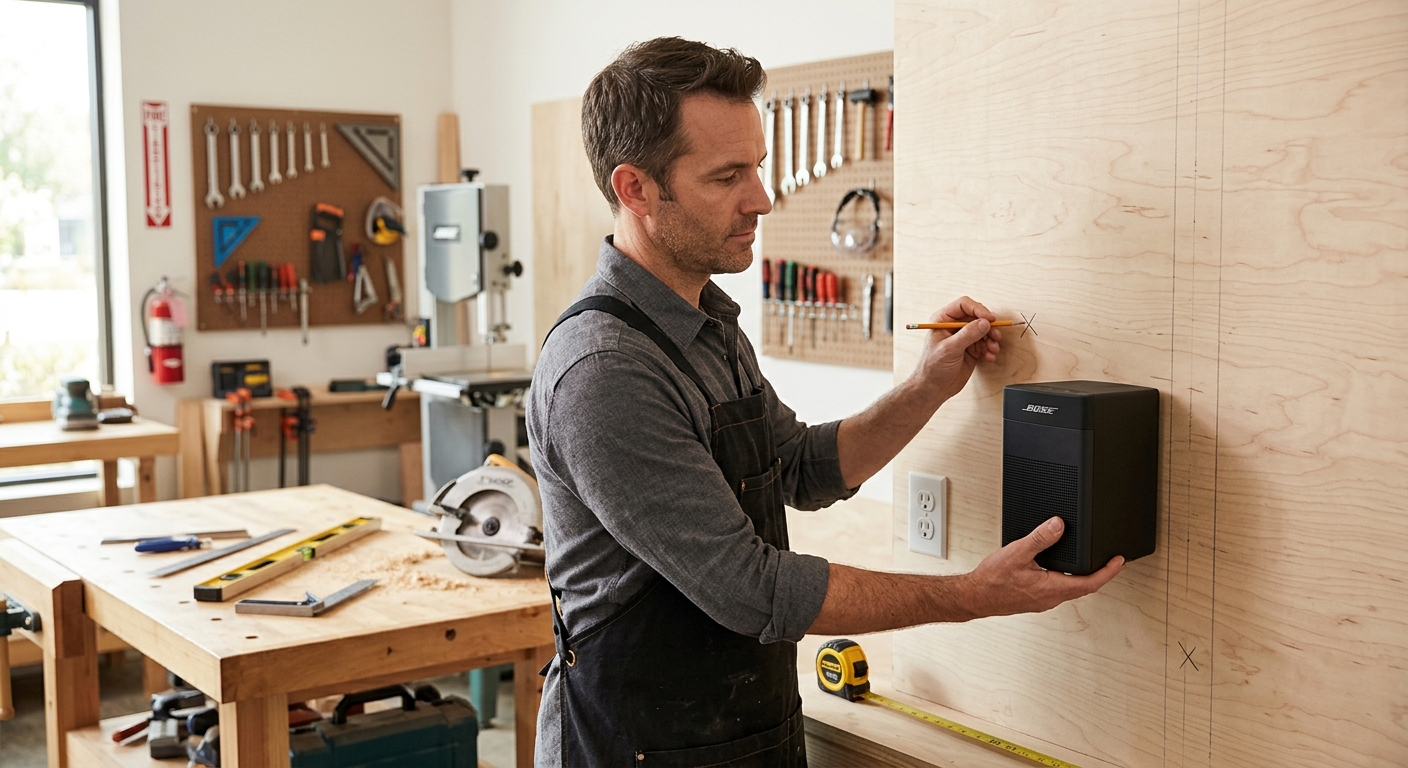
Speakers work best when they’re above head height and angled downward toward the work area. At this position, the sound carries past the workbench without the bench and tools blocking it. Avoid placing speakers on the floor or in corners where they’ll be dusty, stepped on, or blocked by lumber and project materials.
Step 2 – Protect from Dust
Fine wood dust damages speaker cones over time. For ceiling-mounted speakers, use speakers with waterproof or dustproof ratings. For tabletop or wall-mounted speakers, blow them out with compressed air monthly. Dust in the speaker cone and vent holes degrades sound quality and can damage the driver over years of shop use.
Step 3 – Hearing Protection Compatibility
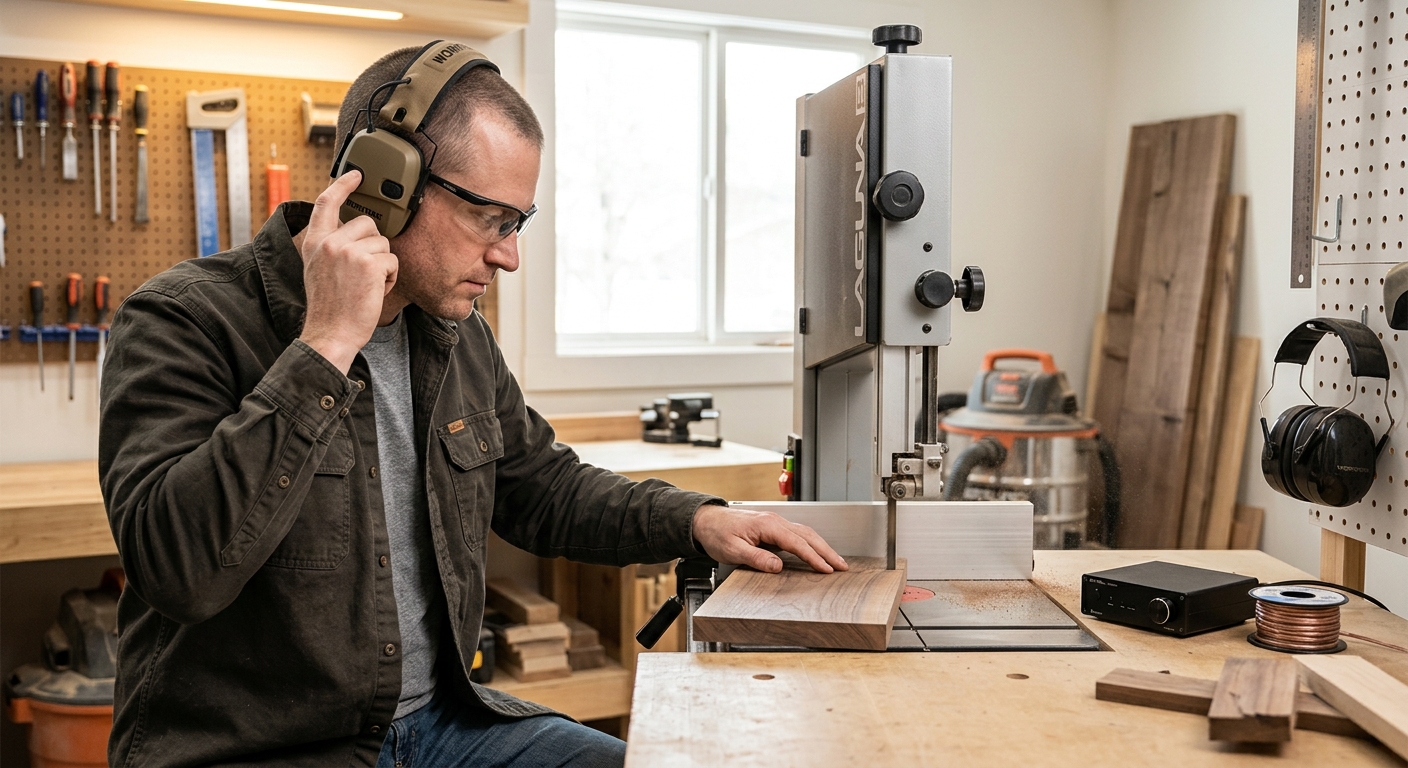
The most important detail about shop audio: always wear hearing protection when running loud machines, even if you have to turn the music off or up to compensate. Consider Bluetooth hearing protectors (3M WorkTunes or similar) – they include integrated speakers that deliver music directly to your ears at safe levels while still protecting your hearing from machine noise. This is the best solution for anyone who wants music and safe hearing.
Step 4 – Mount the Player Control at Arm’s Reach
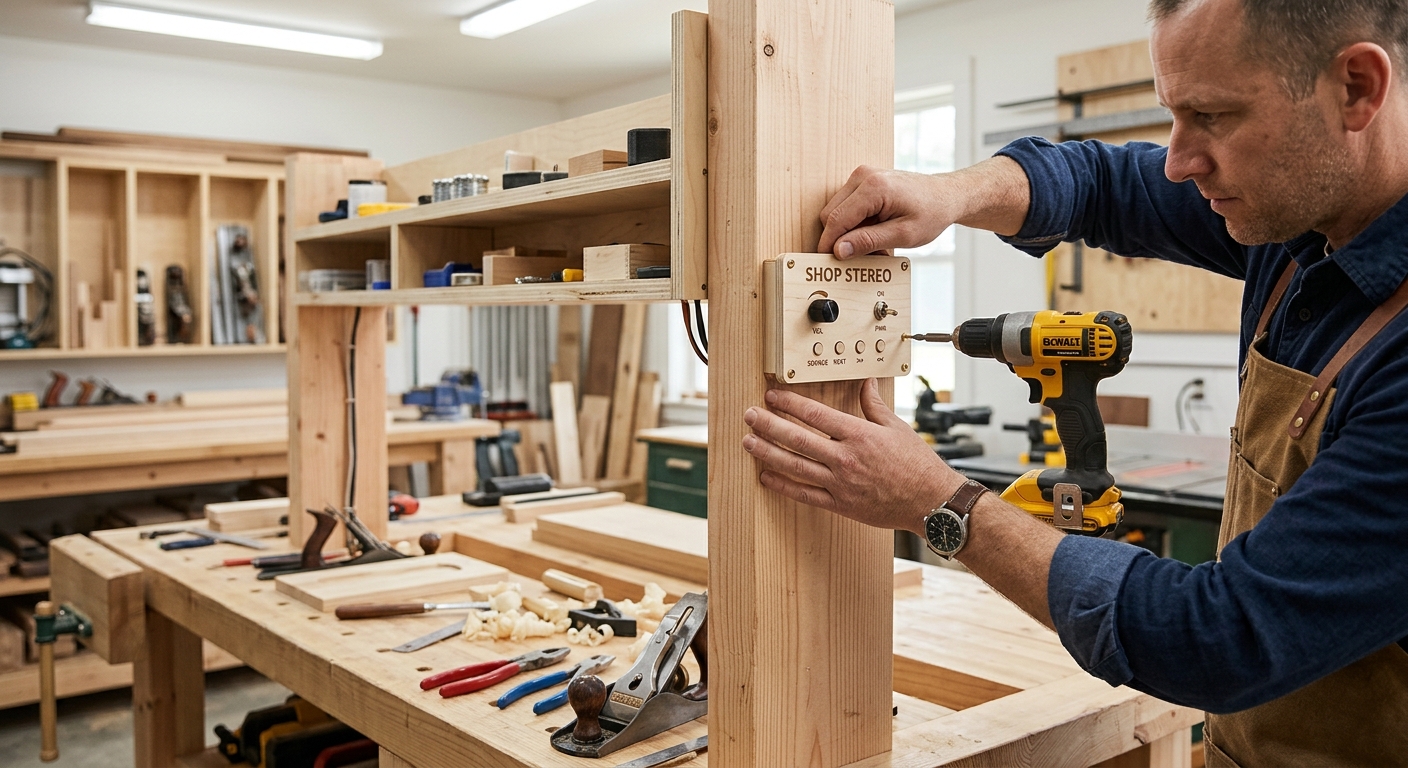
If you’re using a wired system, mount the volume control and input selector within reach of the primary work position – the bench or the table saw feed position. You shouldn’t have to walk across the shop to change the volume when you start a loud machine.
FAQ
What volume is safe for the shop? Any music played loud enough to compete with power tool noise (85 to 100 dB) is damaging your hearing. Use Bluetooth hearing protectors to deliver safe music levels directly to your ears while still protecting from the tool noise around you.
Can I hardwire ceiling speakers in a garage? Yes – use in-ceiling speakers rated for 16-gauge or heavier speaker wire, route the wire along ceiling joists, and connect to a small Class-D amplifier. This is a weekend project that delivers surprisingly good shop audio.