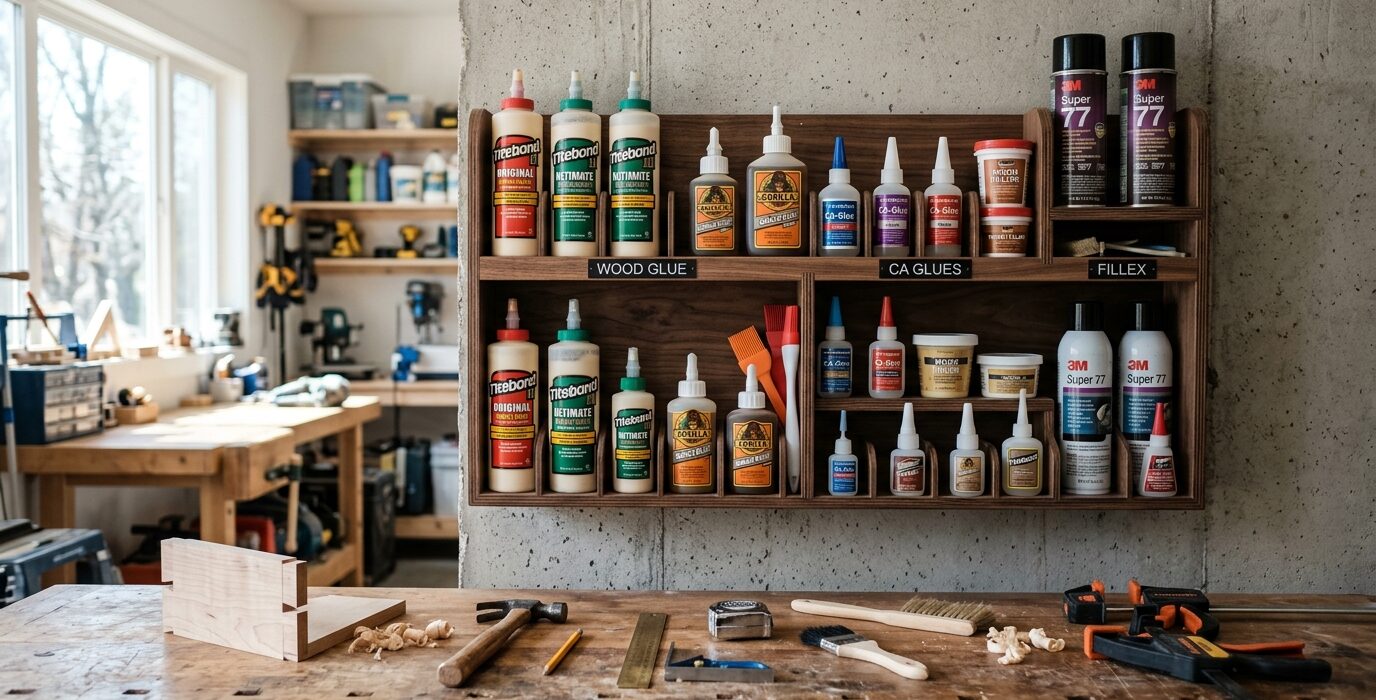
A Glue and Adhesive Storage Station
Adhesives in a woodworking shop include yellow wood glue, polyurethane glue, CA (superglue), epoxy, contact cement, construction adhesive, and specialty bonding agents. Each has different storage requirements, a different shelf life, and different application tools. A dedicated adhesive storage station puts everything in one organized location and prevents the frustration of reaching for the CA and finding an empty bottle, or discovering that the wood glue has congealed in the back of a drawer.
Materials
- One small wall-mounted cabinet or a dedicated shelf section
- Small clear bins for applicators and mixing cups
- Bottle holders or racks for upright glue bottle storage
- Labels for every container
Step 1 – Inventory Your Adhesives
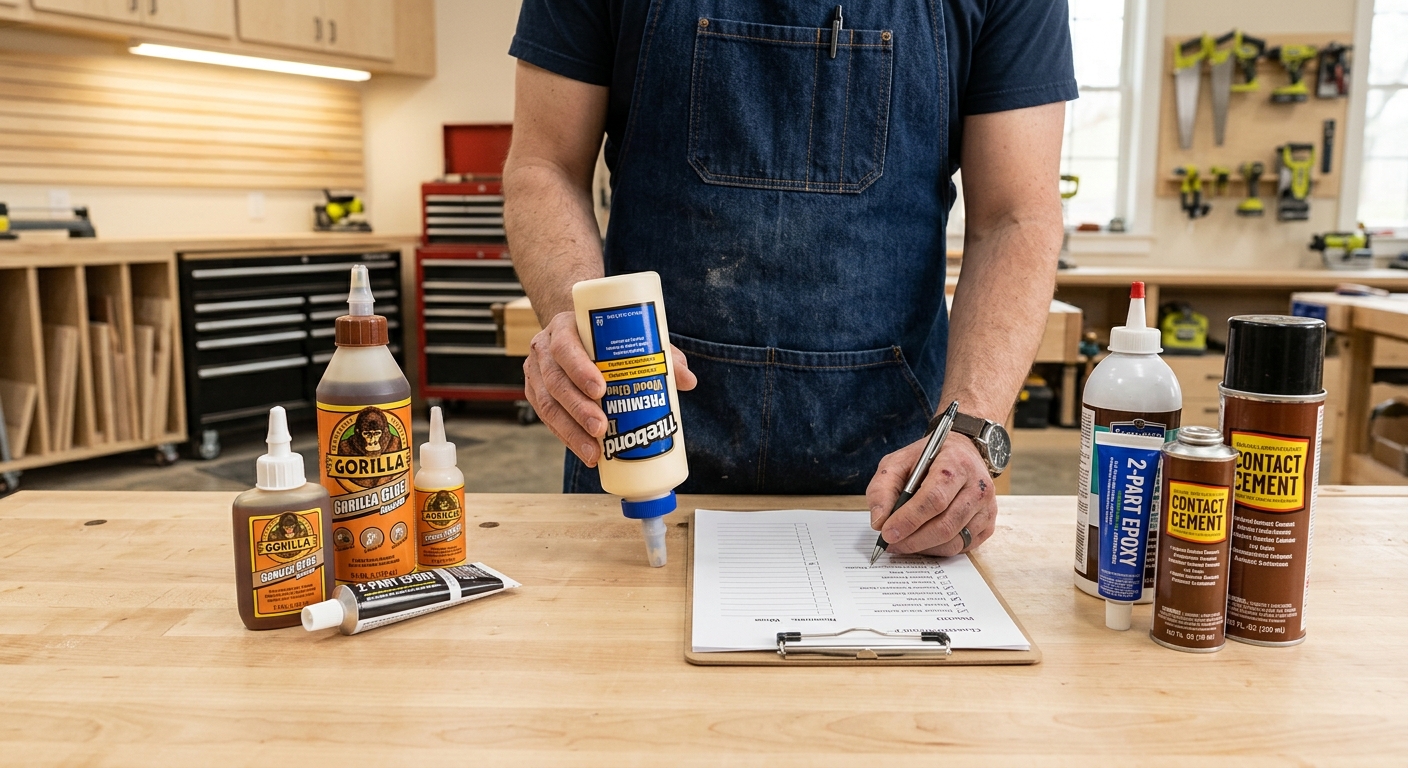
Pull every adhesive from every storage location. Check expiration dates – most wood glues have a 1 to 2-year shelf life from opening, CA glue can last only 6 months to 1 year, and some specialty adhesives have even shorter lives. Discard anything past its date or visibly changed (lumpy, congealed, or changed color significantly).
Step 2 – Organize by Adhesive Type
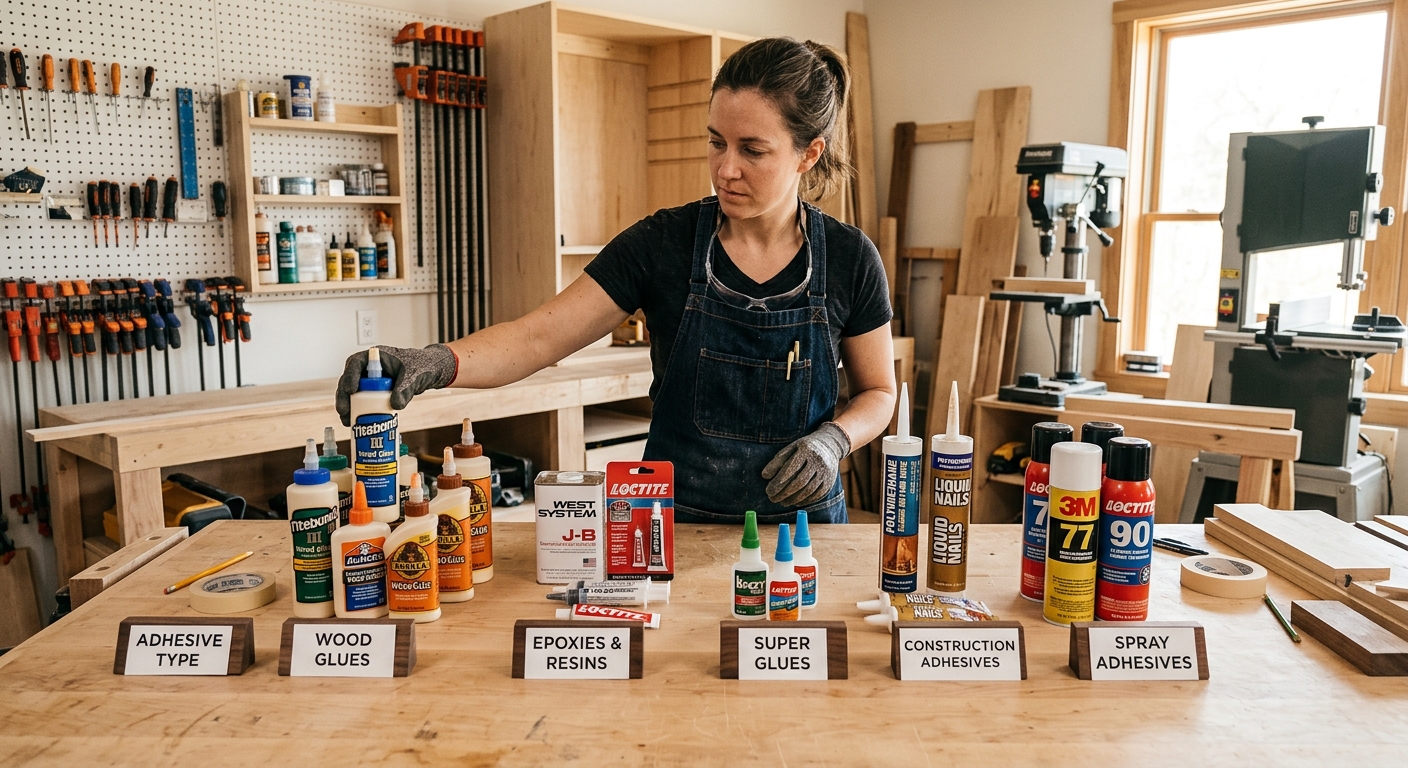
Group adhesives by type in the storage station: wood glues (PVA), CA glues, epoxies, and specialty adhesives each get their own section. This separation matters because CA accelerator contaminates wood glue applicators, and epoxy mixing cups should not be reused for wood glue. Keeping types separated prevents accidental cross-contamination.
Step 3 – Store Glue Bottles Upright
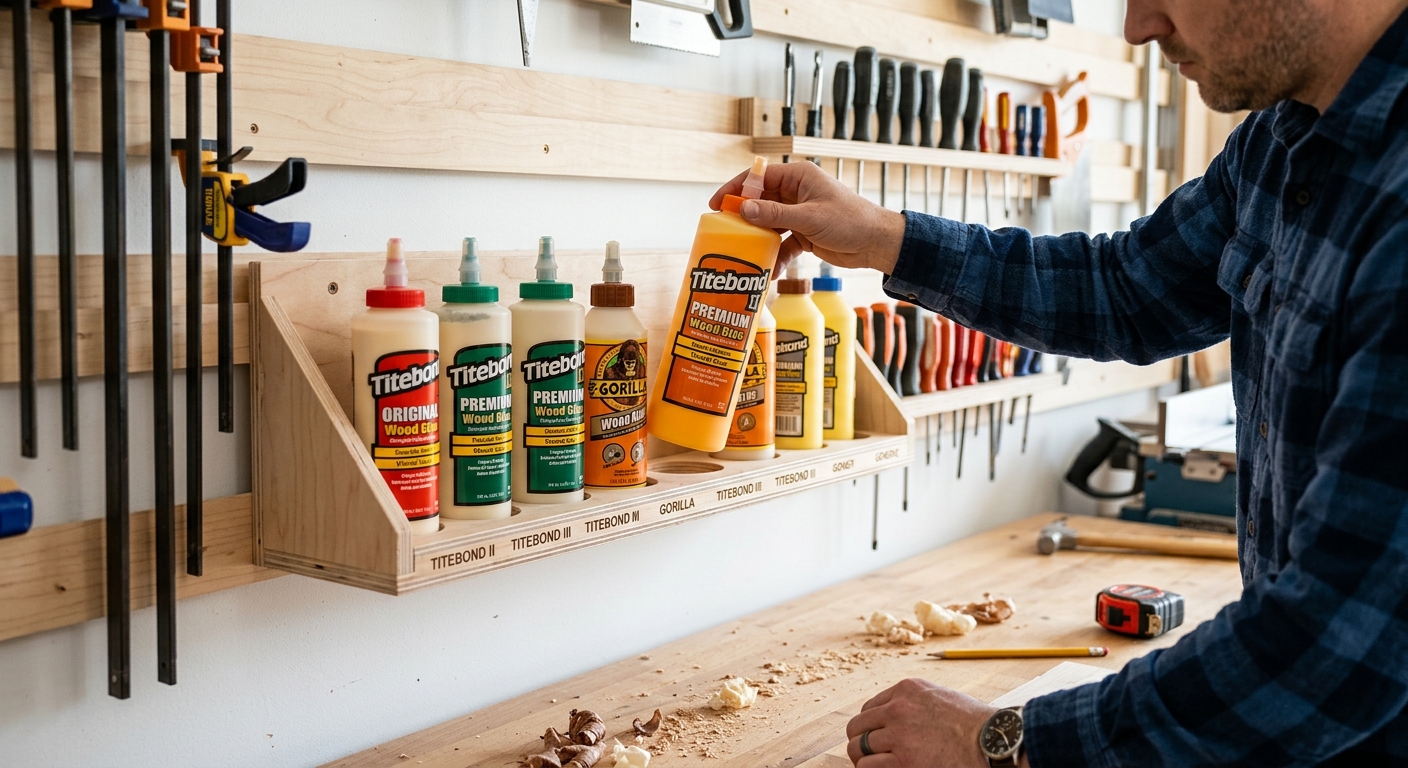
Wood glue and polyurethane glue should be stored upright – not on their sides. Store them with a thin coat of glue on the inside of the cap so the cap doesn’t bond to the bottle. Wipe the nozzle clean after every use before replacing the cap.
Step 4 – Set Up a Mixing and Application Area
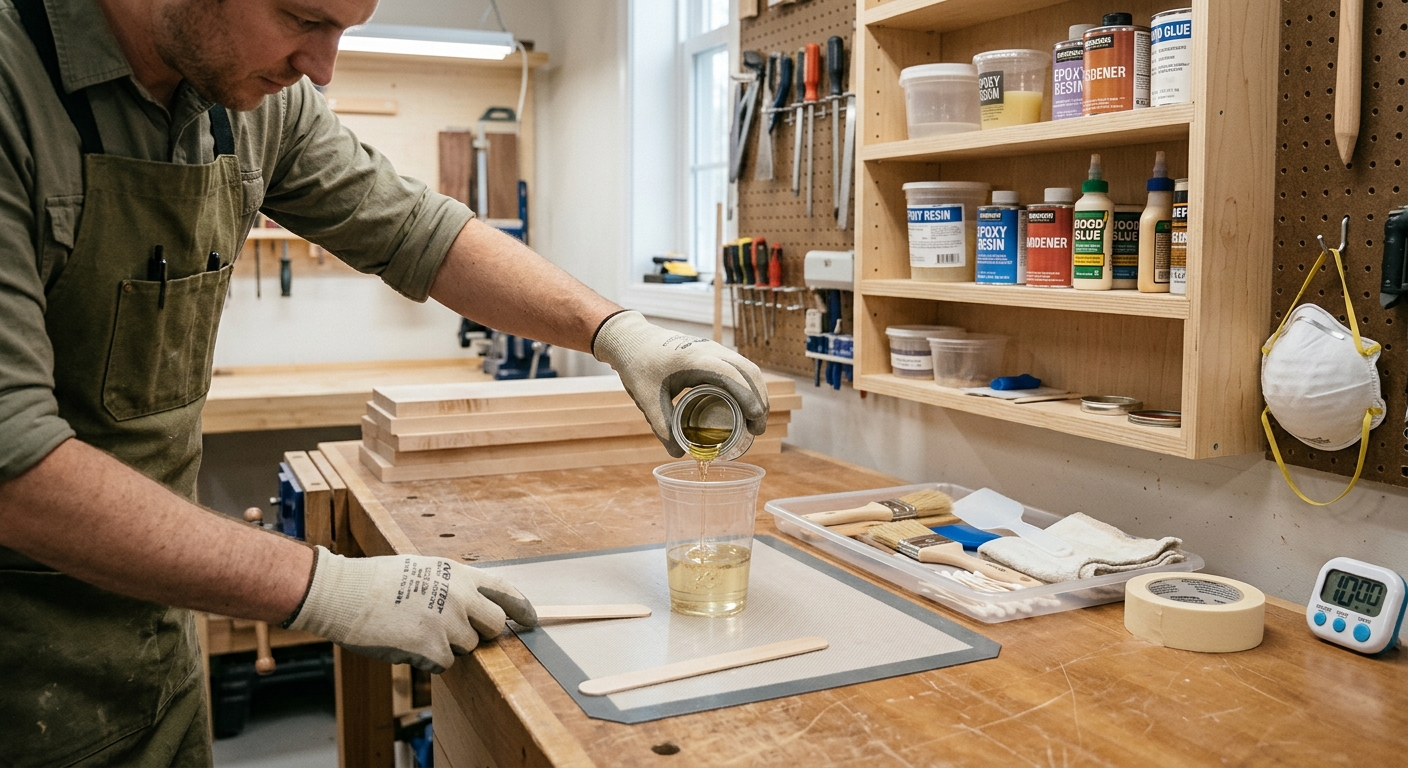
Epoxy needs mixing cups and mixing sticks. CA needs applicator tips. Contact cement needs a brush or applicator pad. Build or designate a small area within the adhesive station specifically for applying adhesives – include mixing cups, sticks, brushes, and a surface that can be cleaned or replaced after each glue-up.
Step 5 – Add a Disposal Station
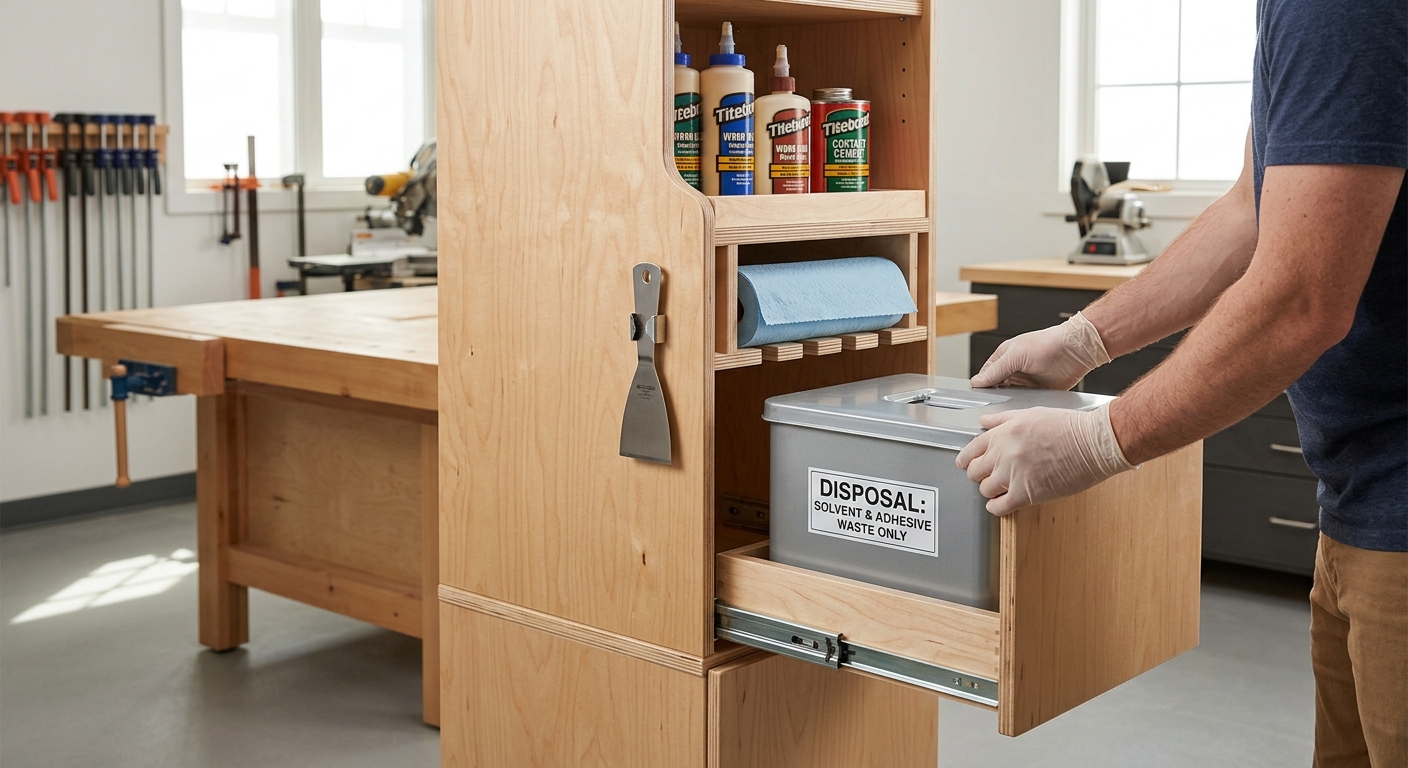
Used mixing cups, applicator tips, and brushes need immediate disposal – don’t let them sit. A small metal trash can (lined with a disposable bag) at the adhesive station catches these items immediately after use. The metal can prevents any adhesive-coated items from bonding to a plastic liner or causing a smoldering situation from epoxy exothermic reactions.
FAQ
Should I refrigerate wood glue? Many woodworkers refrigerate yellow glue to extend shelf life – this is safe but the glue must warm to room temperature before use. Cold glue has higher viscosity and doesn’t spread or penetrate as well. Refrigeration can double the shelf life of an opened container.
Can I store CA glue in the freezer? Yes – unopened CA glue can be stored in the freezer in a sealed bag to significantly extend its shelf life. Allow it to warm completely to room temperature (at least an hour) before opening to prevent moisture condensation from contaminating the glue.