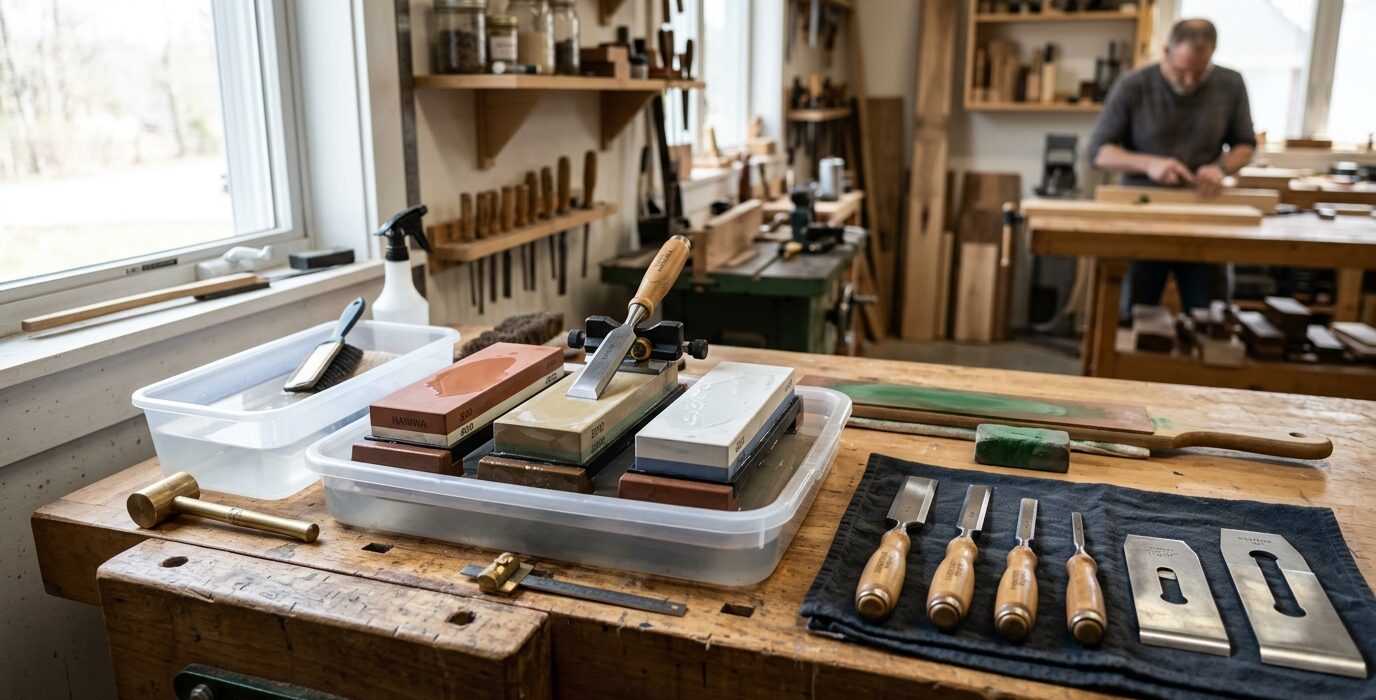
A Grinding Wheel and Sharpening Stone Storage System
Grinding wheels, oil stones, waterstones, and diamond plates are precision abrasives that need protection between uses. A grinding wheel stored incorrectly can develop flat spots from static contact or absorb moisture that makes it unsafe to use. Waterstones need drainage and a way to stay out of freezing temperatures. A purpose-built storage system for sharpening abrasives keeps them in perfect condition and organized for the sharpening sequence.
Materials
- 3/4-inch plywood for the storage shelf or cabinet
- Foam or rubber matting for stone resting surfaces
- A wooden box or cabinet with a door for grinding wheel storage
- Drip tray or drainage tray for waterstones
Step 1 – Store Grinding Wheels Correctly
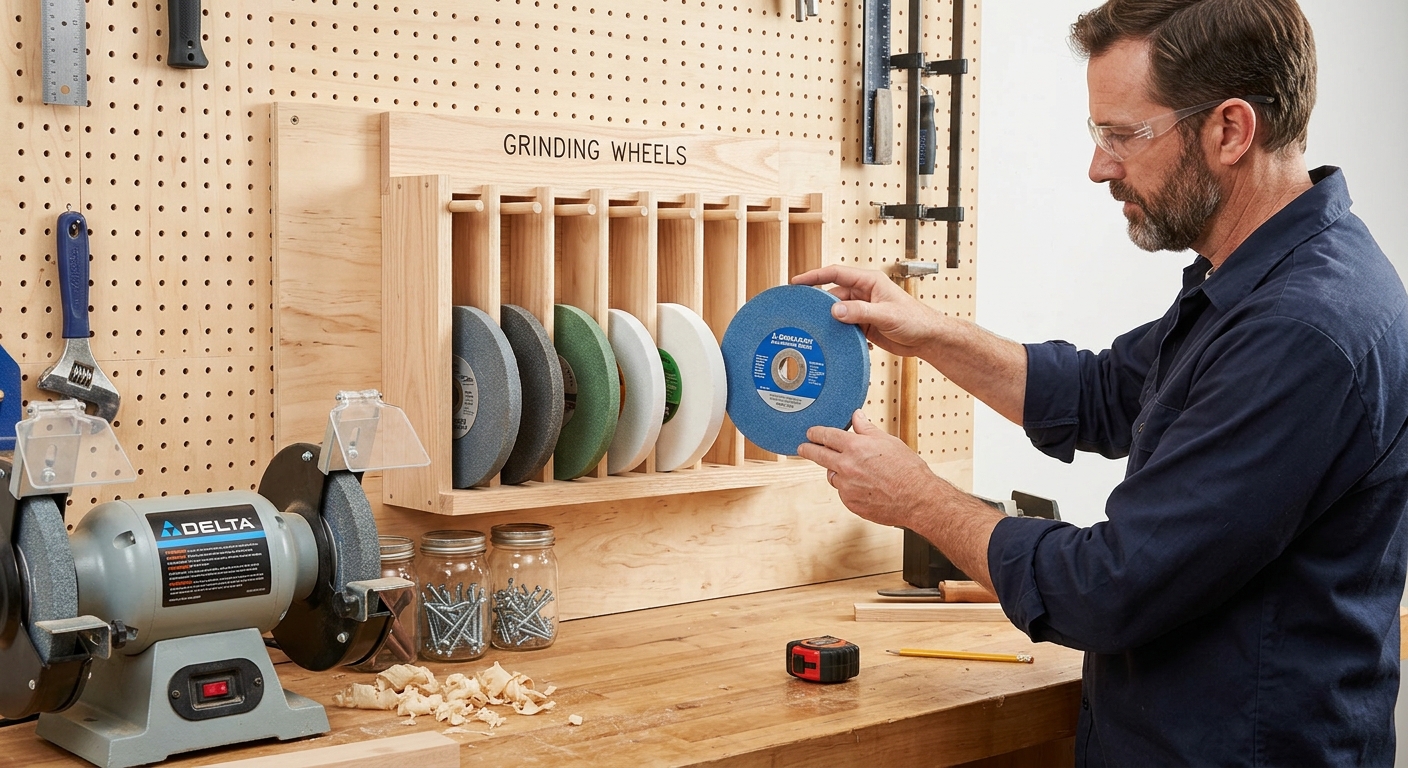
Grinding wheels must be stored upright on a flat surface – never stacked flat or laid on their side for long periods. Storing flat allows the wheel to deform slightly under its own weight at the contact point over months. A simple rack of vertical dividers (like a vinyl record rack) with each wheel standing upright in its own slot is the professional approach. Store wheels in a dry cabinet away from moisture – grinding wheel bonding agents can be weakened by water absorption.
Step 2 – Waterstone Storage
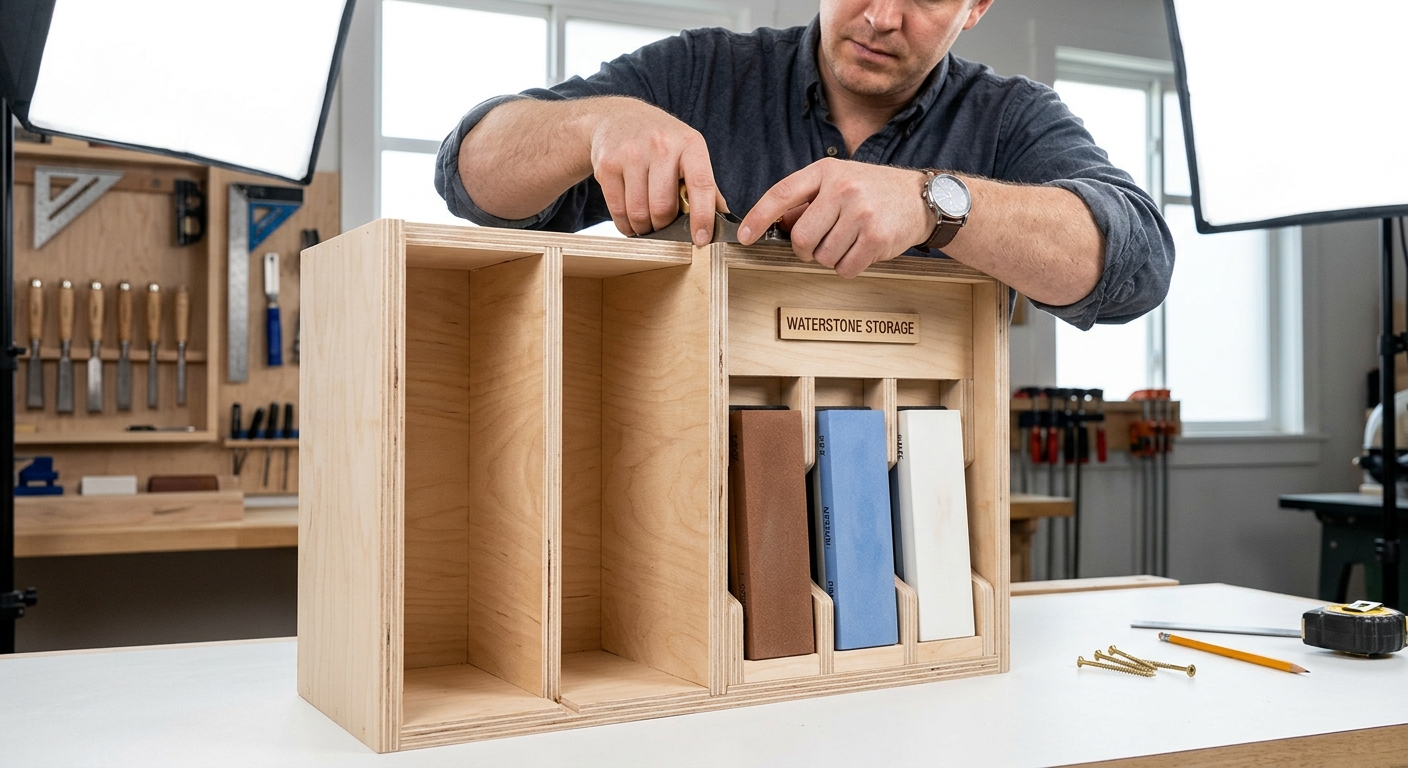
Waterstones are used wet but should not be stored wet in a closed container for extended periods – this promotes bacterial growth and can eventually degrade the stone. After use, drain waterstones and allow them to air dry before storage. Store them flat in an open area or in a drip tray that allows airflow underneath. In freezing temperatures, waterstones must be stored indoors – freezing water expands and can fracture a waterstone.
Step 3 – Oil Stone Storage
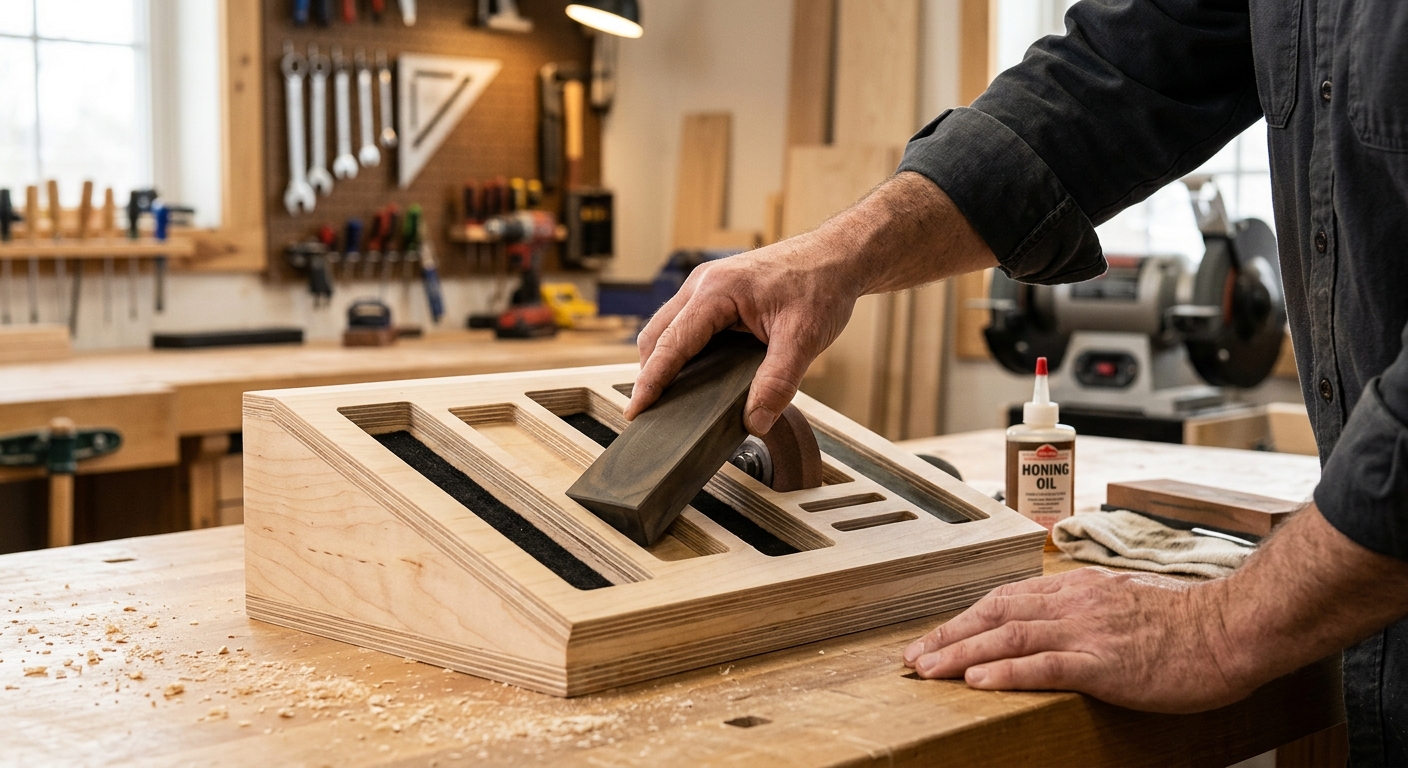
Oil stones can be stored in a simple covered wooden box – they don’t need the drainage that waterstones do. The box keeps grit and metal particles from contaminating other surfaces and keeps the stone clean between sessions. Store with a few drops of honing oil on the surface to keep it conditioned.
Step 4 – Diamond Plate Storage
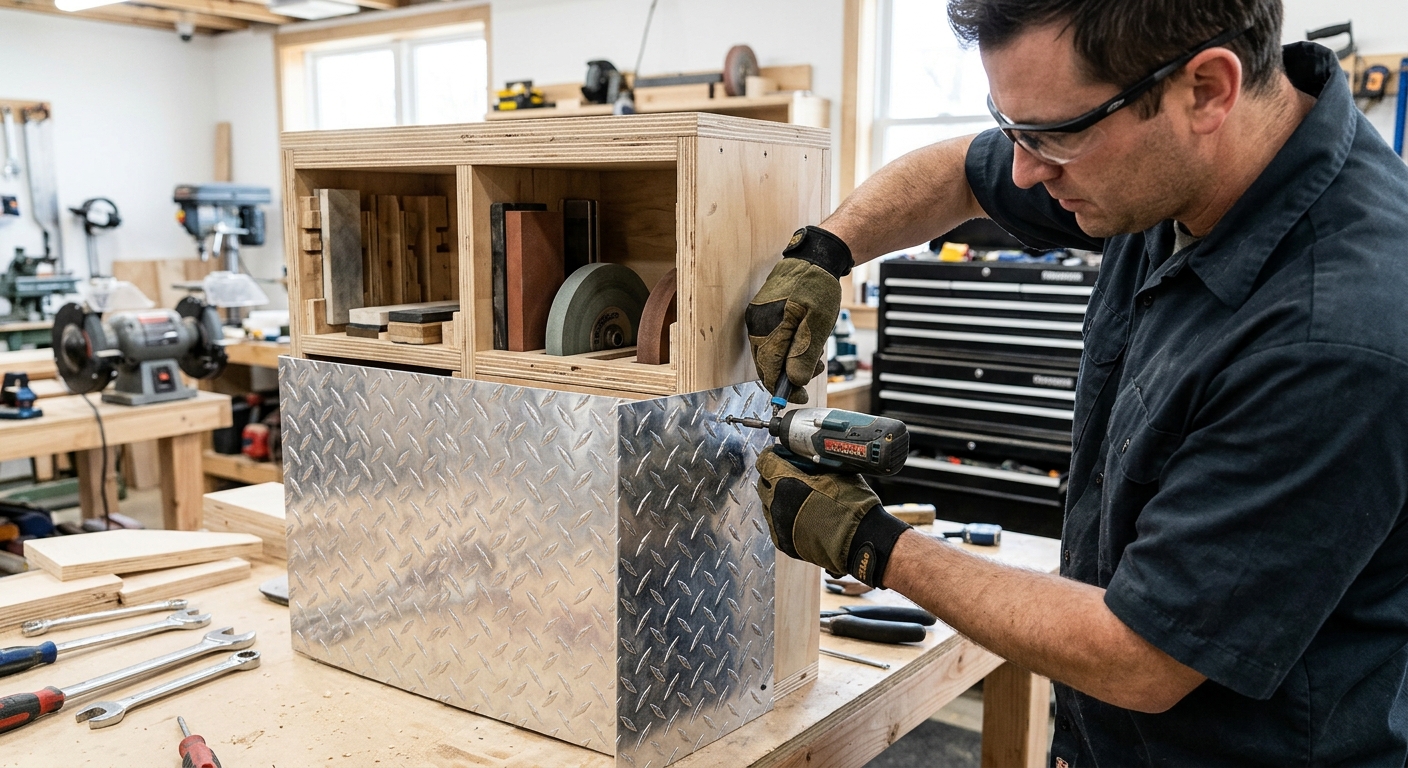
Diamond plates are the most durable sharpening media and the easiest to store. They can lay flat, stand upright, or hang on a hook. The main protection needed is keeping them from scratching other tools – the diamond surface is the same hardness as everything else in the shop, and a diamond plate stored face-down on a metal tool will leave marks. Store them face-up on a shelf or hang them face-out on a hook.
Step 5 – Build the Sharpening Abrasive Cabinet
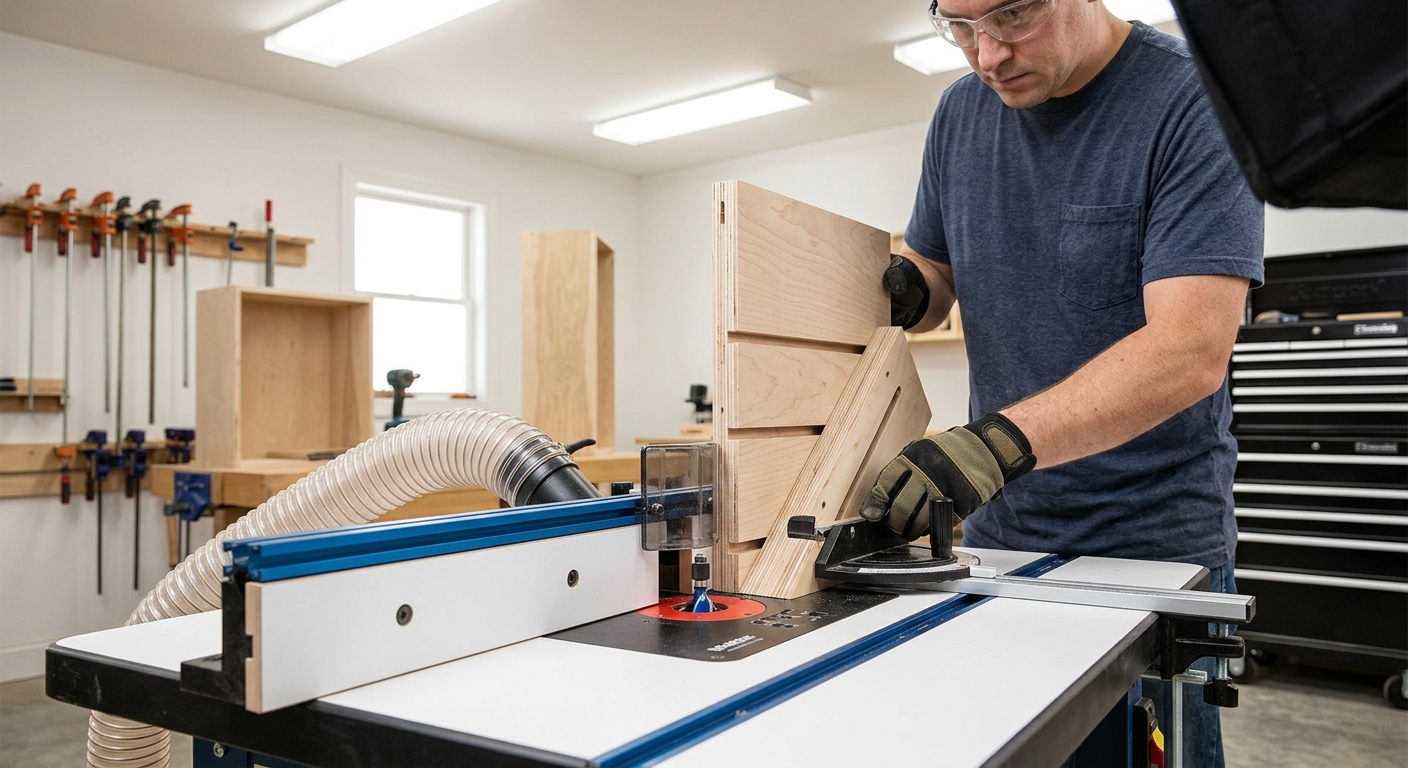
A dedicated small cabinet (12 x 18 x 12 inches is typical) with adjustable shelves provides the right storage for all sharpening media. Each type gets its own shelf: grinding wheels on the bottom, oil stones in the middle, waterstones with a drip tray on a shelf that pulls out for drainage, diamond plates hanging on the door interior.
FAQ
How do I check if a grinding wheel is safe to use? The ring test: hold the wheel lightly on your finger through the arbor hole and tap it gently with a wooden mallet. A sound wheel gives a clear ringing tone. A cracked wheel gives a dull thud – do not use a wheel that thuds during the ring test.
Do waterstones need to be soaked before use? Traditional Japanese waterstones benefit from soaking for 5 to 10 minutes before use. Modern synthetic waterstones from King or Norton can be used with surface water only. Check the manufacturer’s recommendation for your specific stones.