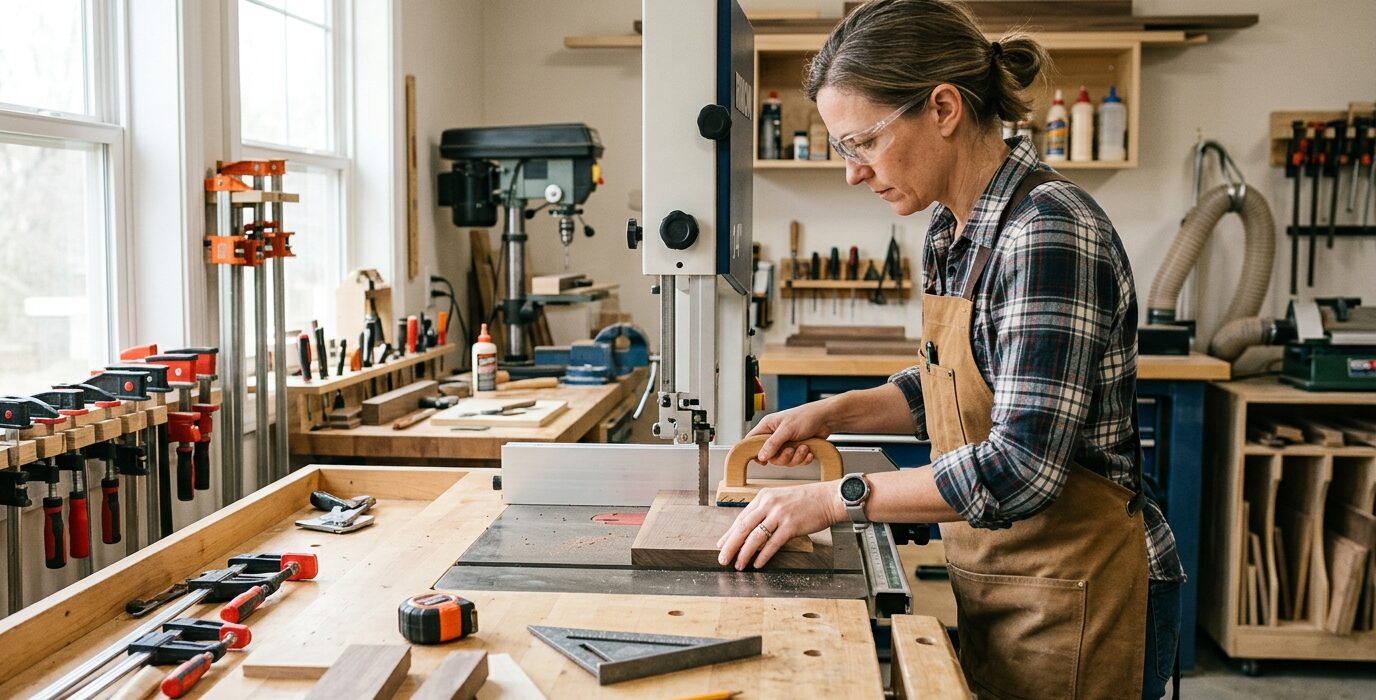
How to Prevent and Fix Workpiece Movement During Cuts
Workpiece movement during a cut is one of the most common sources of inaccurate work in the home shop. A board that shifts during a table saw rip produces a tapered cut instead of a parallel one. A board that rocks during a router table pass produces an uneven profile. Understanding why workpieces move – and how to prevent it – transforms the consistency of your work.
Why Workpieces Move
- Insufficient downward pressure: The workpiece lifts during the cut
- Lack of lateral support: The workpiece moves away from the fence
- Cutting force direction: Climb cuts and upcut spiral bits push workpieces away
- Uneven workpiece: A warped board rocks on the table surface
- Dull tooling: Dull blades and bits require more feed force, which creates more movement tendency
Solutions for Table Saw Work
For ripping: use featherboards to hold the workpiece against the fence AND against the table surface simultaneously – one featherboard for each direction. Position the fence featherboard just ahead of the blade (not behind it). A fence that the workpiece contacts consistently throughout the full cut is essential – if the fence has any play, address it before the cut.
Solutions for Router Table Work
A featherboard before the bit holds the workpiece against the fence. A second featherboard after the bit holds it in the cut profile. A starting pin provides the pivot point for starting freehand curve cuts – without it, the bit catches the leading corner of the workpiece and kicks it out violently. Always use a starting pin and then pivot to the fence for straight router table cuts.
Solutions for Hand Work
For handplane work: a planing stop at the far end of the bench resists the forward force. Bench dogs and holdfasts resist the tendency to move sideways. The key is that the workpiece needs to be held in three directions: down to the bench, forward against the stop, and laterally by the bench edge or a dog.
Dealing with Warped Workpieces
A warped board that rocks on the table surface is the most problematic situation. For table saw work, the high spots on the workpiece bottom can cause the workpiece to rock out of the fence during the cut. Joint the face flat before ripping any board with a cup or twist greater than 1/16 inch. Never rip a severely warped board – it’s one of the most common causes of table saw kickback.
FAQ
Can I use double-sided tape to hold workpieces? Yes – for router work on small pieces where clamps don’t fit, double-sided tape to a larger carrier piece provides secure hold-down. Use tape rated for the operation – thin office tape won’t hold; carpet tape or tool tape is appropriate.
What’s the best featherboard material? Commercially made featherboards from polycarbonate with T-track mounting are the most consistent and easiest to adjust. Shop-made wooden featherboards work well but must be checked for consistent finger pressure before each setup.