How to Quietly Do Woodworking in a Neighborhood
Shop noise is a real issue for woodworkers in residential settings. A table saw at peak load generates 100 to 105 dB. A router can hit 110 dB. These levels are audible three or four houses away and are grounds for noise complaints in most municipalities. This guide covers the practical steps to reduce shop noise both at the source and through shop design, making neighborhood-friendly woodworking possible without sacrificing capability.
The Noise Sources to Address
- Table saw blade: The combination of the motor and the blade cutting generates significant noise. An anti-vibration blade (thicker plate, expansion slots) significantly reduces table saw noise.
- Router: High-RPM routers are the loudest tools in the shop. A variable-speed router at lower RPM when possible is noticeably quieter.
- Dust collector: Many dust collectors are extremely loud, especially single-stage shop vac-style collectors. A cyclone separator with a quieter impeller motor is a significant noise reduction.
- Compressor: A pancake compressor is notably louder than a belt-drive upright compressor. Running the compressor during acceptable hours and using a remote-mount location reduces impact.
Step 1 – Insulate the Garage
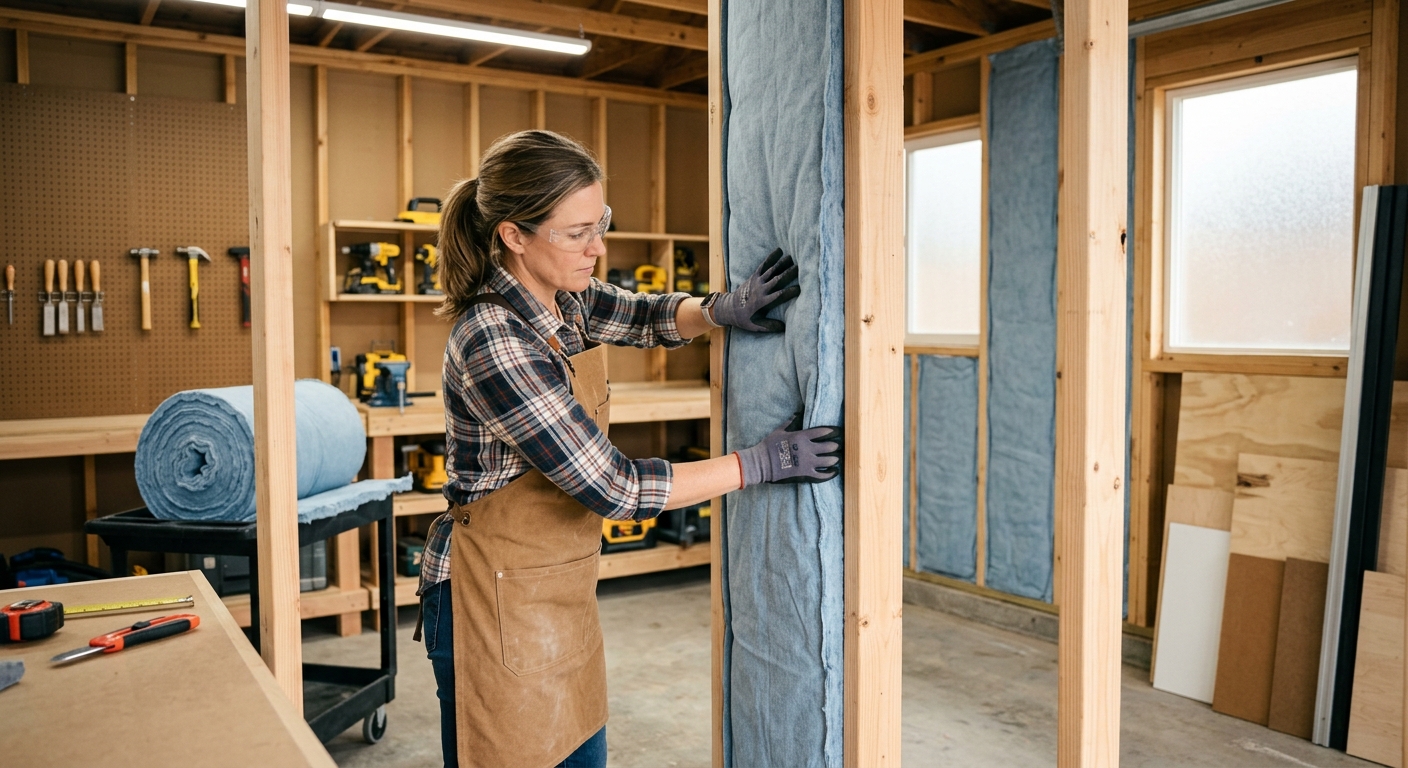
Insulation reduces noise transmission as a secondary benefit to thermal control. R-13 batts in the garage walls and R-19 in the ceiling reduce both heat loss and noise transmission to neighbors. The garage door is the biggest weak point – a solid-panel steel door with an insulated core transmits less noise than a hollow aluminum panel door.
Step 2 – Work During Acceptable Hours
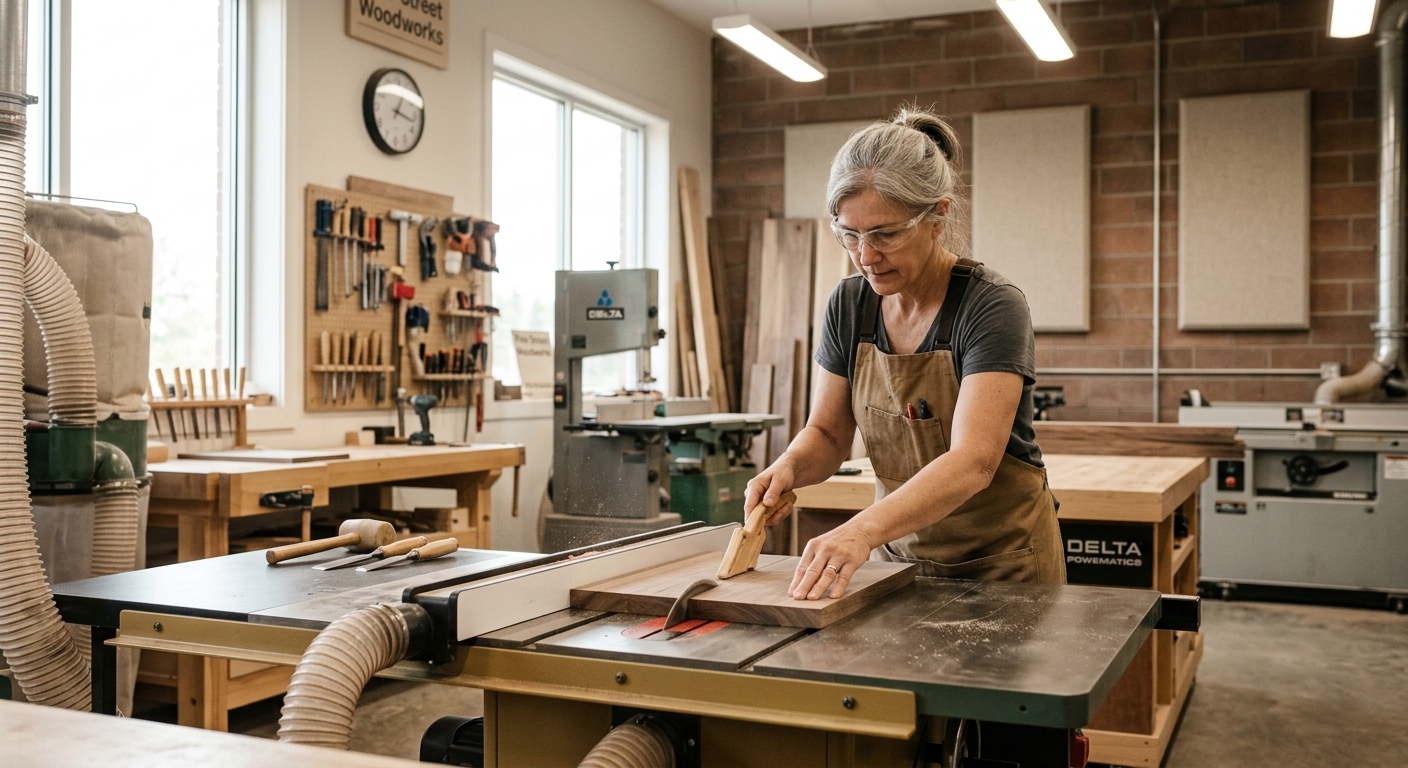
Most municipalities have noise ordinances that specify allowable hours for power tool use – typically 7 AM to 9 PM on weekdays and 8 AM to 8 PM on weekends. Working within these hours eliminates most neighbor complaints. Early morning work with power tools is the most common source of conflict.
Step 3 – Use Hand Tools for Neighbor-Sensitive Sessions
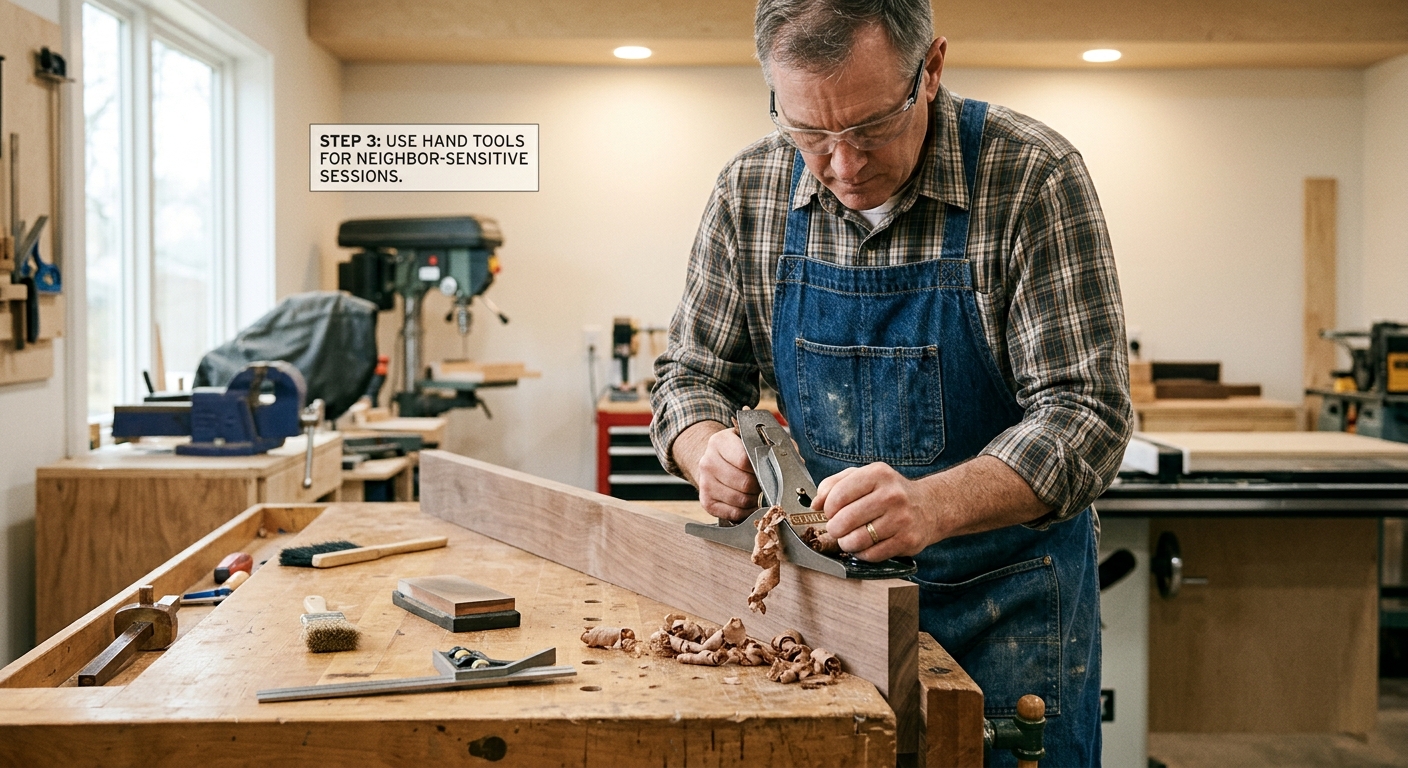
Hand tools – hand saws, chisels, planes, and mallets – generate a fraction of the noise of power tools. A session of handsaw crosscutting and hand planing that would disturb no one is possible at almost any hour. Schedule power tool work during core daytime hours and hand tool work for early mornings and evenings.
Step 4 – Reduce Transmission at the Source
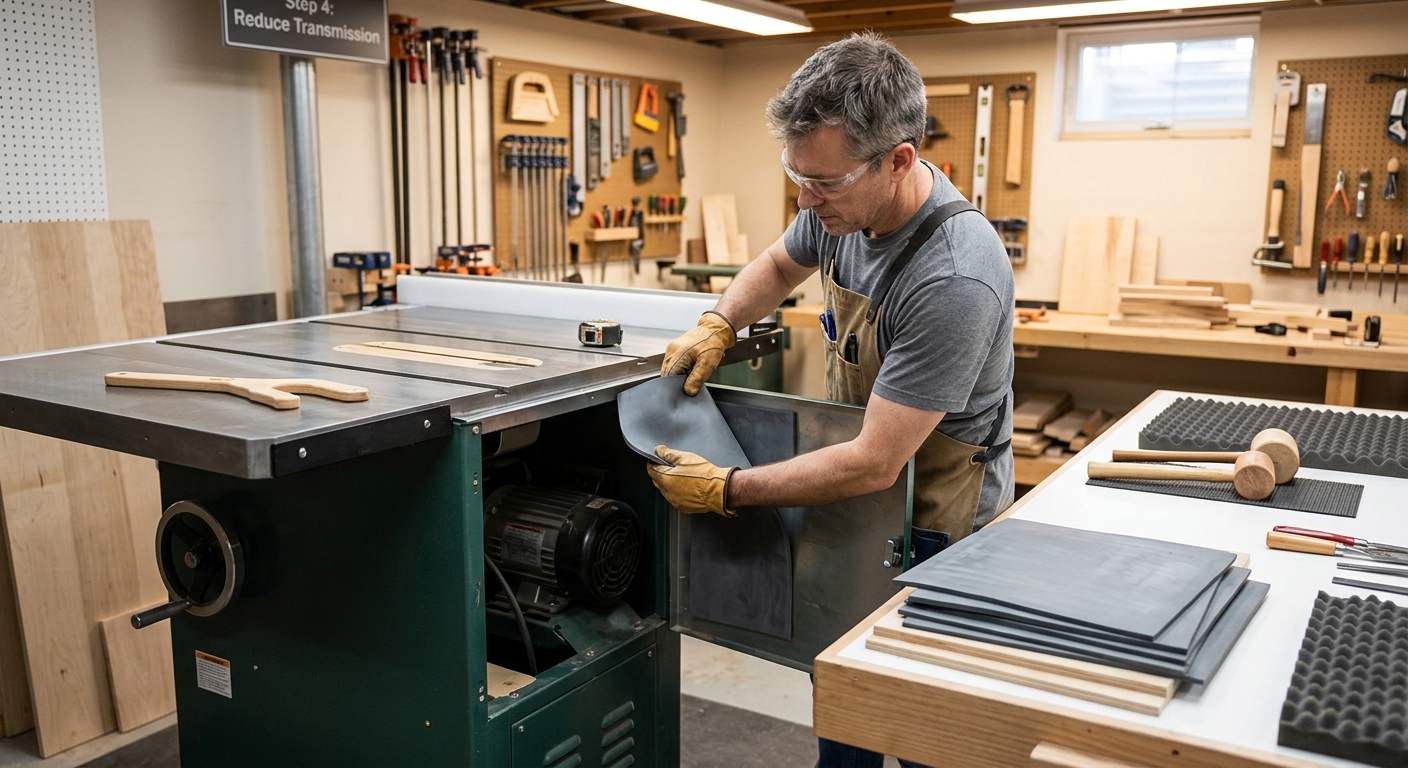
Mount machines on isolating pads (rubber anti-vibration pads under the machine feet) to reduce vibration transmission to the floor and walls. Fill wall stud bays with mass-loaded vinyl and acoustic batt insulation specifically designed for sound control rather than thermal control.
FAQ
Can I completely soundproof a garage? Complete soundproofing of a residential garage is not practically achievable without professional acoustic construction (double walls, decoupled room within a room). Meaningful noise reduction – enough to stay within normal residential limits – is achievable with insulation and thoughtful scheduling.
What’s the quietest saw for cutting lumber? A sharp handsaw is quieter than any power saw. For power options, a track saw with a blade shroud is quieter than an open blade. A slow-speed crosscut saw is quieter than a high-RPM router. Choose the quietest adequate tool for sensitive time periods.