Build a Shop in a Detached Garage on a Budget
A detached garage is the ideal shop building – separate from the house, dedicated to the craft, with exterior walls that can be modified for ventilation and electrical without affecting the house structure. Setting up a shop in a detached garage on a budget requires prioritizing investments, building what you can yourself, and being strategic about machine acquisition. This guide covers the setup sequence, the critical infrastructure investments, and the shop builds that give the best return on a constrained budget.
Step 1 – Electrical First
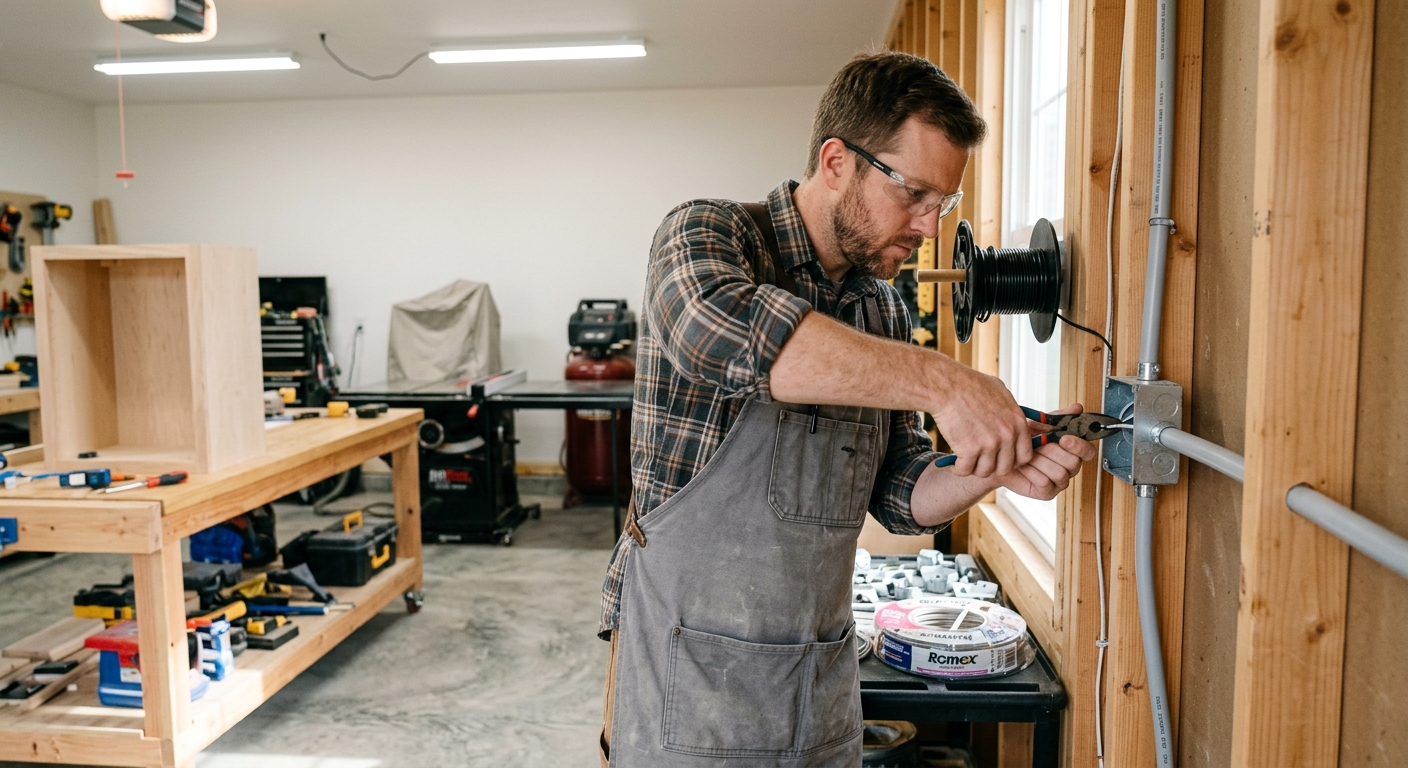
A detached garage typically has no electrical service, or has only a single lighting circuit. The first investment is a proper subpanel – a 60-amp minimum, 100-amp preferred – fed from the main house panel. This requires a licensed electrician and a permit in most jurisdictions, and costs $1,500 to $3,000 depending on the distance from the main panel and local labor rates. Every other shop investment depends on this: no electrical means no machines, no lighting, no climate control.
Step 2 – Lighting
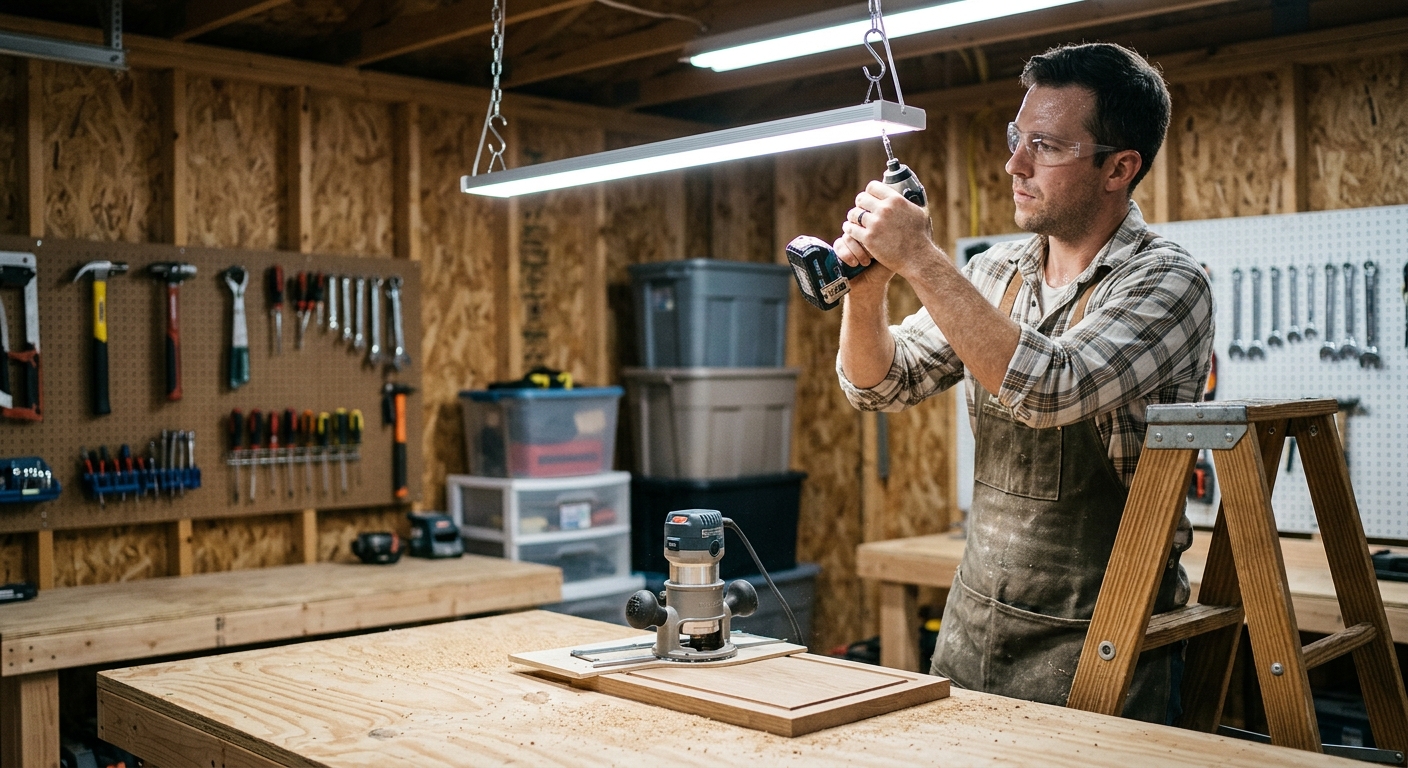
Before buying a single tool, install proper lighting. A dimly lit shop is unsafe and produces worse work. Six 4-foot LED shop lights (4,000 to 5,000 lumens each) at the ceiling provide uniform illumination across a 400-square-foot space. Total material cost: $150 to $200. A shop that’s well-lit feels bigger, safer, and more pleasant to work in – all for less than the cost of a mid-range jigsaw.
Step 3 – The Workbench
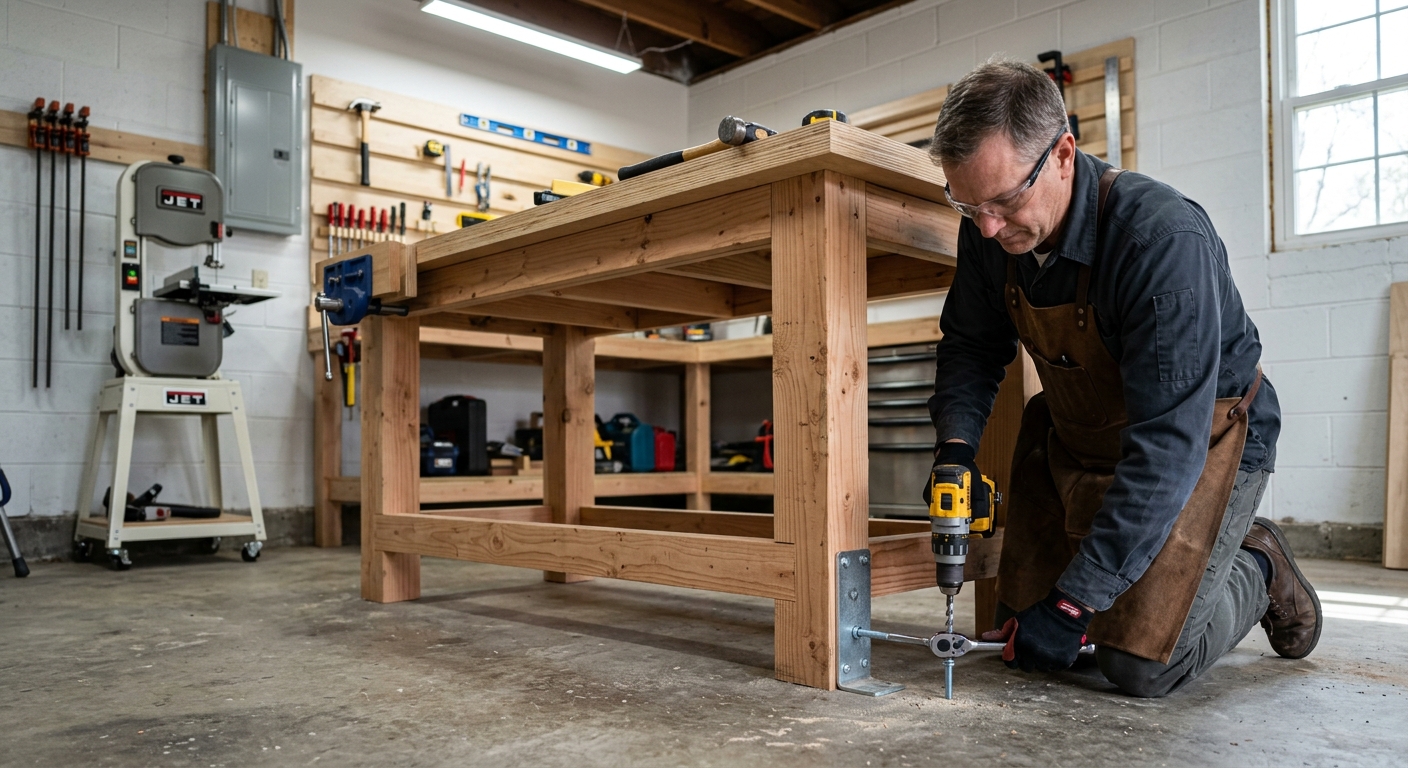
Build the workbench before buying machines. The bench is both the first major project and the foundation of everything that follows. A basic 2×4 bench with a plywood top (no vise initially) costs $100 to $150 in material. A face vise adds $60 to $100 and is worth it immediately. Build from the rough lumber plans – it goes together with a circular saw, a drill, and basic measuring tools.
Step 4 – Machine Acquisition on a Budget
Buy used from Facebook Marketplace, Craigslist, and estate sales. A contractor table saw in good condition typically sells for $200 to $400 used versus $600 to $1,200 new. A 14-inch band saw: $200 to $400 used. A lunchbox planer: $150 to $300 used. The used market for woodworking machines is excellent because most sellers are home hobbyists who bought quality machines and used them lightly. The main risk is buying a machine with a worn bearing or a damaged fence – inspect before purchasing.
Budget Allocation Guide
- Electrical: $1,500-$3,000 (non-negotiable, get quotes)
- Lighting: $150-$200
- Workbench: $100-$200
- Table saw (used): $200-$400
- Dust collection: $200-$400
- Hand tools (starter set): $200-$400
- Remaining budget: additional machines and organization as needs arise
FAQ
What’s the minimum viable budget for a functional detached garage shop?
Electrical ($2,000) + lighting ($200) + bench ($150) + hand tools ($300) = $2,650 before any power tools. This gets you a fully lit, powered shop with a solid bench and the hand tools to do real woodworking. Add a used table saw ($300) for a total of about $3,000 and you have a functional power tool shop.
Should I insulate the garage first?
Insulate the walls and door if you plan to use the shop year-round in a cold climate. Insulation costs $500 to $1,500 for a one-car garage and dramatically changes the comfort and usability of the space in winter. If you’re in a mild climate, insulation is less critical and can be deferred.