Build a Grinding Wheel Storage Rack
Grinding wheels are fragile – a crack in a wheel that’s not visible to the naked eye can cause the wheel to shatter at operating speed, which is a serious safety hazard. Proper storage prevents the impacts and contact that cause grinding wheel cracks. A dedicated wall-mounted rack keeps wheels separated, labeled, and protected between uses, extending wheel life and maintaining the safety standard that grinding wheel use requires.
Materials
- 1×8 or 1×10 board, 24 to 36 inches long
- 3/4-inch dowel sections, 3 inches long each
- Wood glue and screws
- Foam pipe insulation to pad the dowels
- Mounting hardware for wall attachment
Step 1 – Inventory Your Wheels
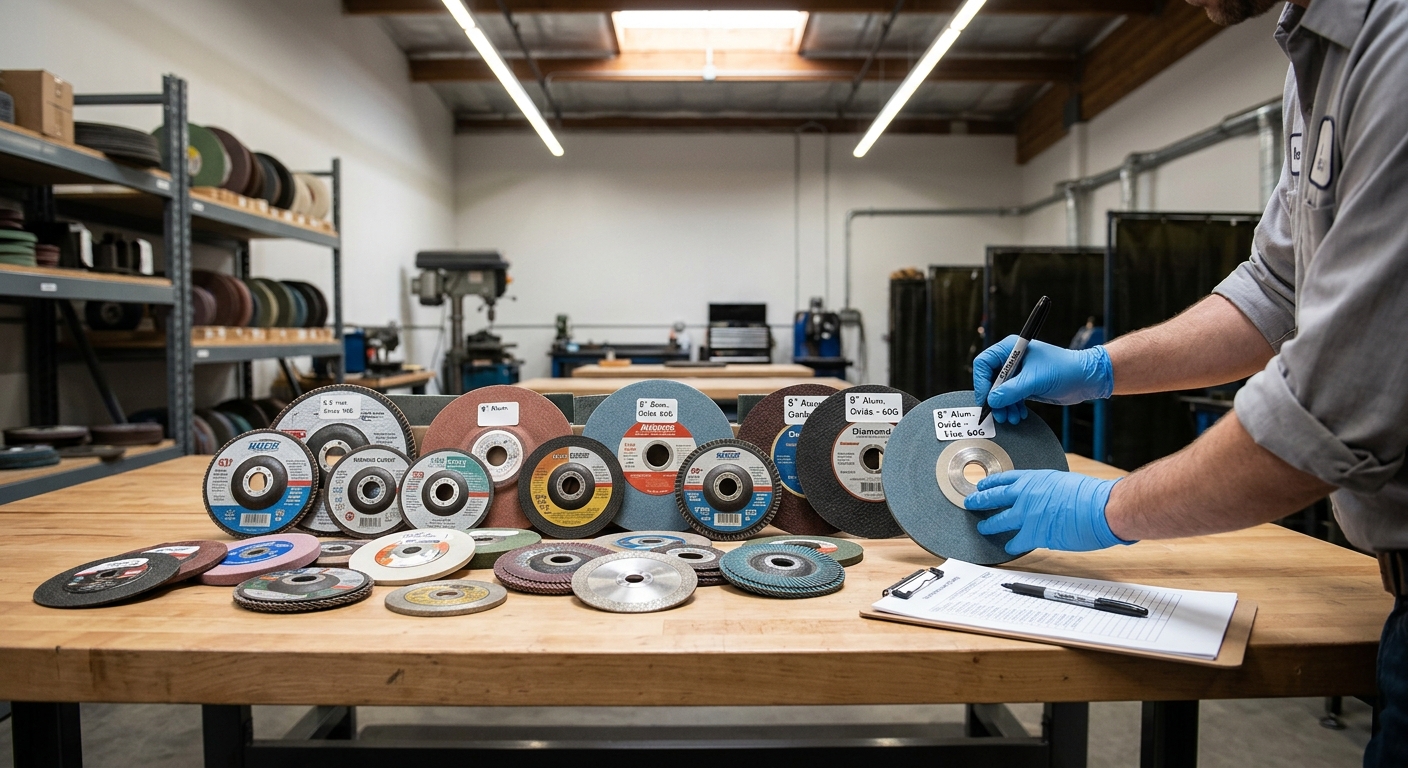
Count every grinding wheel, flap disc, cut-off wheel, and wire wheel. Note the arbor hole size (typically 5/8 inch or 1 inch) and the outer diameter. Most bench grinder wheels are 6 or 8 inches in diameter with a 1-inch arbor hole. Angle grinder wheels are 4.5 or 5 inches in diameter with a 5/8-inch arbor hole.
Step 2 – Build the Wheel Holders
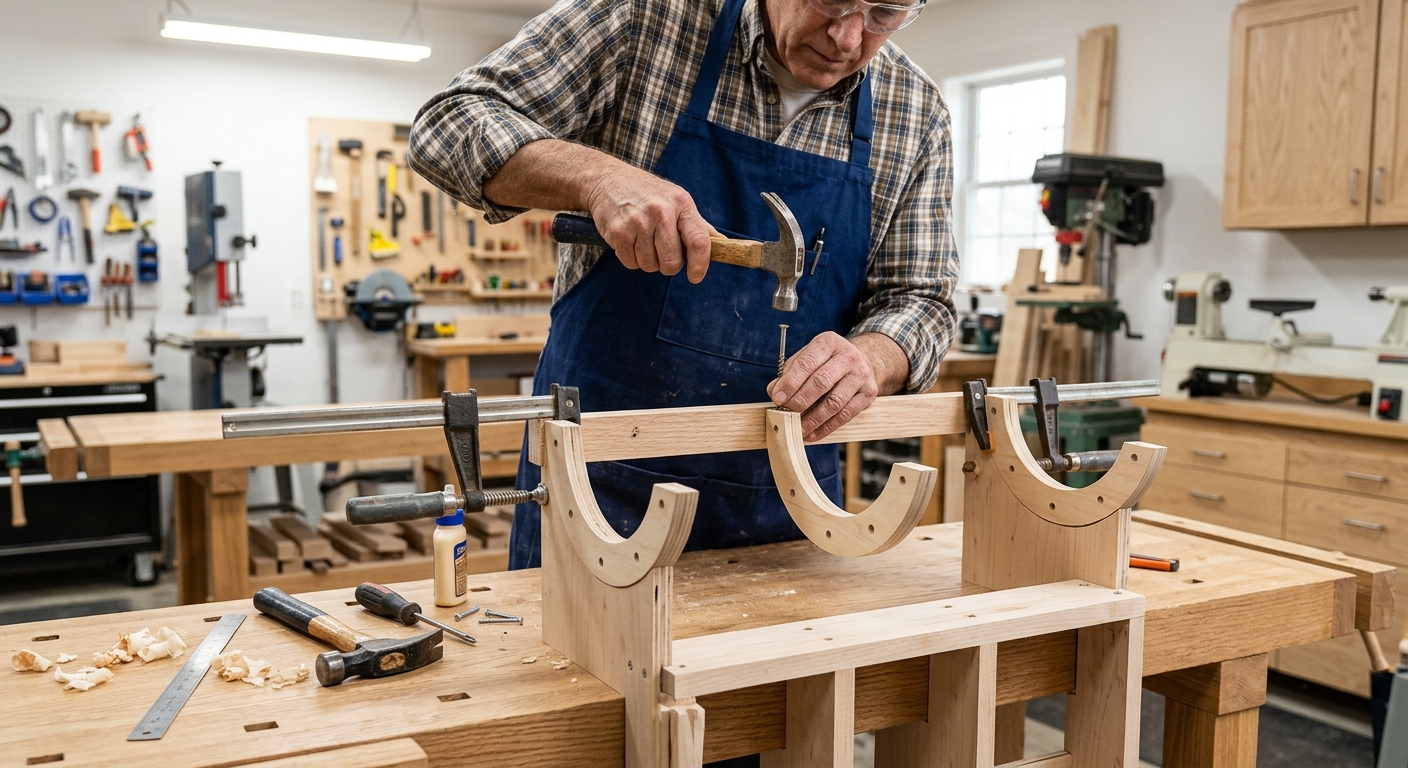
Each wheel holder is a dowel sized to the arbor hole of the wheel – the wheel slips over the dowel and hangs horizontally. For 1-inch arbor holes, use 3/4-inch dowel with the foam insulation sleeve to center the wheel and prevent contact with bare wood. For 5/8-inch arbor holes, use 1/2-inch dowel with foam insulation. Drill angled holes in the board (15 degrees upward) so wheels can’t slide off accidentally.
Step 3 – Space for Wheel Separation
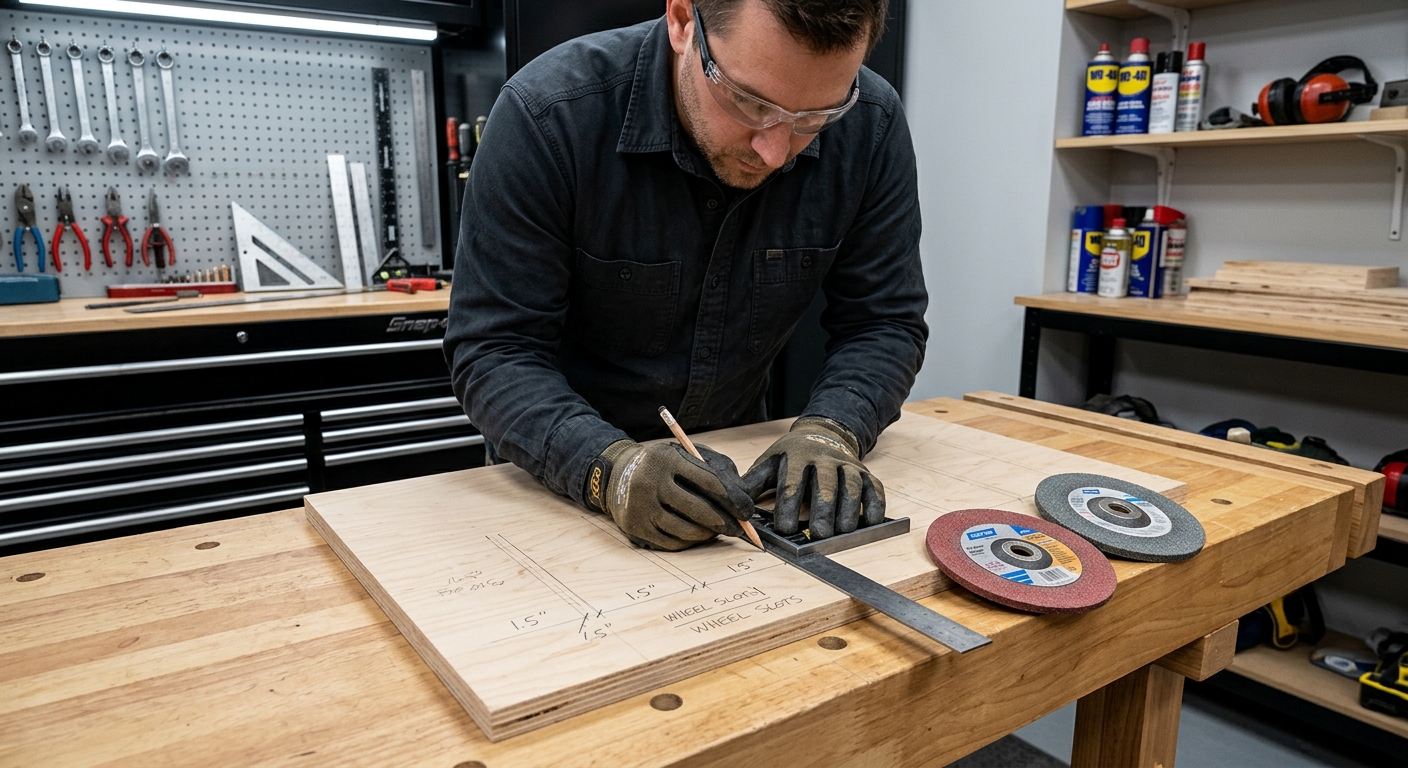
Space wheel holders at least 3 inches apart so wheels don’t contact each other on the rack. Grinding wheel contact in storage is the most common source of undetected cracks in home shop wheels. Adjacent wheels that knock together vibrate in ways that create micro-fractures invisible before the wheel is used.
Step 4 – Label Each Position
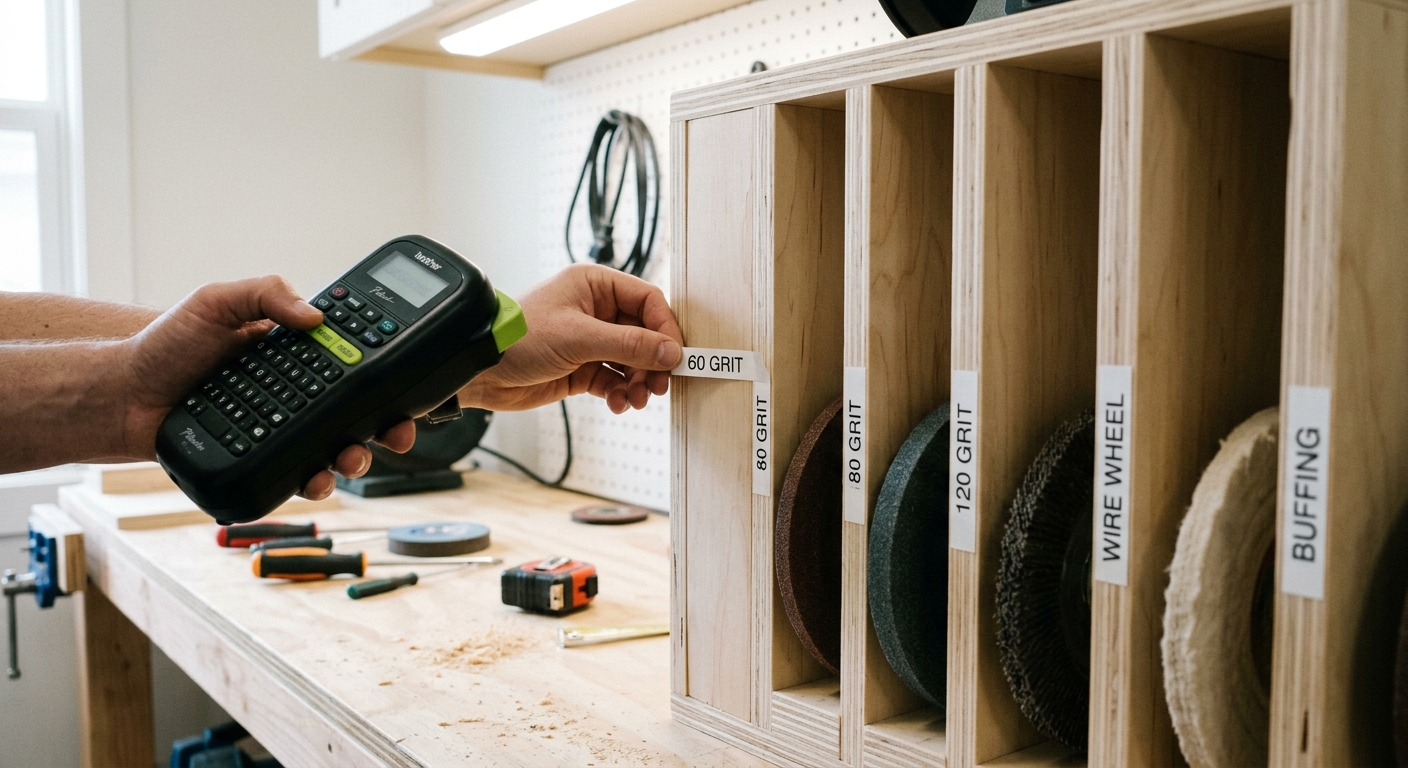
Label the position below each dowel with the wheel type, grit, and arbor size. This makes selection fast and ensures wheels return to the right position – further separating different grit levels that shouldn’t be mixed.
FAQ
How do I test a grinding wheel for cracks before use?
Ring test: suspend the wheel on a pencil through the arbor hole and tap it with a wooden mallet. A sound wheel produces a clear ringing tone. A cracked wheel produces a dull thud. Never use a wheel that fails the ring test. This test takes 5 seconds and should be standard practice before mounting any grinding wheel.
How long do grinding wheels last?
Vitrified grinding wheels (the standard bench grinder wheel) have no defined shelf life if stored correctly – they don’t degrade chemically over time. Resinoid-bonded wheels (most angle grinder wheels) have a maximum date printed on the wheel; use before this date is recommended by manufacturers.