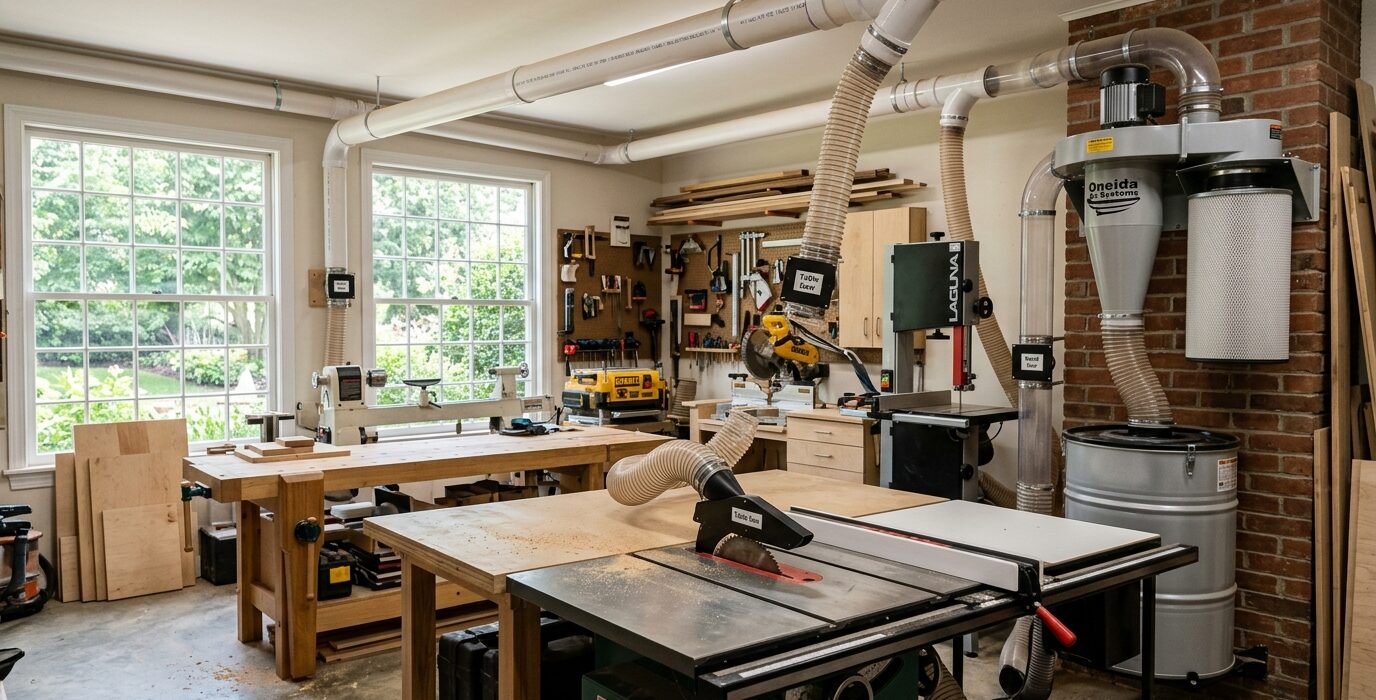
Real Dust Control Without Breaking the Bank
Woodworking dust is not just a mess problem – it’s a health problem. Fine wood dust, particularly from hardwoods like walnut, cherry, and oak, is a known carcinogen with long-term lung health implications. A proper dust collection system removes fine particles at the source before they become airborne. Here’s how to build effective dust collection on a budget without compromising on actual particle capture.
Understanding What You’re Fighting
Dust collectors are rated by two measures: air volume (CFM – cubic feet per minute) and filtration rating (micron rating). Most woodworking dust hazard comes from particles smaller than 10 microns – too small to see but deep enough to reach your lungs. A 5-micron filter bag or cartridge filter stops 99% of these particles. A 30-micron bag (still common on budget machines) passes the most dangerous particles right through.
Budget Dust Collection Hierarchy
- Level 1 ($100-$200): A single-stage 1-1/2 HP dust collector with a 5-micron filter bag. Handles one tool at a time. Adequate for a small shop.
- Level 2 ($300-$600): Two-stage (separator + collector) with 1-micron canister filter. Handles larger debris without clogging the fine filter. Better capture.
- Level 3 ($800+): 3-5 HP collector with 1-micron pleated canister, permanent ducting, and blast gates at each machine. Near-professional capture rates.
Step 1: Start With the Machines That Matter Most
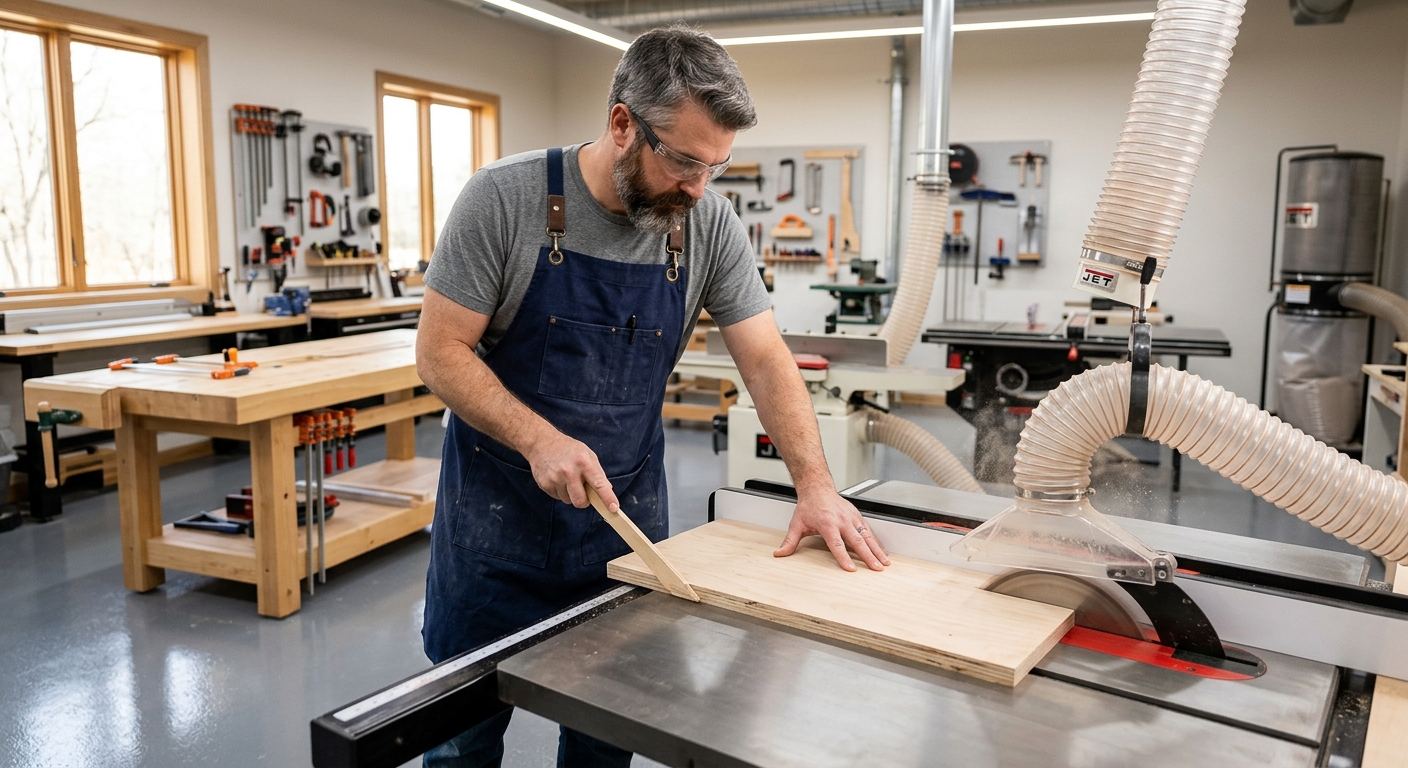
Priority order for dust collection in a shop: router table (fine dust, high volume), table saw (medium dust, high volume), orbital and belt sanders (fine dust, medium volume), miter saw (coarse chips, moderate volume). Connect your dust collector to these in priority order. The jointer and planer produce chips that can often be contained with a chip chute rather than full ducting.
Step 2: Add a Dust Separator
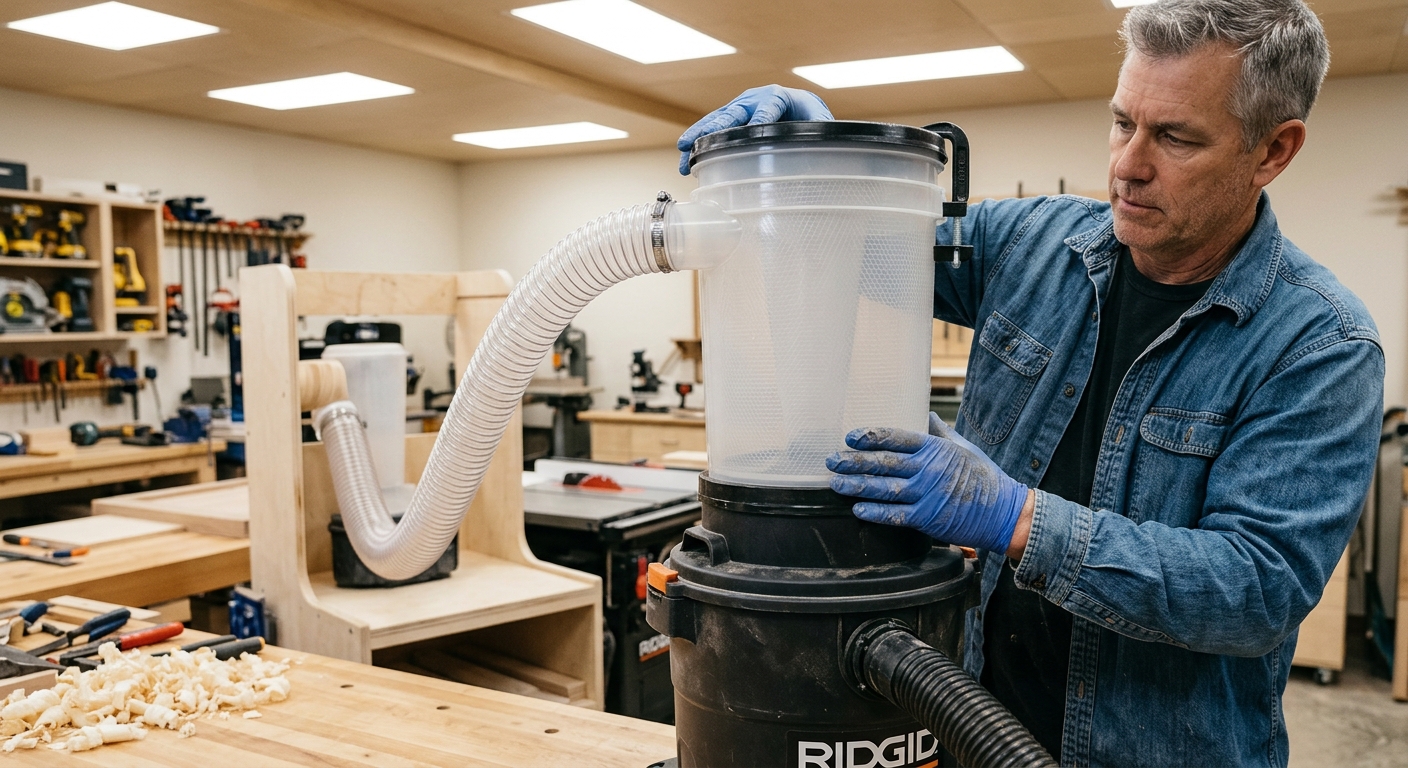
A cyclone separator (commercial or shop-made from a bucket and a cyclone lid) sits between the machines and the collector. It separates 90%+ of chips before they reach the collector bag, dramatically extending filter cleaning intervals and preventing bag clogging. A Dust Deputy or Oneida cyclone separator costs $50-$100 and is the best single upgrade for any dust collection system.
Step 3: Use 4-Inch Hose Throughout
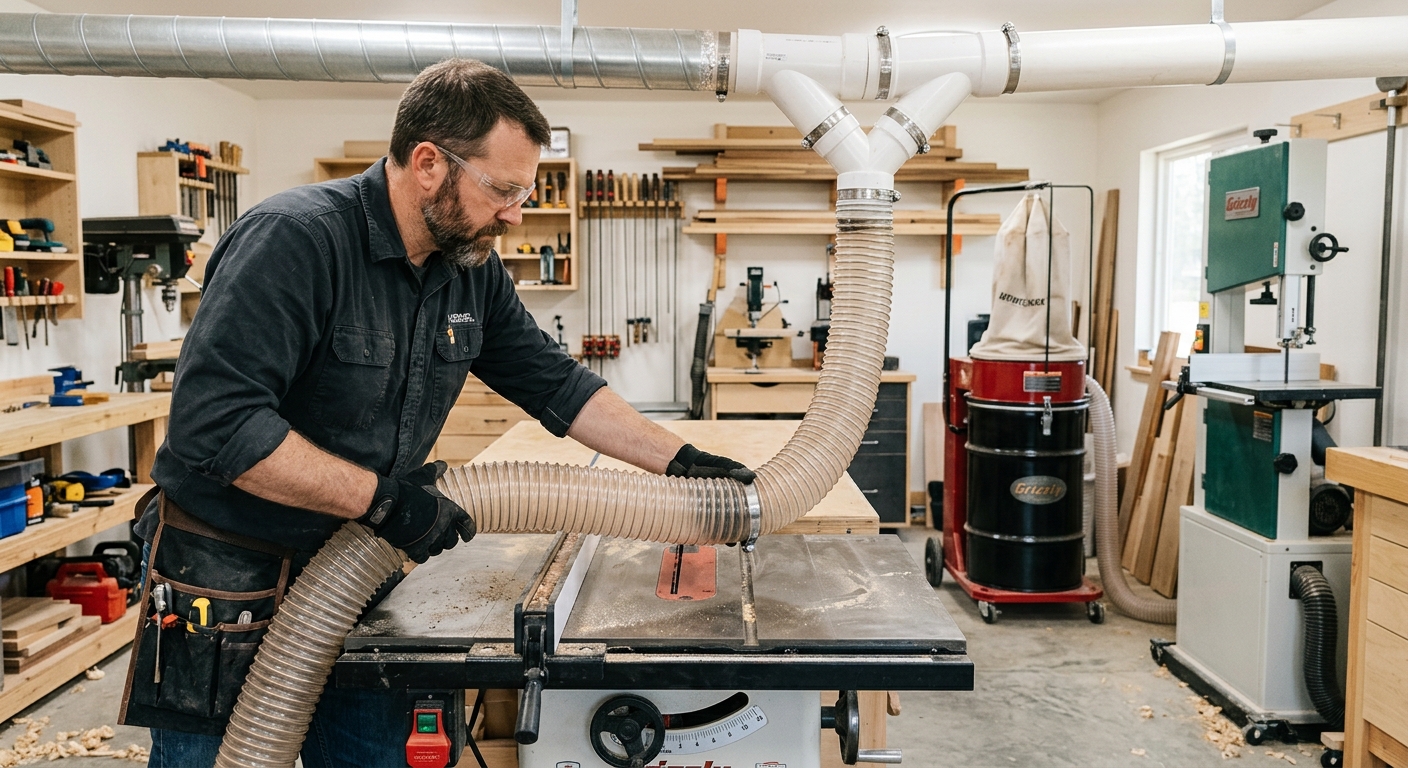
Dust collection efficiency drops sharply if you reduce duct diameter. Use 4-inch flex hose for all connections. Avoid 2-1/2-inch reducers except for sander connections. Long hose runs reduce CFM – keep runs under 15 feet for a portable collector, or upgrade to a larger machine for permanent ducting.
Step 4: Build a Shop-Made Dust Hood for the Miter Saw
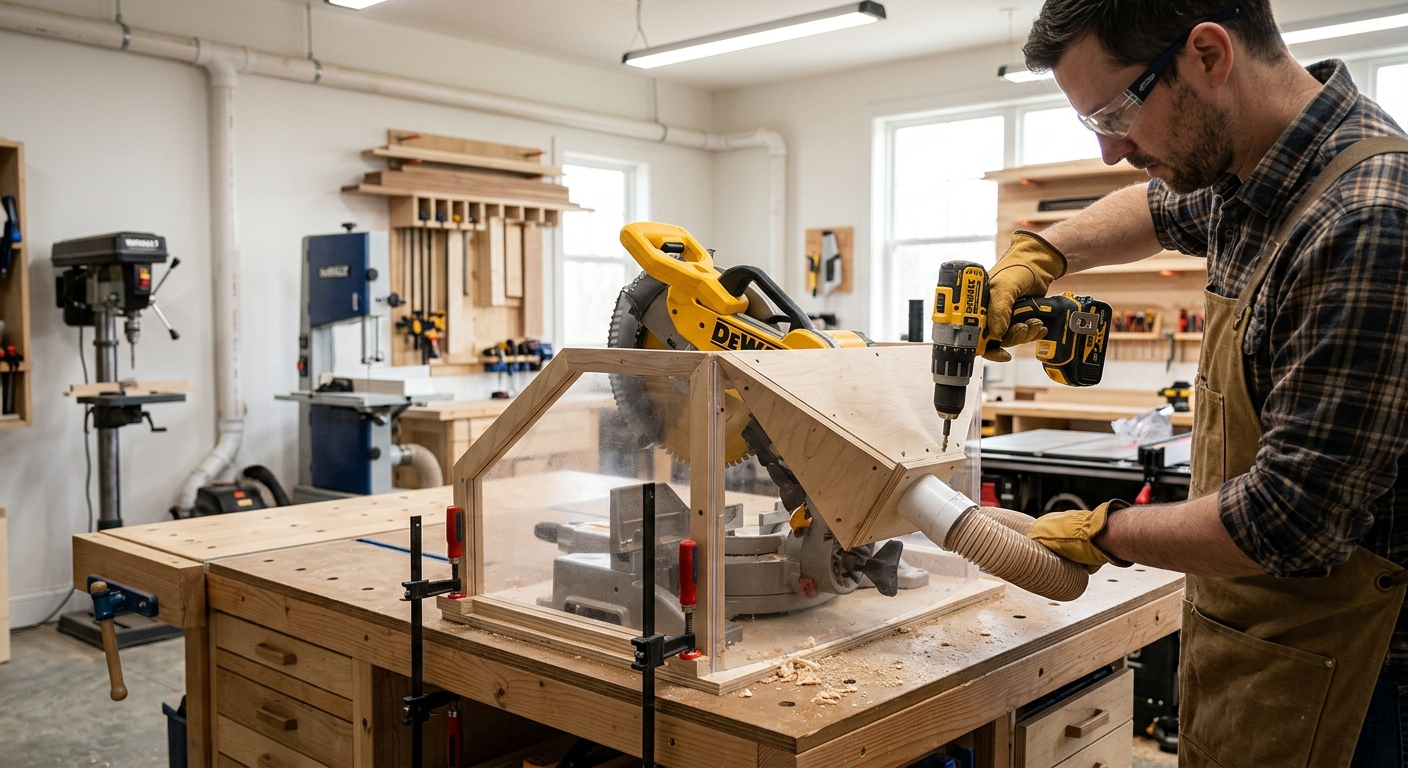
Miter saws throw chips forward and backward and are notoriously difficult to capture. A shop-made hood – a three-sided box of plywood mounted behind the saw – captures the rearward throw. Add a 4-inch hose connection to the back of the hood. You’ll capture 60-70% of miter saw dust with a well-fitted hood, compared to 20-30% with a bag-only connection.
FAQ
Do I need a HEPA filter for my dust collector?
HEPA filtration (0.3 micron, 99.97% efficiency) is ideal but expensive. A 1-micron canister filter is the practical sweet spot for most home shops – it captures the medically significant particles at a fraction of HEPA cost. If you work with a lot of finish sanding or exotic species, the investment in HEPA filtration is worthwhile.