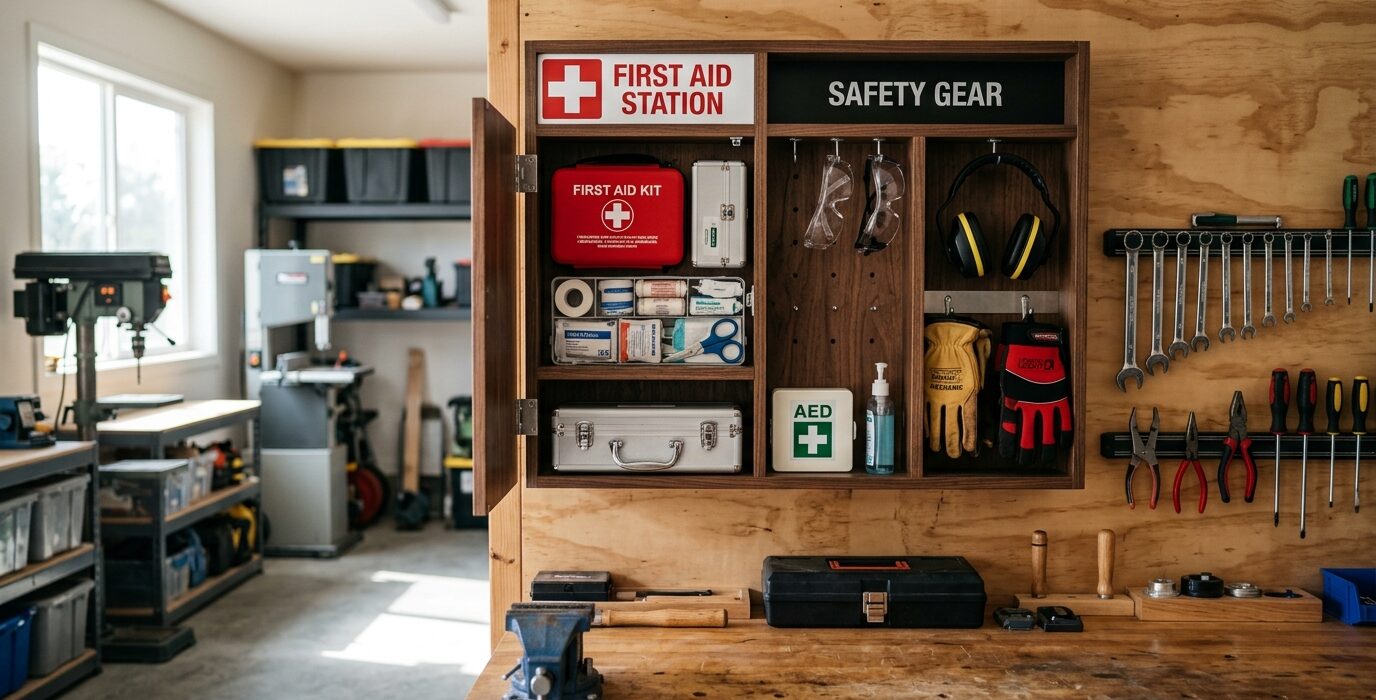
A First Aid and Safety Gear Station for the Shop
Workshop injuries happen to careful, experienced woodworkers. A splinter, a cut, a flying chip in the eye, a burn from a router bit – these are not signs of carelessness, they’re occupational realities of working with sharp tools and machinery. Having first aid supplies and safety gear immediately accessible – not in the house, not in a car, right there in the shop – is the professional approach to shop safety.
What the Safety Station Contains
First aid:
- Adhesive bandages in multiple sizes
- Non-stick pads and medical tape
- Antiseptic wipes and antibiotic ointment
- Eye wash station (saline flush bottles)
- Tweezers for splinter removal
- Nitrile gloves (for handling cuts and chemical exposure)
Safety gear:
- Safety glasses (multiple pairs – for visitors)
- Hearing protection (foam earplugs and/or earmuffs)
- Dust respirator (N95 minimum, P100 for finishing)
- Face shield (for lathe work and grinding)
- Nitrile gloves
Materials
- A commercial first aid cabinet (with ANSI/OSHA compliance labeling)
- 3/4-inch plywood for a safety gear rack beside the first aid cabinet
- Hooks and holders for the PPE items
Step 1 – Choose a Compliant First Aid Cabinet
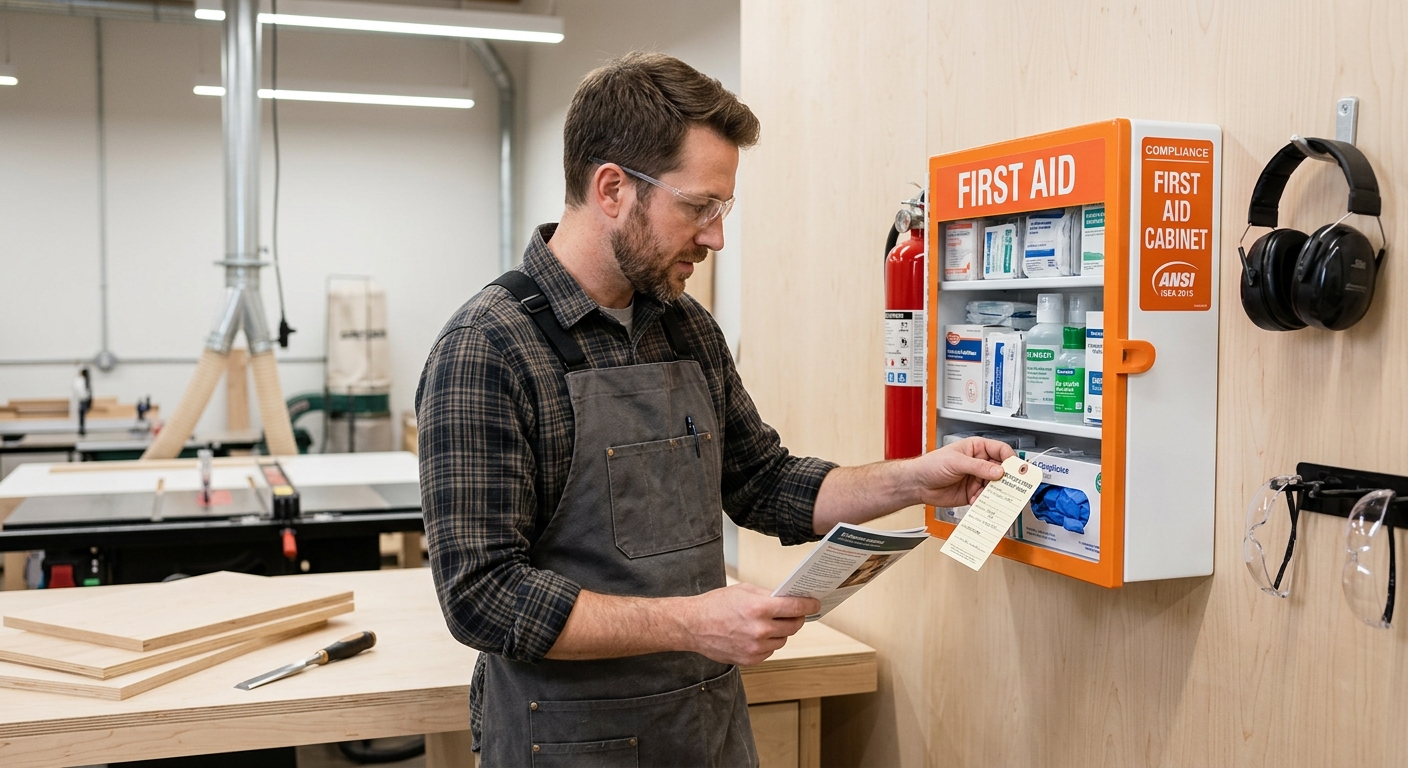
Buy an ANSI Class A or Class B first aid kit rather than assembling your own. These are designed for occupational environments with the right content for the most common injuries. A Class A kit ($25 to $60) covers minor injuries. A Class B kit ($60 to $150) handles more serious injuries. Wall-mount it in a clearly visible location near the shop entrance.
Step 2 – Add an Eye Wash Station
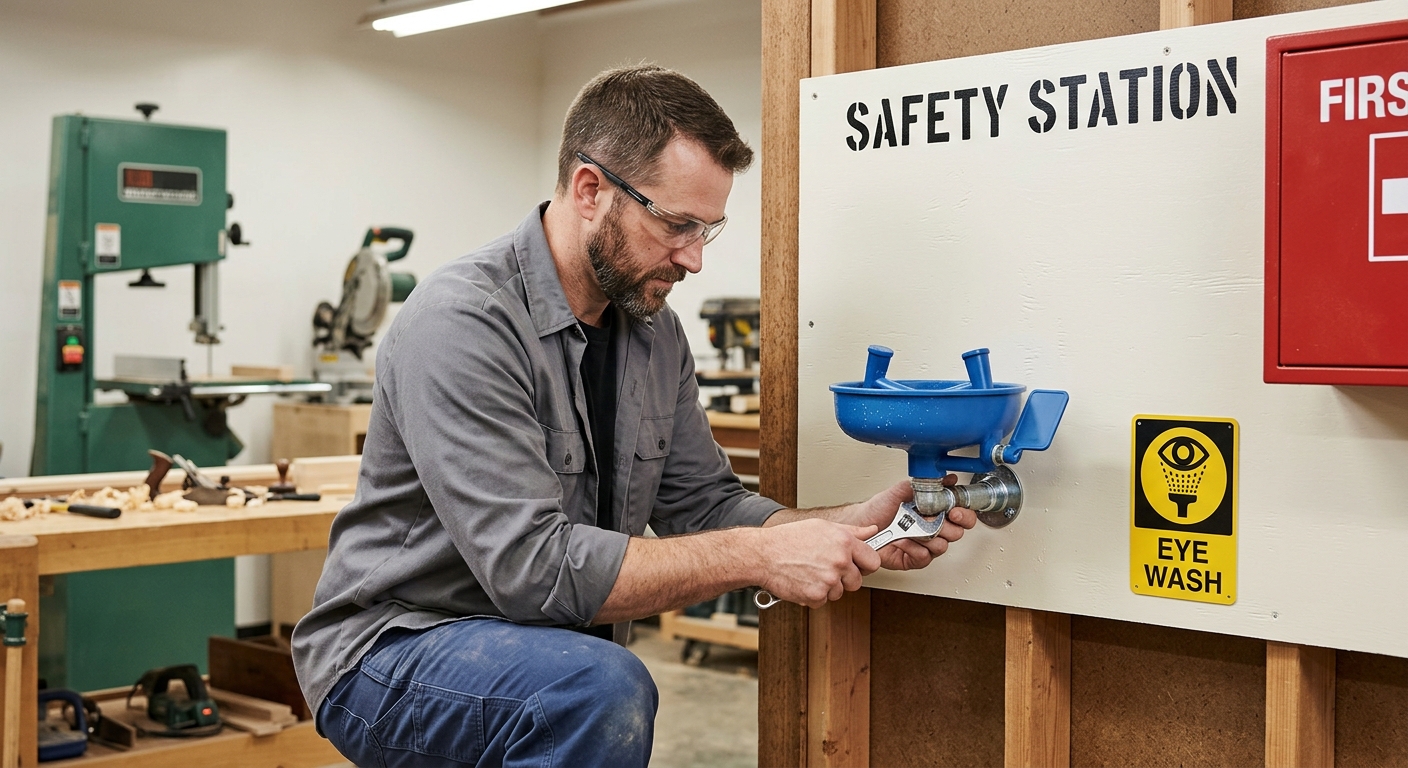
A saline eye wash station (the disposable bottle type) mounts on the wall beside the first aid cabinet. In the event of a chip or sawdust in the eye, the station is immediately accessible for a thorough flush before seeking medical attention if needed. Refresh the bottles annually – saline has an expiration date.
Step 3 – Build the Safety Gear Rack
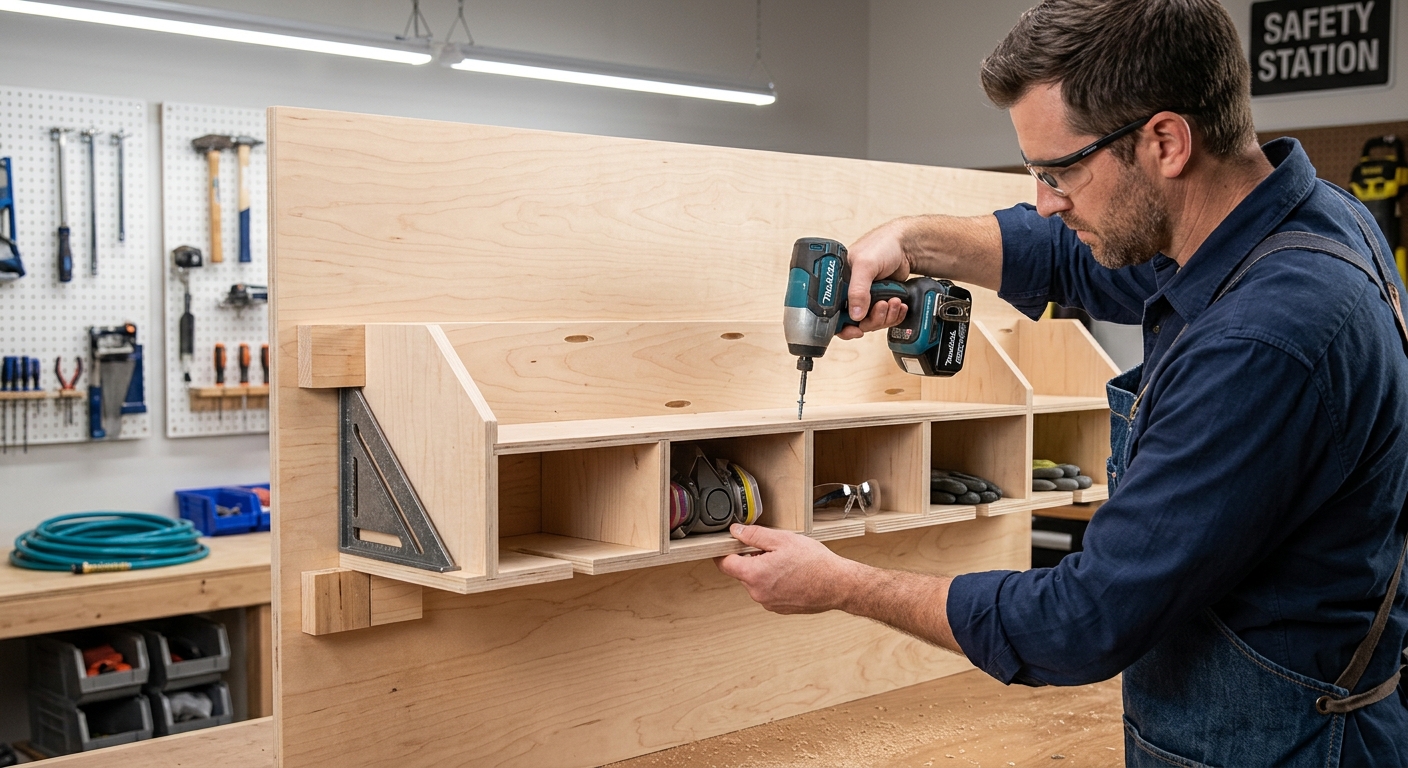
Mount hooks and holders beside the first aid cabinet for all PPE. Safety glasses on hooks, earmuffs on a wide hook, respirators in labeled slots or hanging on large pegs. The goal is that every piece of safety equipment is immediately visible and reachable at the shop entrance – you see it every time you walk in, which reinforces the habit of using it.
Step 4 – Post Emergency Information
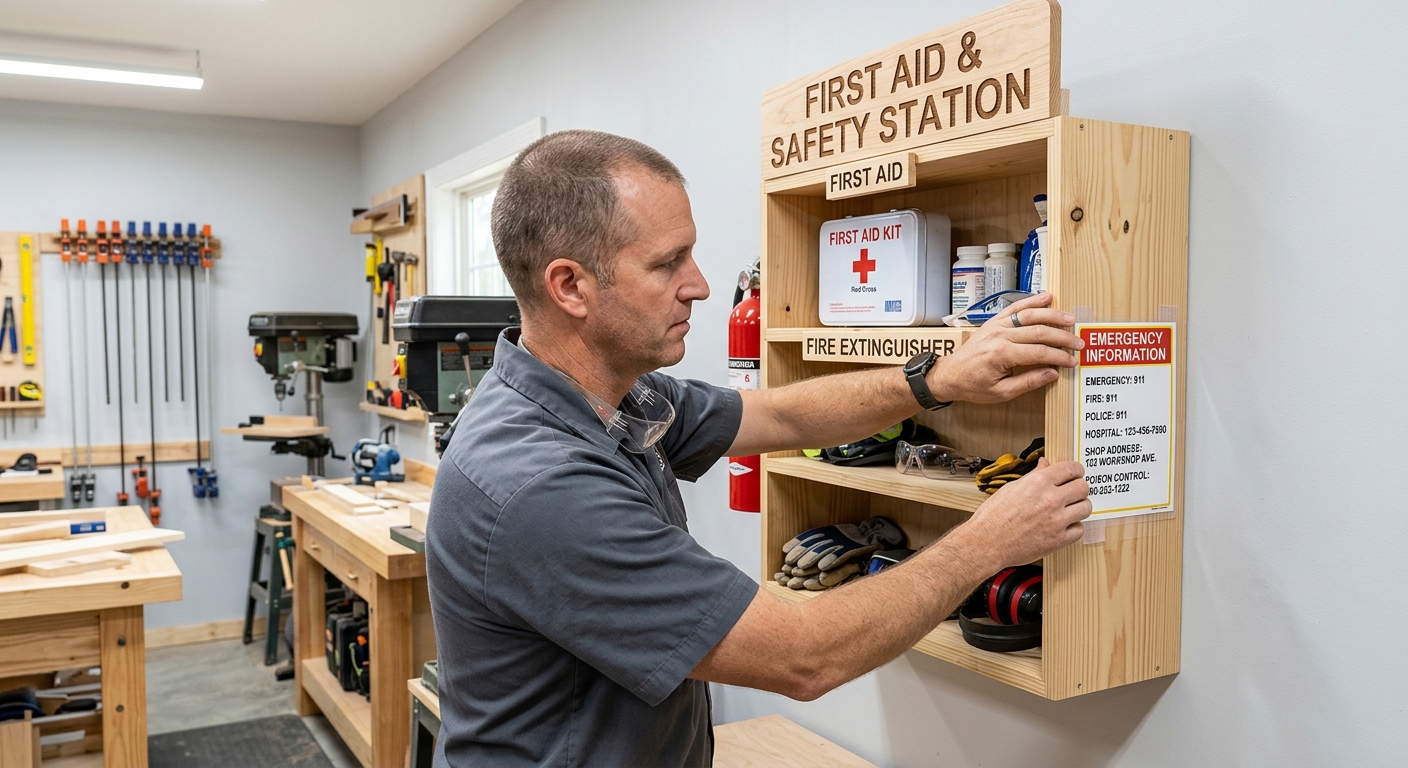
Laminate a card with: your shop address, the local emergency number, the local hospital address, and the poison control number (1-800-222-1222 in the US). Post it prominently on the wall beside the safety station. If a serious injury happens, you want this information immediately without having to look it up.
FAQ
Should I keep a fire extinguisher at the safety station? Yes – a 2.5 or 5-pound ABC extinguisher should be within arm’s reach of the shop entrance. Mount it on the wall below the safety station and make sure everyone who uses the shop knows how to use it: PASS – Pull pin, Aim at base, Squeeze handle, Sweep side to side.
How often should I restock the first aid kit? After every use – never leave a depleted first aid kit in place. Check the contents quarterly for expired items and restock anything that’s been used or is past its expiration date.