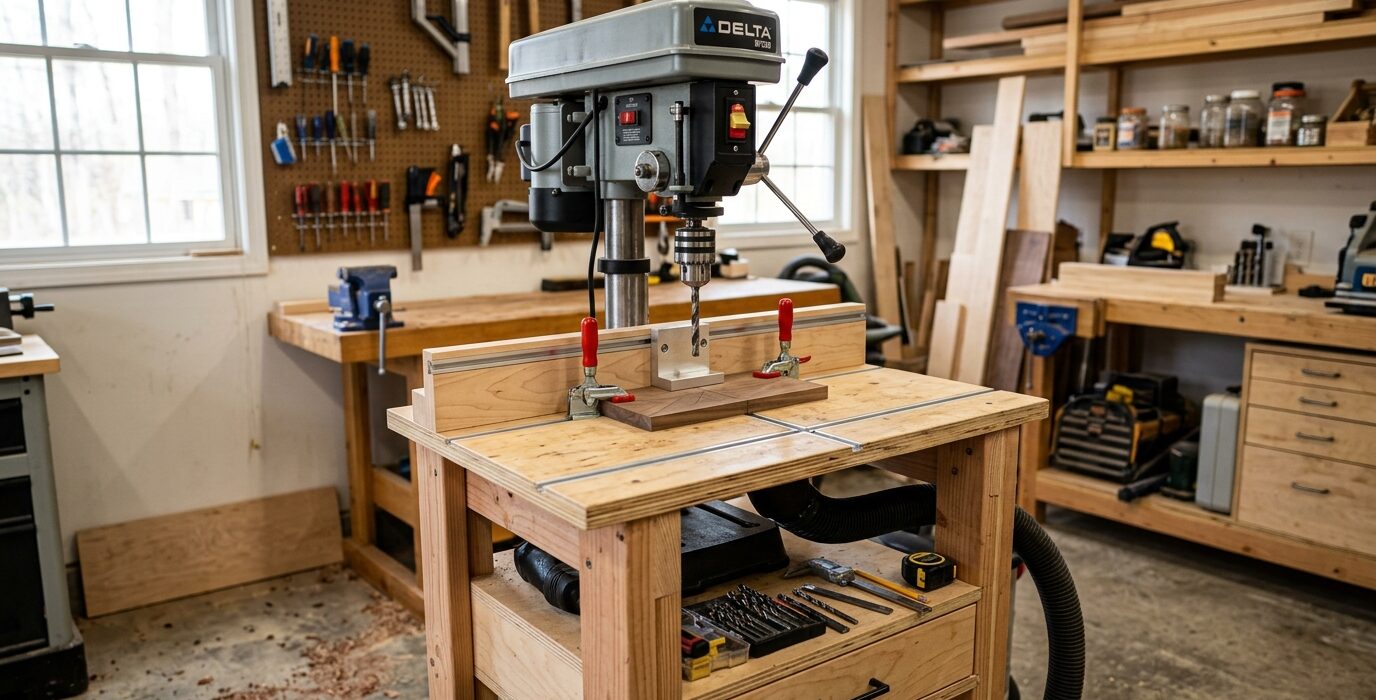
Two Tools, One Footprint in the Shop
A flip-top tool stand holds two benchtop tools on a rotating platform mounted in a storage cabinet. Flip the platform and one tool swaps for the other. The floor footprint is the same as a single tool stand. For small shops, this is one of the highest-return builds possible – two full tools in half the space.
Materials
- 3/4-inch Baltic birch plywood – one full sheet
- 2×4 lumber – 20 linear feet for the base cabinet
- Two pivot bolts: 5/8-inch carriage bolts with washers and lock nuts
- Four locking swivel casters
- T-track and star knobs for the locking system
- Wood screws – 2-inch and 3-inch
Step 1 – Build the Cabinet Base
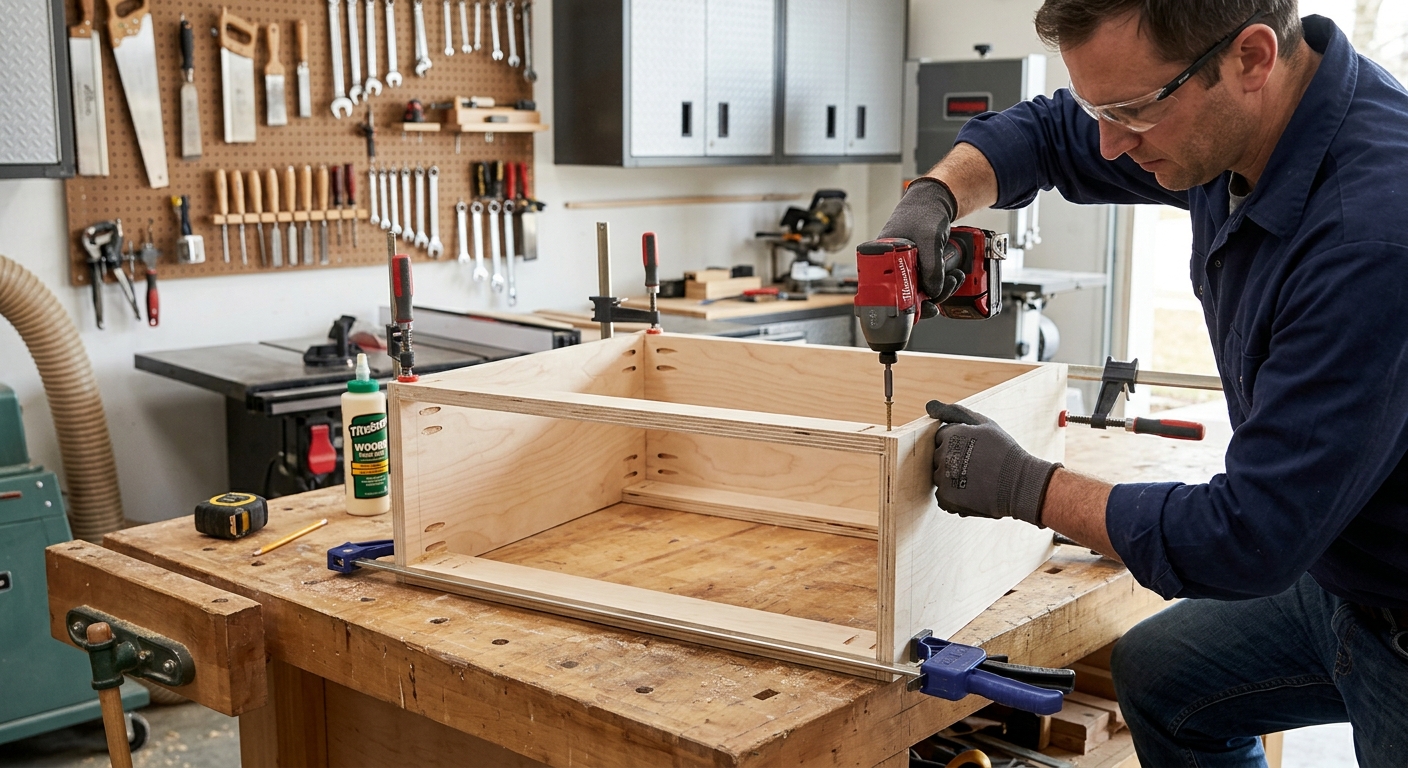
Build a plywood box: two sides, back, bottom, and interior shelves for accessories. The top of the cabinet is open – the rotating platform fits between the two side walls at the top. Size the cabinet so that when a tool is on top, it’s at comfortable working height (typically 34 to 36 inches total including the platform and tool).
Step 2 – Build and Balance the Platform
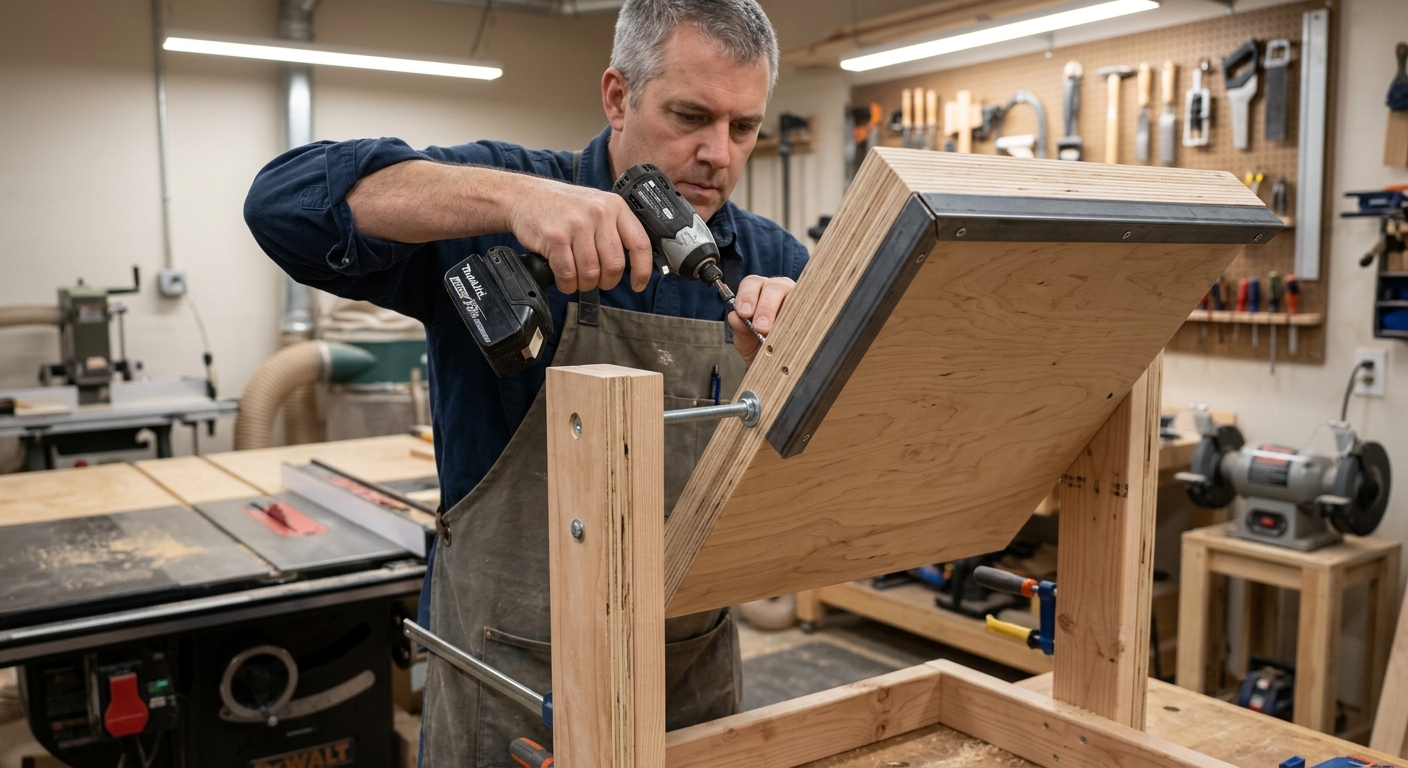
Cut the rotating platform from 3/4-inch plywood. Mount both tools on opposite faces before installing the platform in the cabinet – it’s much easier to work on a flat surface than inside the cabinet. Position both tools so their center of gravity is as close to the pivot axis as possible. Test the balance by holding the platform at the pivot point.
Step 3 – Install the Pivot System
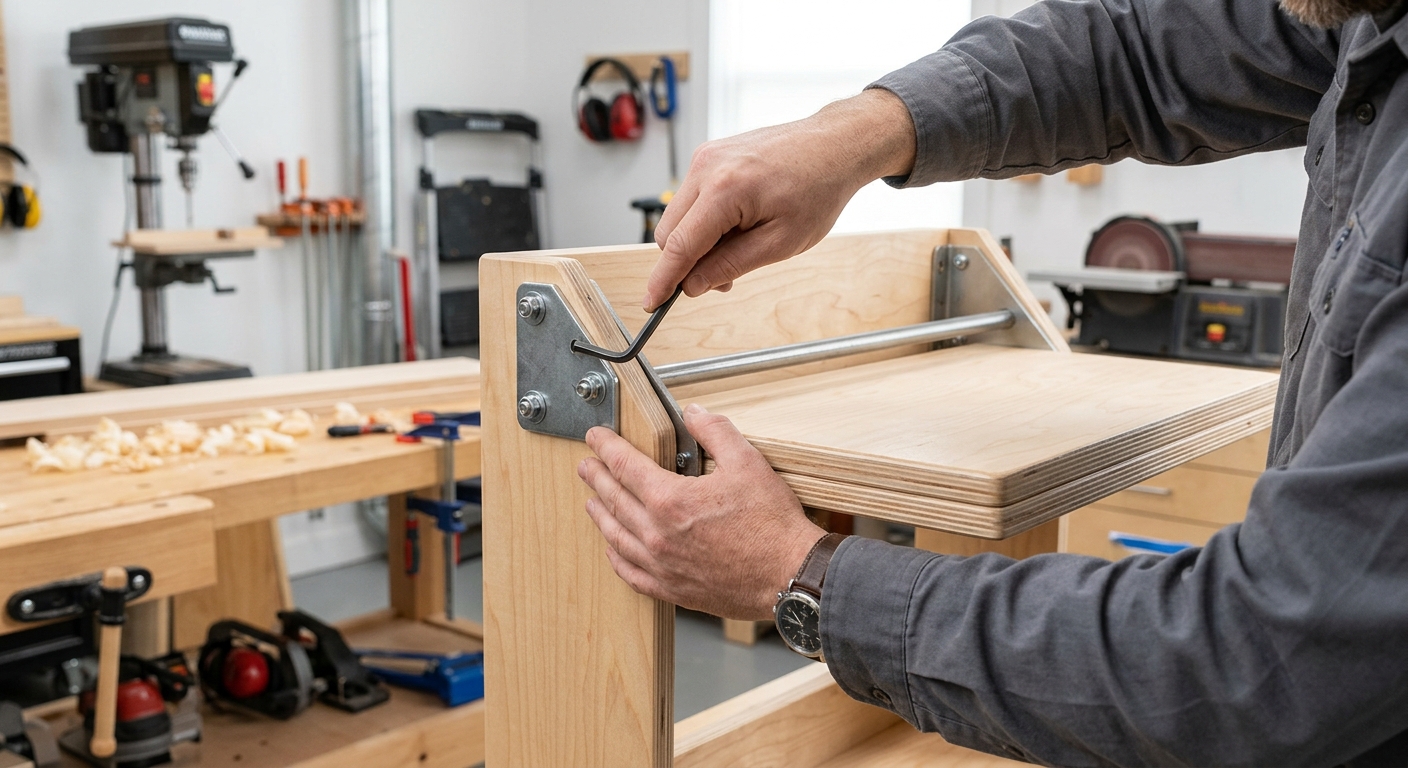
Drill matching 5/8-inch holes through both cabinet side walls at the exact same height – these holes must be perfectly aligned. Slide the platform into the cabinet opening and push carriage bolts through the walls and platform pivot holes. Add large washers and lock nuts on the outside. The platform should rotate with moderate effort.
Step 4 – Add a Positive Locking System
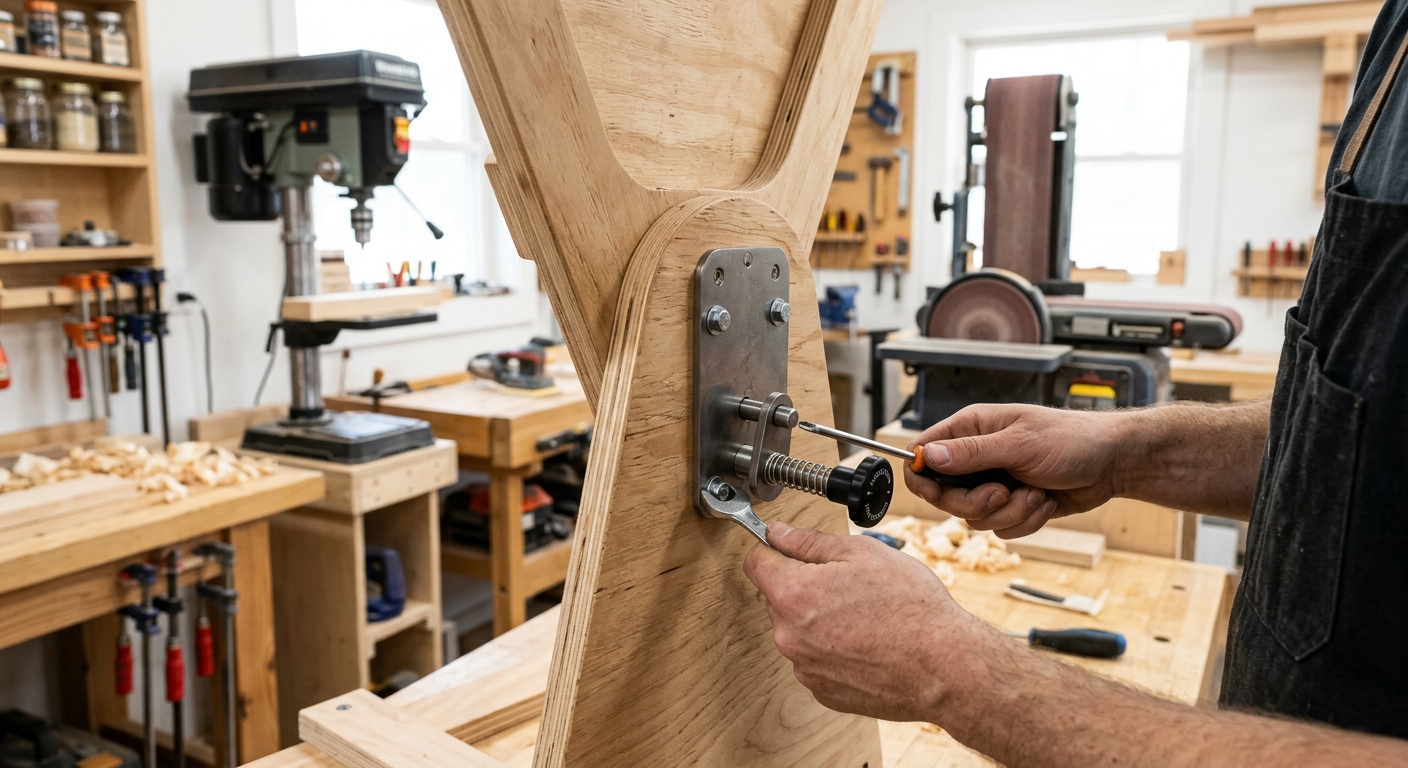
Mount T-track strips on the inside of each cabinet wall. A T-bolt through a block on the platform end engages the track and locks the platform in either position with a star knob. When locked, there must be absolutely no movement – test with body weight before relying on this in use.
Step 5 – Mount Casters and Final Check
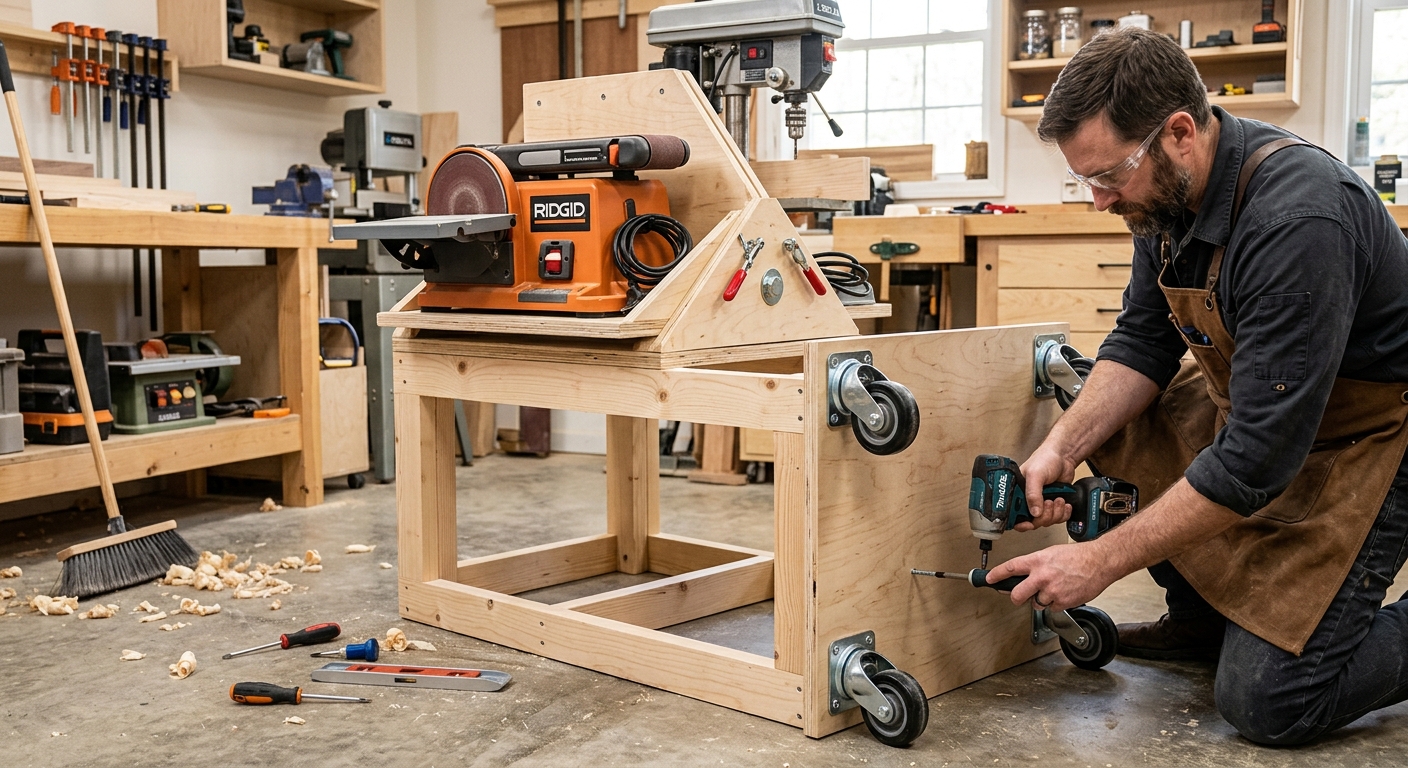
Bolt four heavy-duty locking casters to the cabinet bottom. Roll to position, lock all casters, lock the platform in the desired tool position. The flip operation takes under 15 seconds once you have the routine down.
FAQ
What tool combination is most popular? Drill press and oscillating spindle sander is by far the most common pairing. They’re used on nearly every project, similar in weight, and don’t require large outfeed tables that would interfere with flipping.
How much weight can the platform hold? With 5/8-inch pivot bolts and good plywood construction, 100 pounds per tool side is comfortable. Most benchtop tools weigh 25 to 75 pounds, so this is more than adequate.