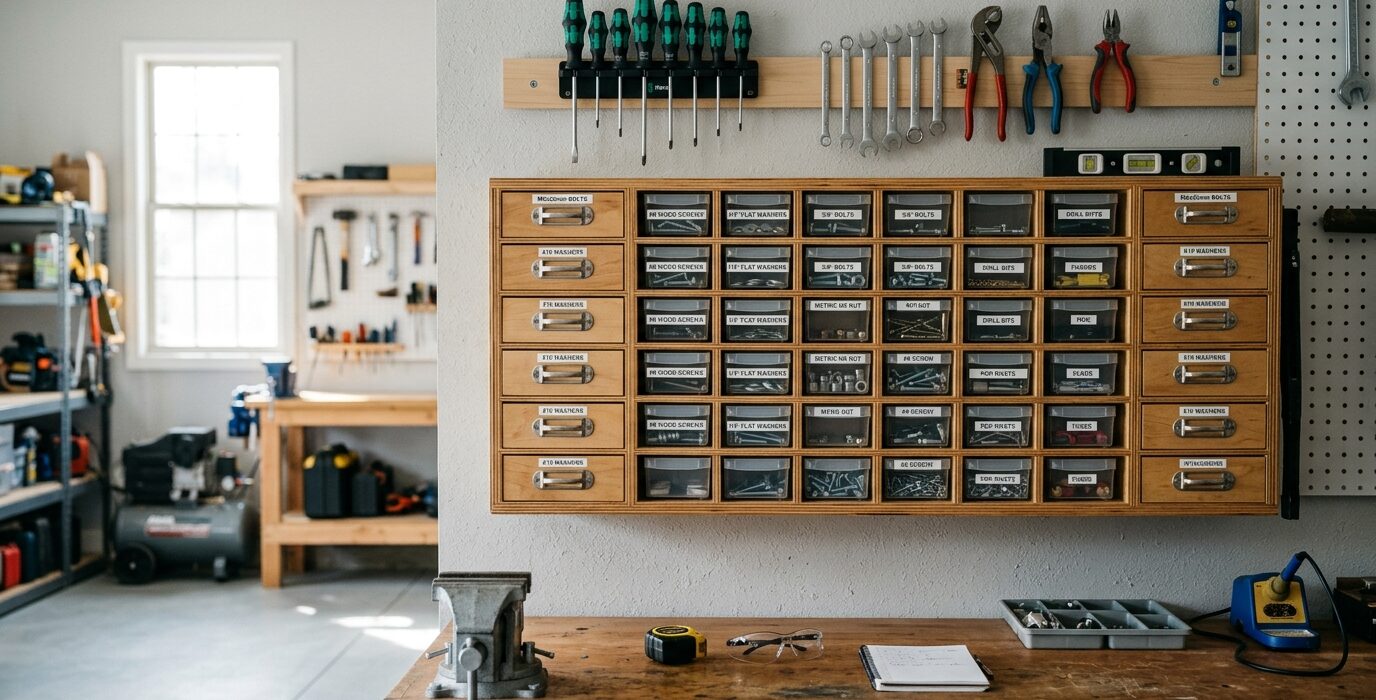
Build a Small Parts Cabinet with Bin Drawers
A small parts cabinet with individual bin drawers is the most efficient small-item storage solution in any shop. The drawer format lets you see contents at a glance (labels facing out), pull exactly what you need without touching adjacent bins, and maintain organization even when the bins aren’t perfectly sorted. This build results in a compact, wall-mounted cabinet with 20-40 individual bin drawers sized for the small parts your shop actually uses.
Design Overview
The cabinet is a wall-mounted plywood box with a grid of individual bin drawers pulled by a finger groove (no hardware required). Each drawer is sized for a specific category of parts: one drawer for #8 flat-head wood screws, one for #6 pan-head machine screws, one for assorted washers, etc. The bin drawers are the same exterior size but the internal dividers vary by contents.
Materials List
- 3/4-inch plywood, one sheet (cabinet box)
- 1/4-inch Baltic birch plywood, two sheets (drawer boxes)
- Wood glue
- Label maker
- Construction screws
Step 1: Determine Drawer Count and Size
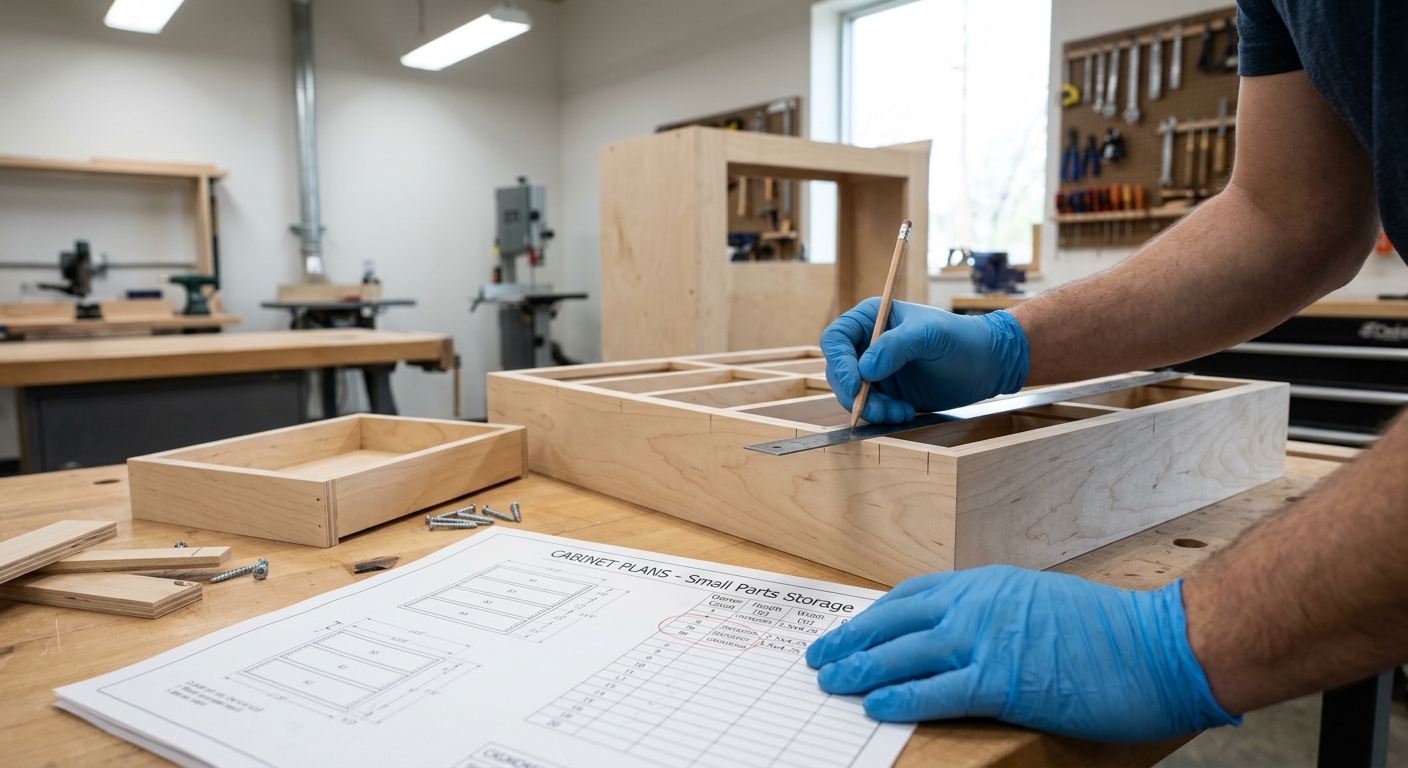
A typical small parts cabinet has 20-40 drawers. Common drawer dimensions: 4 inches wide, 4 inches tall, 12 inches deep. With 5 drawers per row at 4-inch spacing, a 20-inch wide cabinet holds 5 columns. At 4-inch height per drawer, a 20-inch tall cabinet holds 5 rows: 25 drawers total. Scale to your available wall space and parts inventory.
Step 2: Build the Cabinet Box
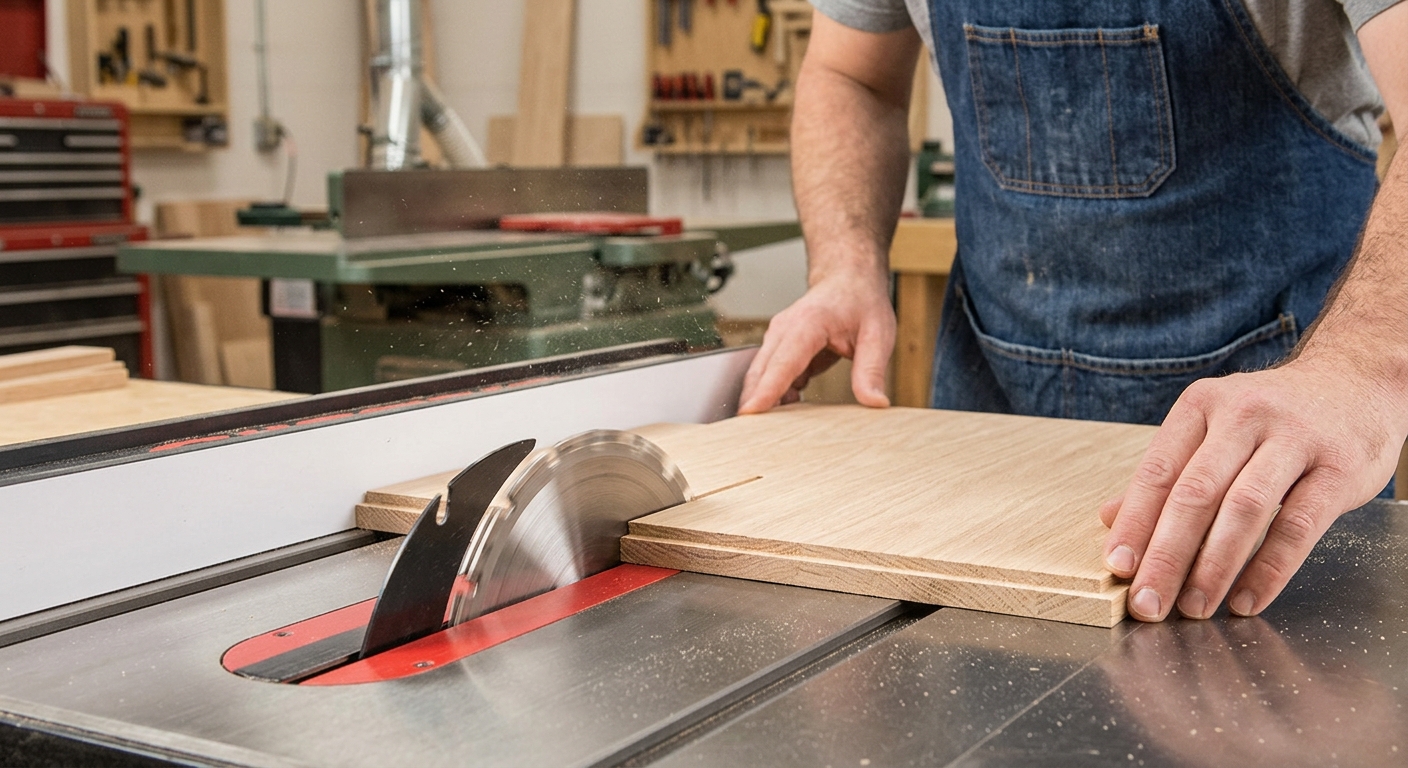
The cabinet box has a back panel, two sides, top, and bottom. The interior has horizontal shelves at 4-inch intervals – these are the runners that the drawers slide on. The shelves must be perfectly level and parallel or drawers will bind. Use a dado set or router to cut rabbit joints for the shelf-to-side connections for maximum strength.
Step 3: Build the Drawers
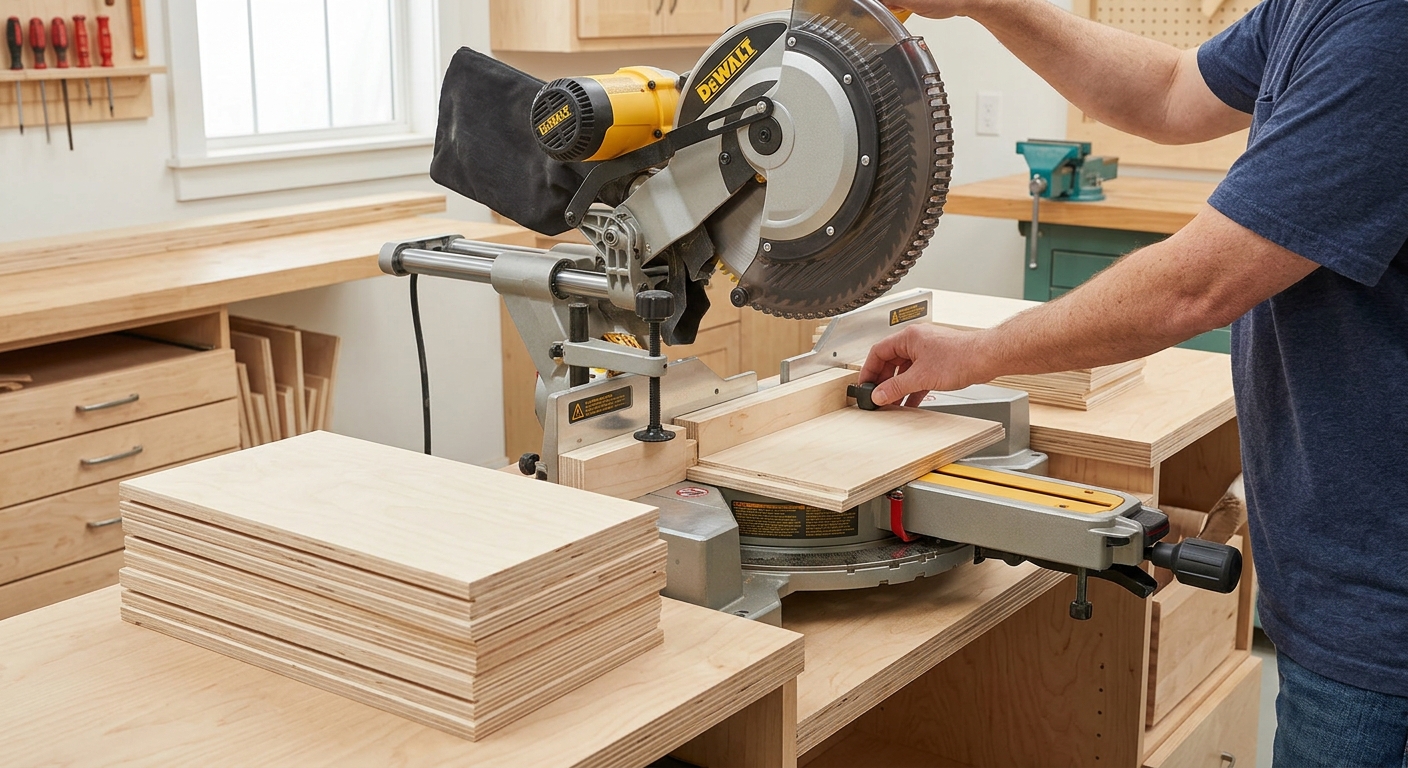
Each drawer is a 1/4-inch plywood box: two sides, front, back, and bottom. The drawer width is the opening width minus 1/16 inch on each side. Cut all drawer sides from a full sheet before assembling – this gives consistent dimensions across all drawers. Assemble with glue and 3/4-inch brad nails. Add a router-cut or chiseled finger groove in the drawer front for pulling.
Step 4: Test Fit All Drawers
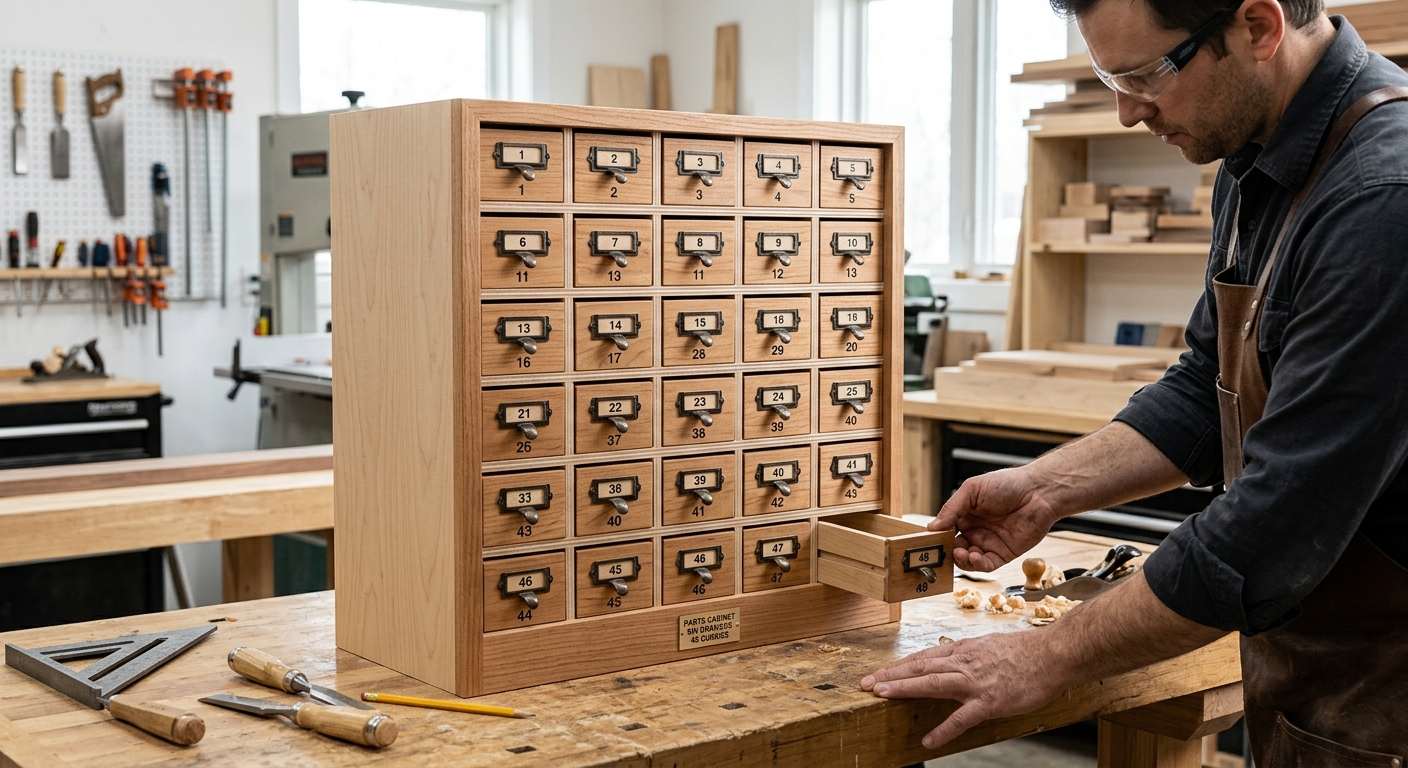
Slide each drawer into its opening before labeling. Every drawer should slide smoothly without binding and stop flush with the cabinet front when pushed in fully. Apply paste wax to the drawer sides and the shelf runners for smooth operation. Adjust any tight drawers by planing the sides.
Step 5: Label and Load
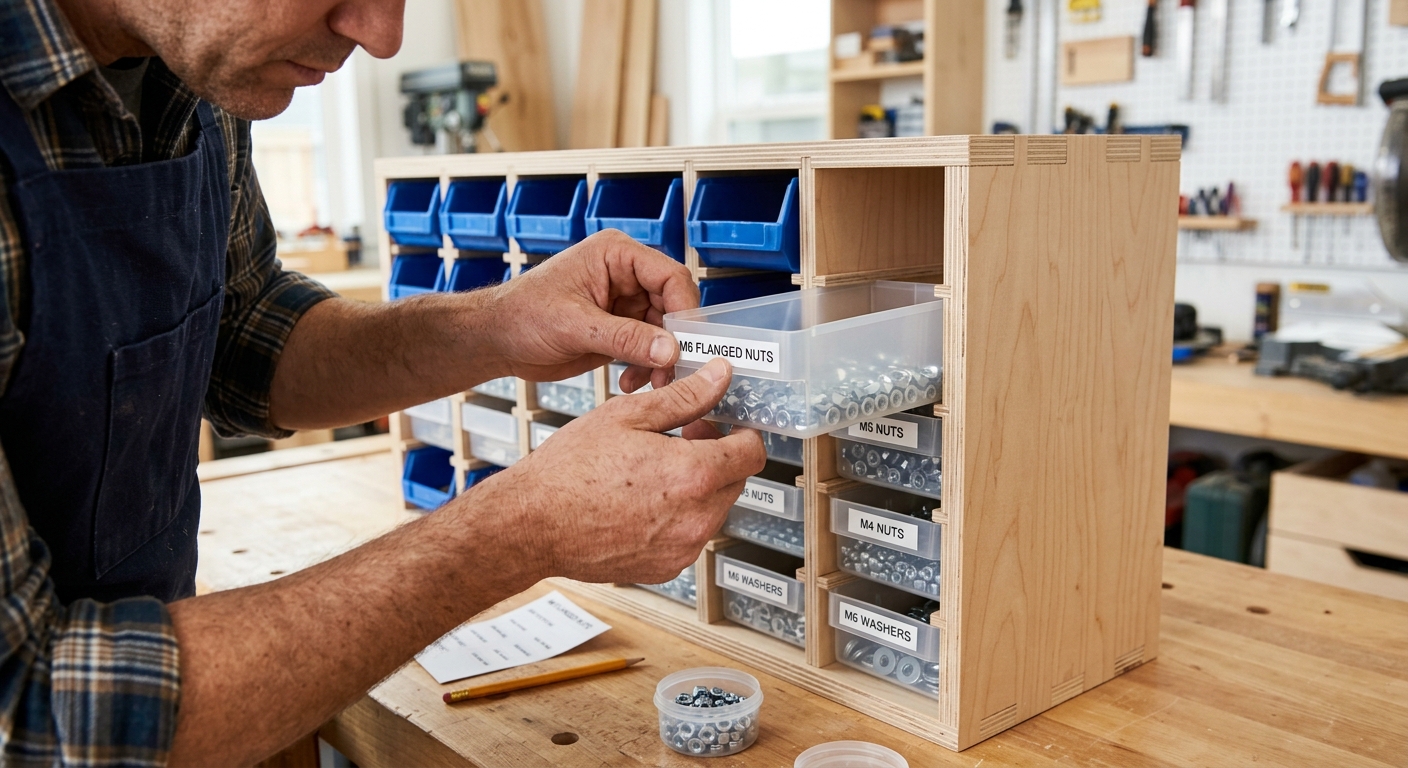
Apply labels to the drawer faces before loading contents. Consistent labeling – all labels at the same height on each drawer front – makes scanning the cabinet much faster. Load drawers with one type of small part per drawer. Use paper towel rolls or cardboard dividers inside the larger drawers to subdivide into two compartments if needed.
FAQ
Can I use commercial bin drawers instead of building my own?
Yes – commercial small parts cabinets from hardware stores are inexpensive and work well. The reason to build your own: you can customize drawer dimensions for your specific parts, build the cabinet to fit an exact wall space, and match the visual style of other shop furniture. For pure function, commercial is fine.