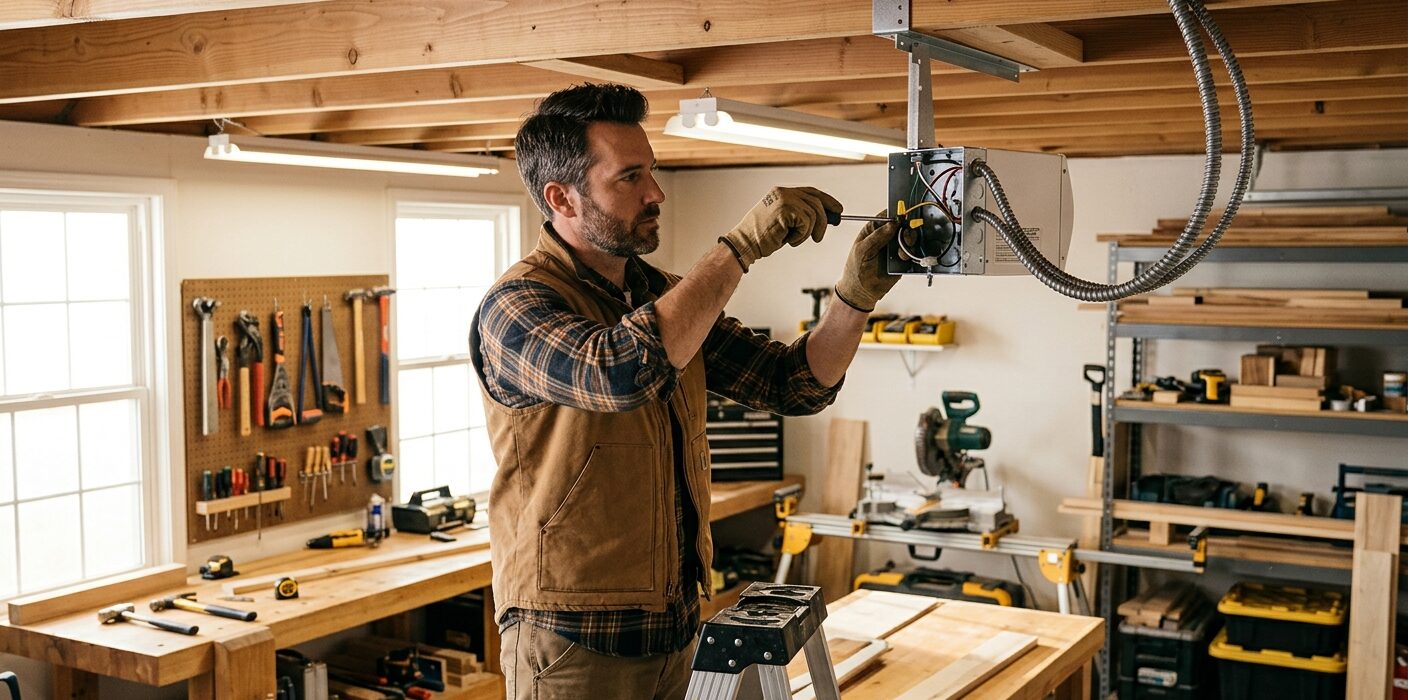
Cheap Ways to Heat a Garage Workshop
A cold garage shop kills motivation and stops glue from setting. Most wood glue requires temperatures above 50 degrees Fahrenheit to cure properly – work below that threshold and you risk glue joints that look good but have no strength. Heating a garage well enough to work comfortably and glue reliably doesn’t have to be expensive, but it requires choosing the right heat source for the space.
Heating Options Compared
- Forced-air propane or natural gas heater: Fast, powerful, and effective. The most popular choice for uninsulated garages. Requires good ventilation for combustion air and CO safety. Costs $200 to $500 for the unit.
- Electric infrared heater: Heats people and surfaces rather than air. Effective for warming the work area even in a drafty space. No combustion, no CO risk. Costs $150 to $400.
- Mini-split heat pump: Efficient, quiet, and heats or cools. Requires insulation to be effective. Installation costs $1,500 to $3,000 but operating costs are low.
- Wood stove or pellet stove: Excellent heat, low operating cost, but requires installation clearances, a chimney, and regular cleaning.
Step 1 – Insulate Before Heating
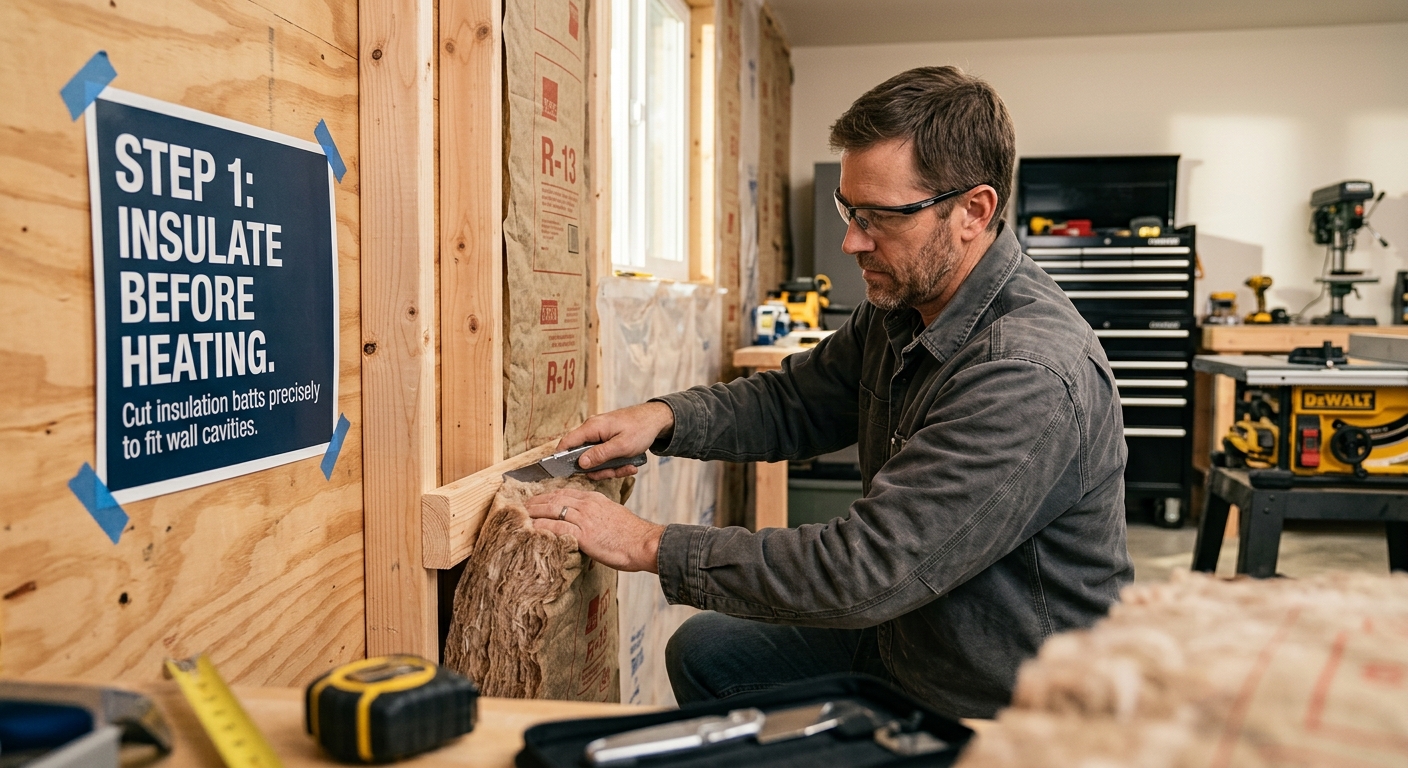
Insulation is the force multiplier for any heating system. A completely uninsulated garage loses heat as fast as any heater can produce it. Even adding R-13 batt insulation to the walls and R-19 to the ceiling dramatically reduces the heating load and makes any heater more effective. The payback on insulation is measured in months, not years, in a regularly used shop.
Step 2 – Choose the Right Heater Size
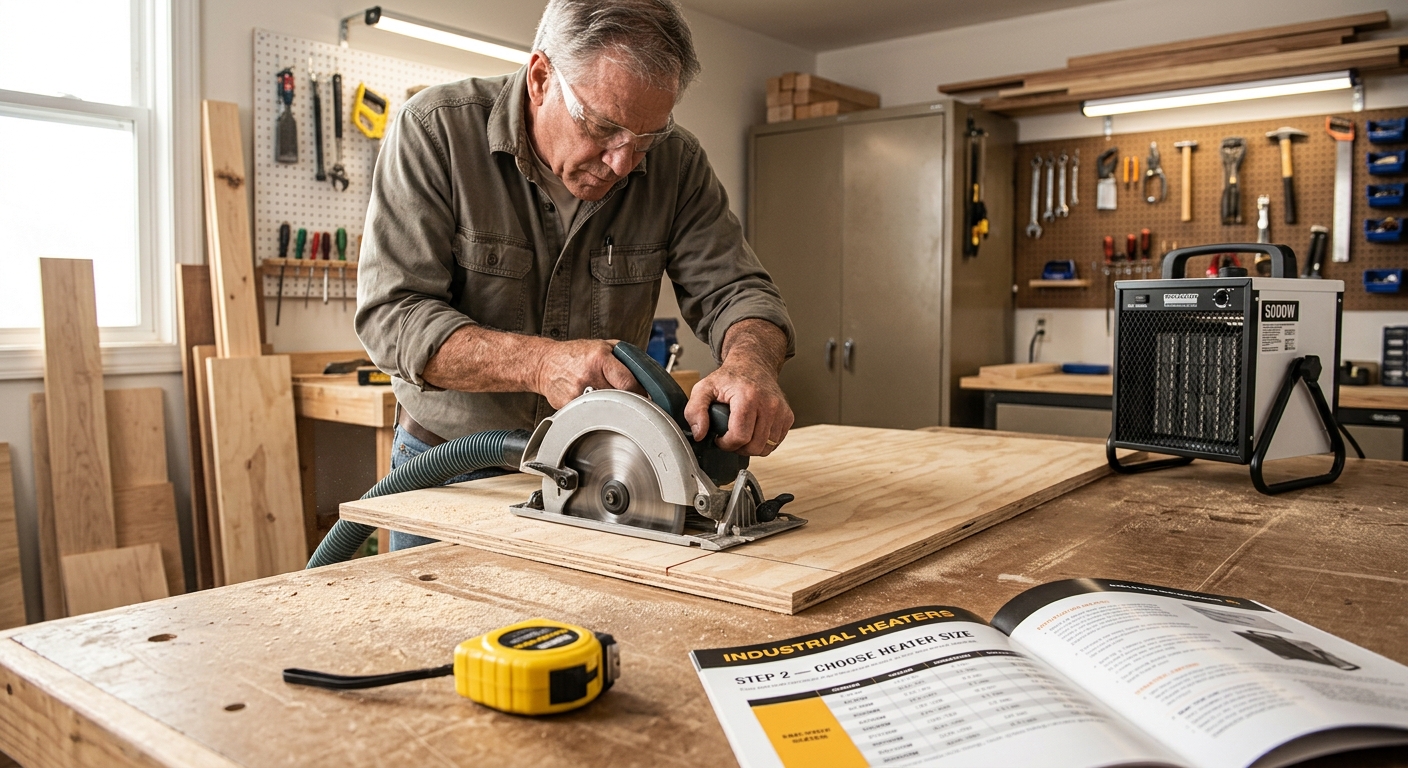
Size the heater using BTU calculations. For a garage shop: multiply the volume (length x width x ceiling height) by 0.133 for BTUs needed per degree of temperature rise. For a 20 x 24 x 9-foot garage shop needing to heat from 20 to 65 degrees Fahrenheit (a 45-degree rise), you need about 24,000 BTUs. Add 20 percent for an uninsulated space.
Step 3 – Install Carbon Monoxide Detection
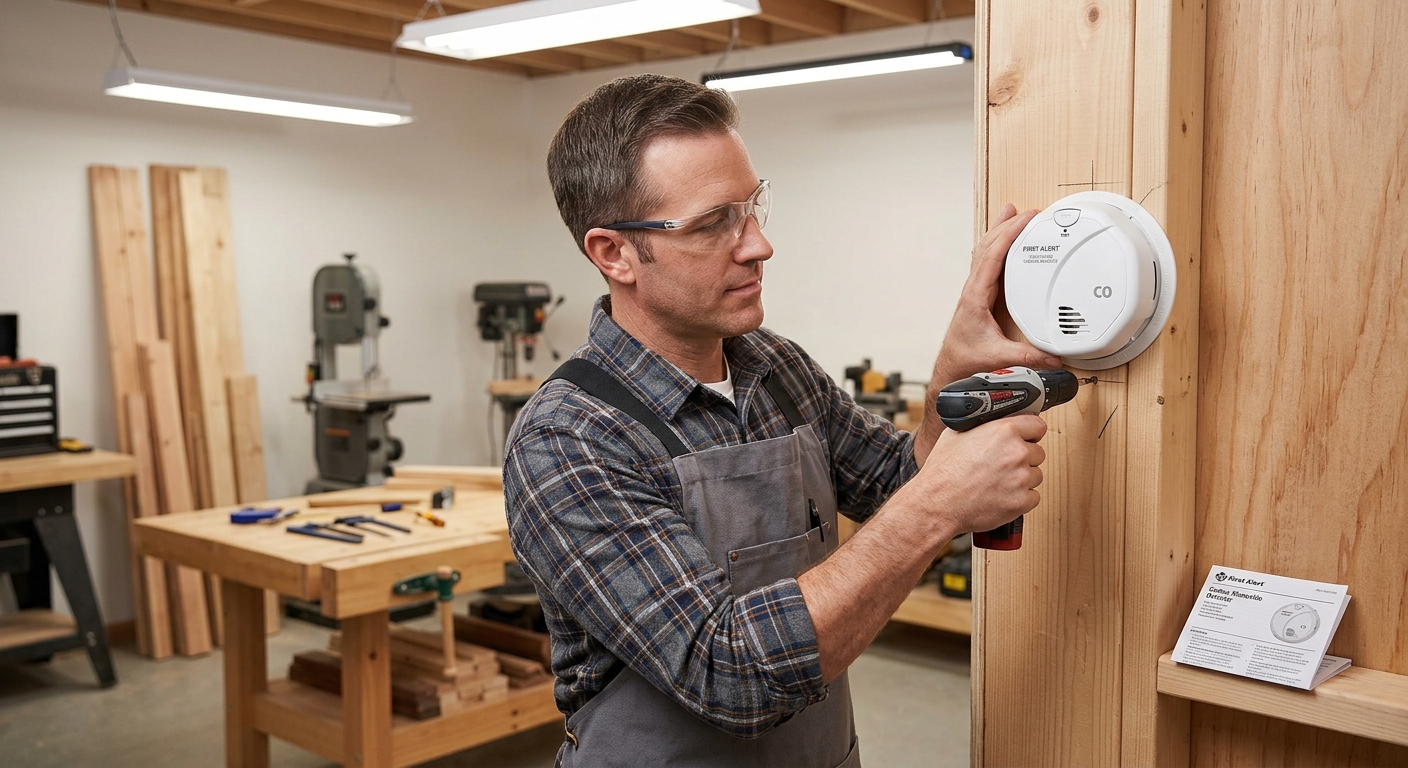
Any combustion heater (gas, propane, kerosene) in a closed space produces carbon monoxide. Install a CO detector at the shop entrance and test it monthly. Never run a combustion heater in a completely sealed space – always maintain at least a small amount of fresh air ventilation.
Step 4 – Position the Heater Correctly
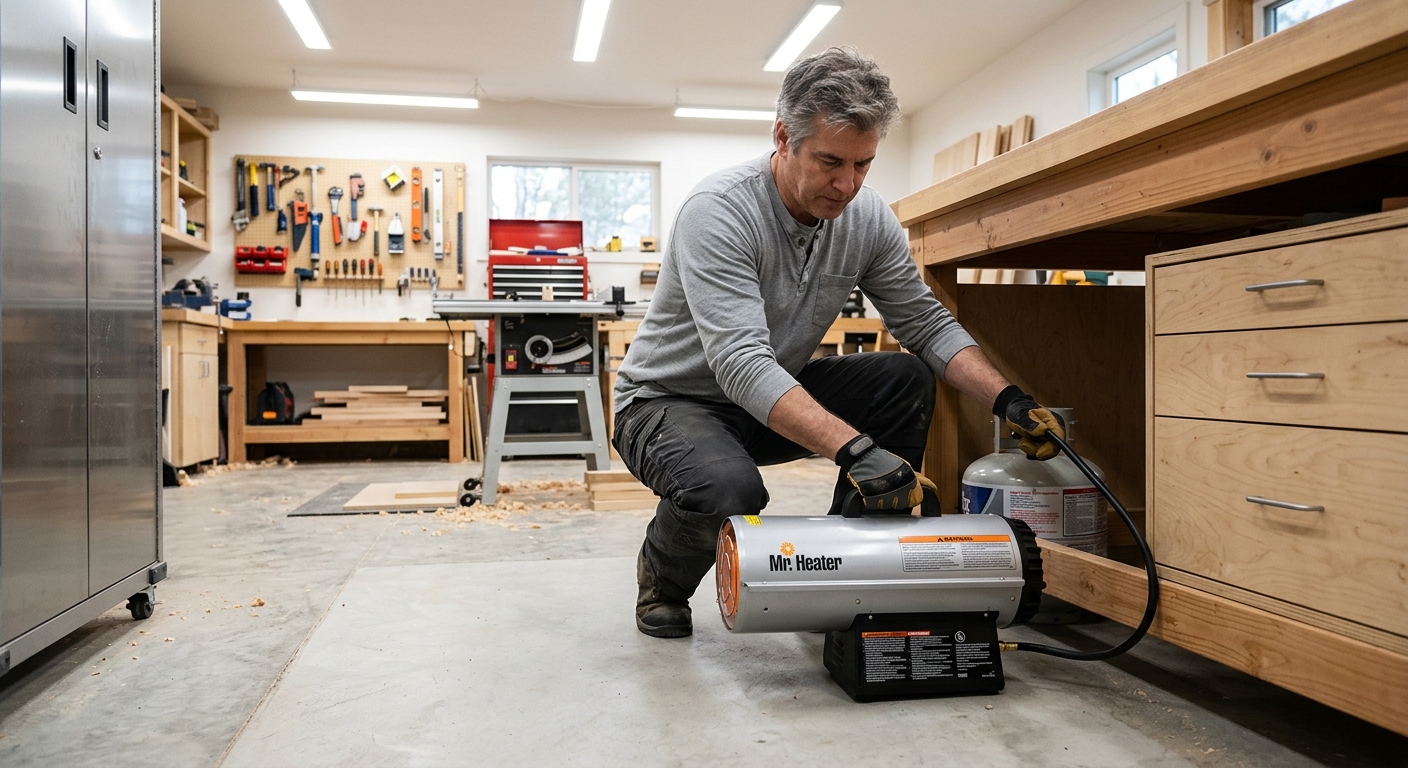
Position the heater where air circulation distributes heat evenly. In a garage shop, a heater mounted high on one end wall and aimed diagonally across the space creates the best air movement. Avoid mounting heaters directly above flammable materials, finishing supplies, or sawdust piles.
FAQ
What’s the most affordable way to heat a small shop? For occasional use, a 240V electric space heater (the type with a thermostat and fan) is the simplest and most affordable option. For frequent year-round use, propane forced air is usually the best value for heat output per dollar of operating cost.
Can I use a kerosene heater? Not recommended for shops with finishing supplies. Kerosene produces combustion gases and moisture, and a kerosene flame near solvent-based finishes is a fire risk. Use vented combustion heaters or electric alternatives.