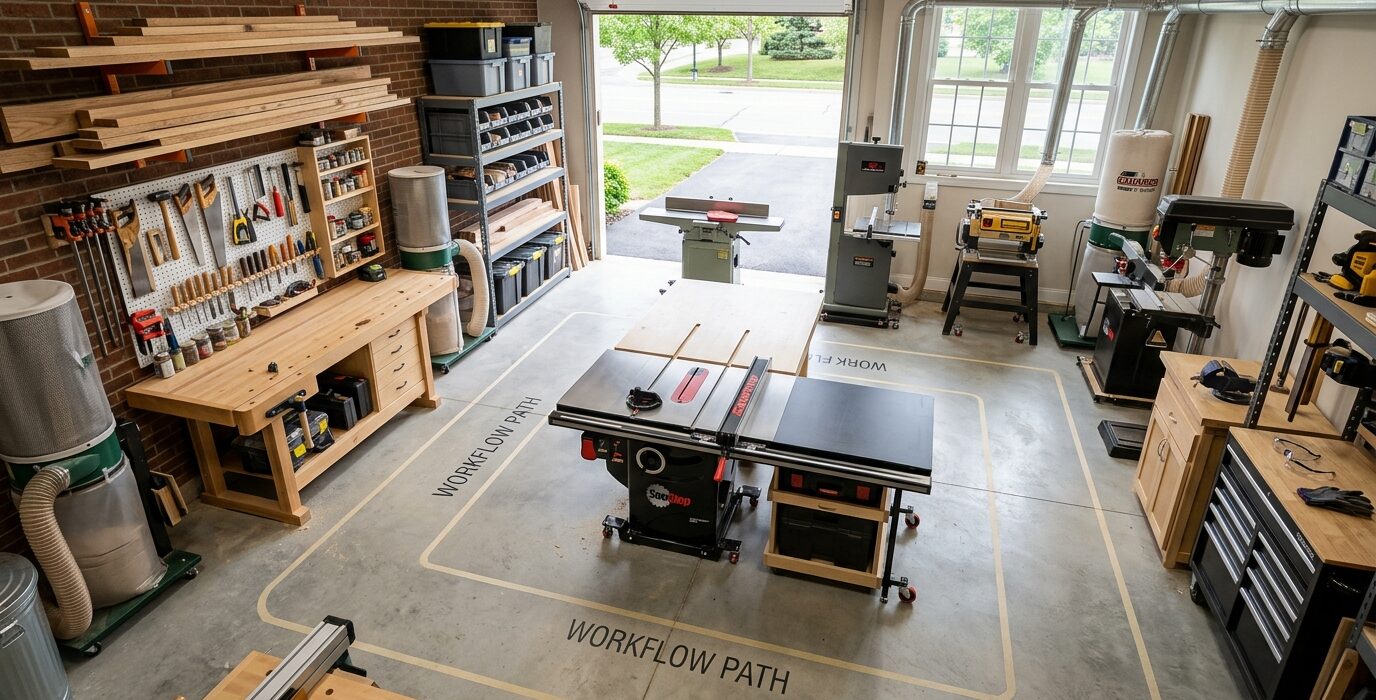
The Scrap Wood Problem – and How to Solve It
Every shop generates scrap wood. Small off-cuts from projects, shorts from ripping boards to width, end pieces from cutting to length – it accumulates fast and becomes a pile of potential that turns into a mess. A well-designed scrap wood bin solves this: it sorts scraps by size, makes good pieces findable and retrievable without a wrestling match, and has a clear system for deciding what stays and what gets burned or composted.
The Sorting System
The most effective scrap bins use size categories rather than species categories. Size is what you need to know when looking for a piece – not whether it’s oak or maple. A simple three-category system works well:
- Useful scraps: Pieces longer than 12 inches and wider than 2 inches
- Short scraps: Pieces 6 to 12 inches long – for small parts, wedges, and test pieces
- Offcuts and shims: Thin pieces and very short pieces useful for shimming and packing
Materials
- 3/4-inch plywood for the bin structure
- 2×4 lumber for the base frame if building a floor-standing unit
- Vertical dividers to separate categories
- Optional: casters for mobility
Step 1 – Build the Main Bin
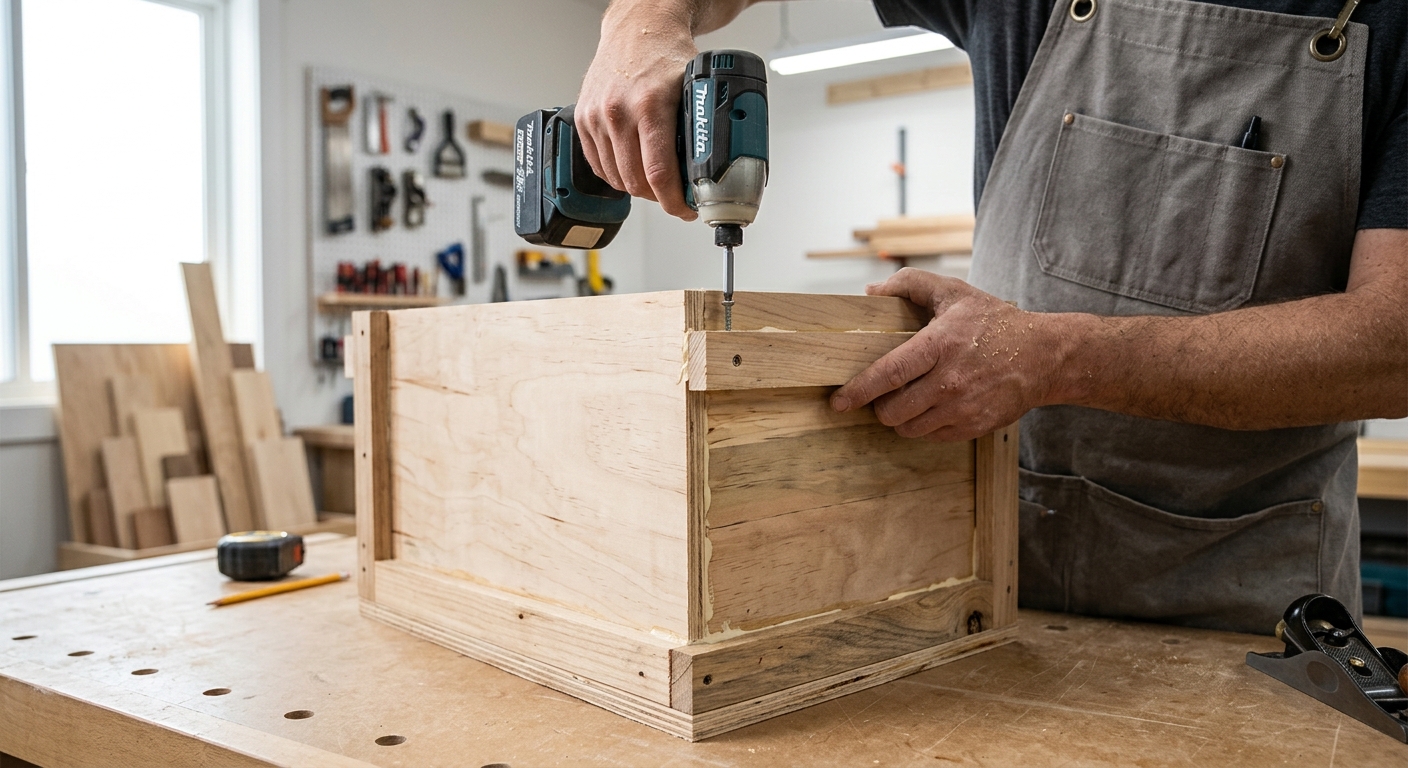
Build a simple open-top plywood box approximately 18 x 24 x 36 inches tall. This is the main scrap bin. The interior divides into two or three vertical sections using 3/4-inch plywood dividers. The front face should be open or have low walls – you need to be able to see the end grain of boards to assess them quickly.
Step 2 – Add a Short Scrap Section
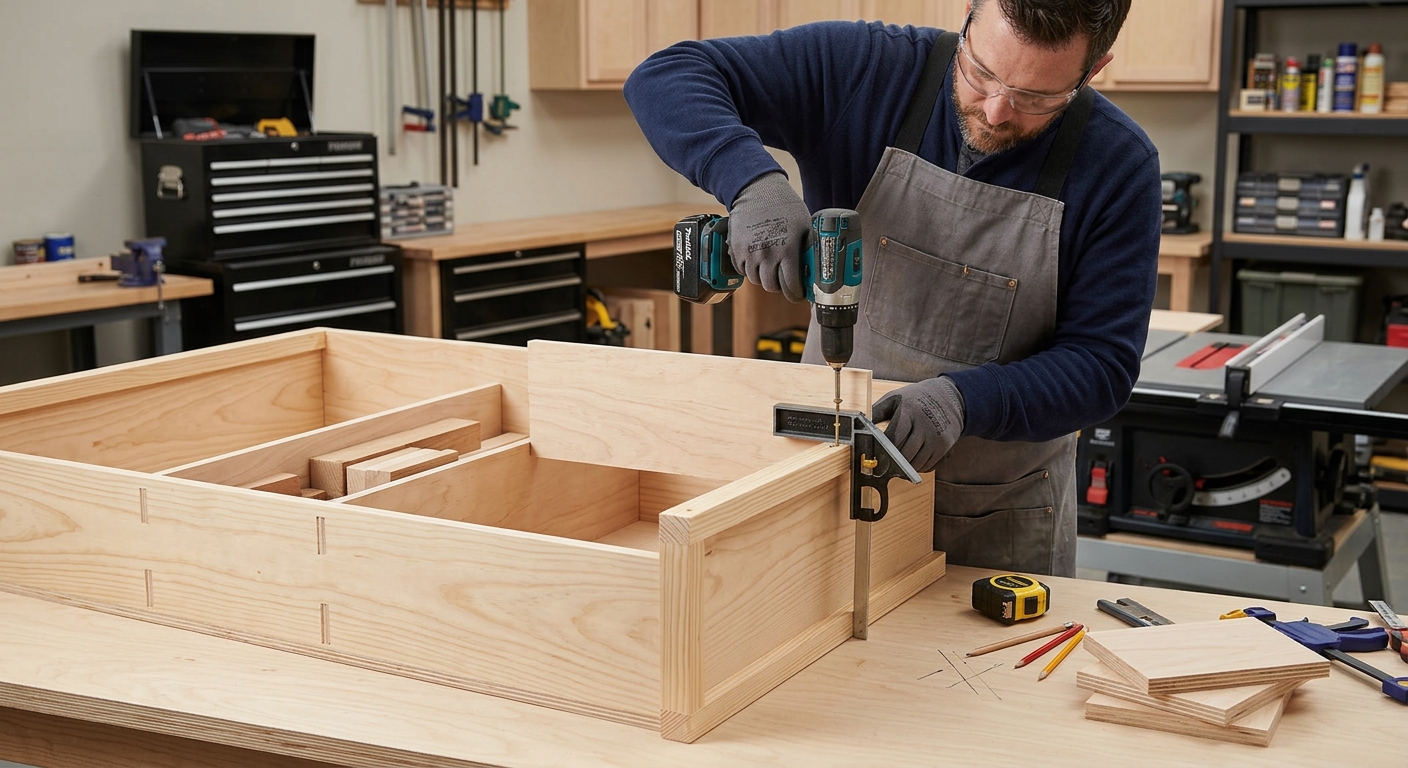
Build a separate horizontal shelf or a second smaller bin beside the main bin for short scraps. These pieces are handy for test cuts, jig parts, and small components but shouldn’t mix with longer stock. A divided drawer in the base of the main bin works well.
Step 3 – Set Up the Purge Rule
The purge rule is what keeps the bin useful: any piece that has been in the bin for three projects without being used gets burned or goes to the kindling pile. If a piece has been there that long, you’re not going to use it. Enforce this ruthlessly. A scrap bin that holds only genuinely useful pieces is infinitely more valuable than one stuffed with hope.
Step 4 – Label the Sections
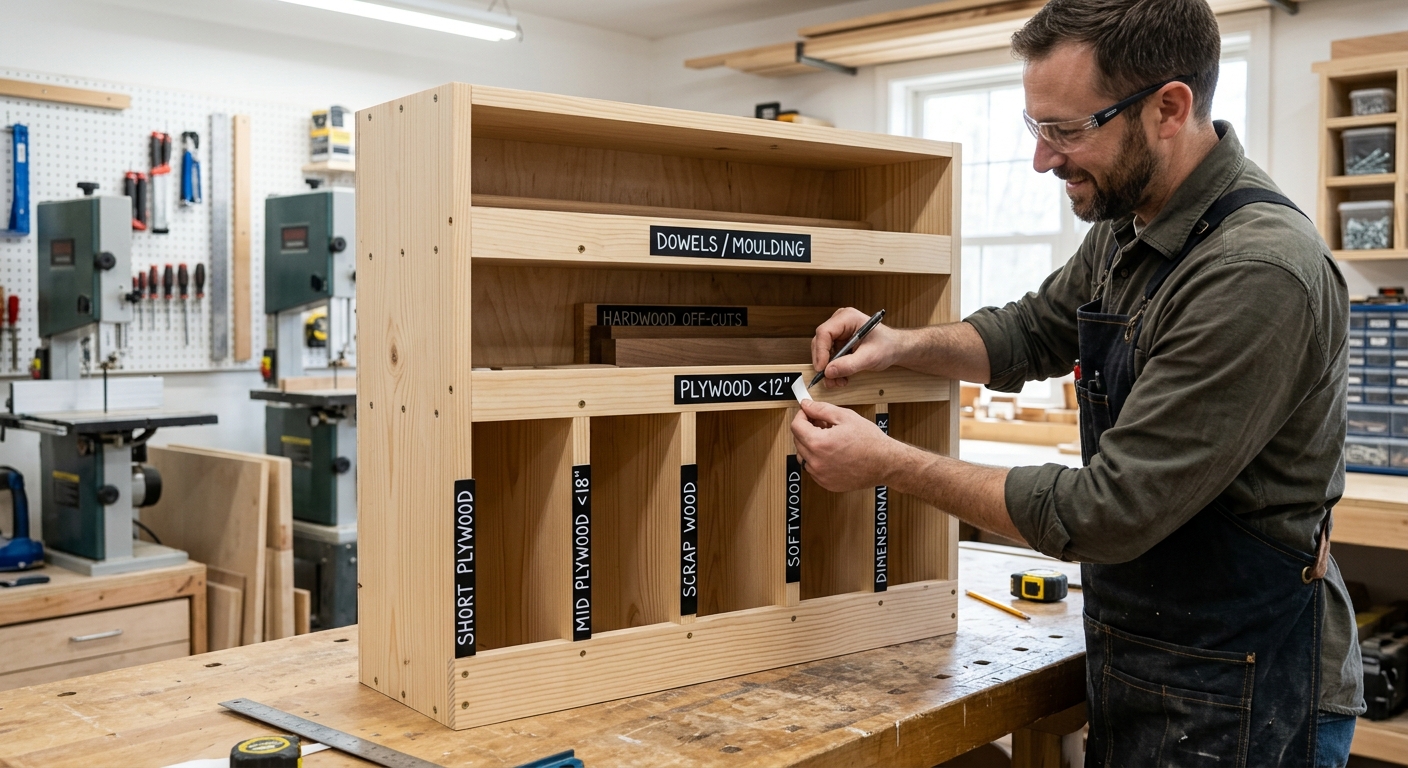
Simple labels on each section of the bin help you and anyone else in the shop put things in the right place. It takes 10 minutes to label and saves confusion for years.
FAQ
Should I sort by species? Species sorting is secondary to size sorting for most woodworkers. If you work frequently with specific species for specific purposes (cherry for accent pieces, pine for jigs), you might add a species section. Otherwise, sort by size first.
How do I prevent moisture from building up in the scrap bin? Keep the bin away from exterior walls and the floor. Elevate it on feet or casters. Air circulation is important – an open design rather than a closed cabinet lets moisture escape.