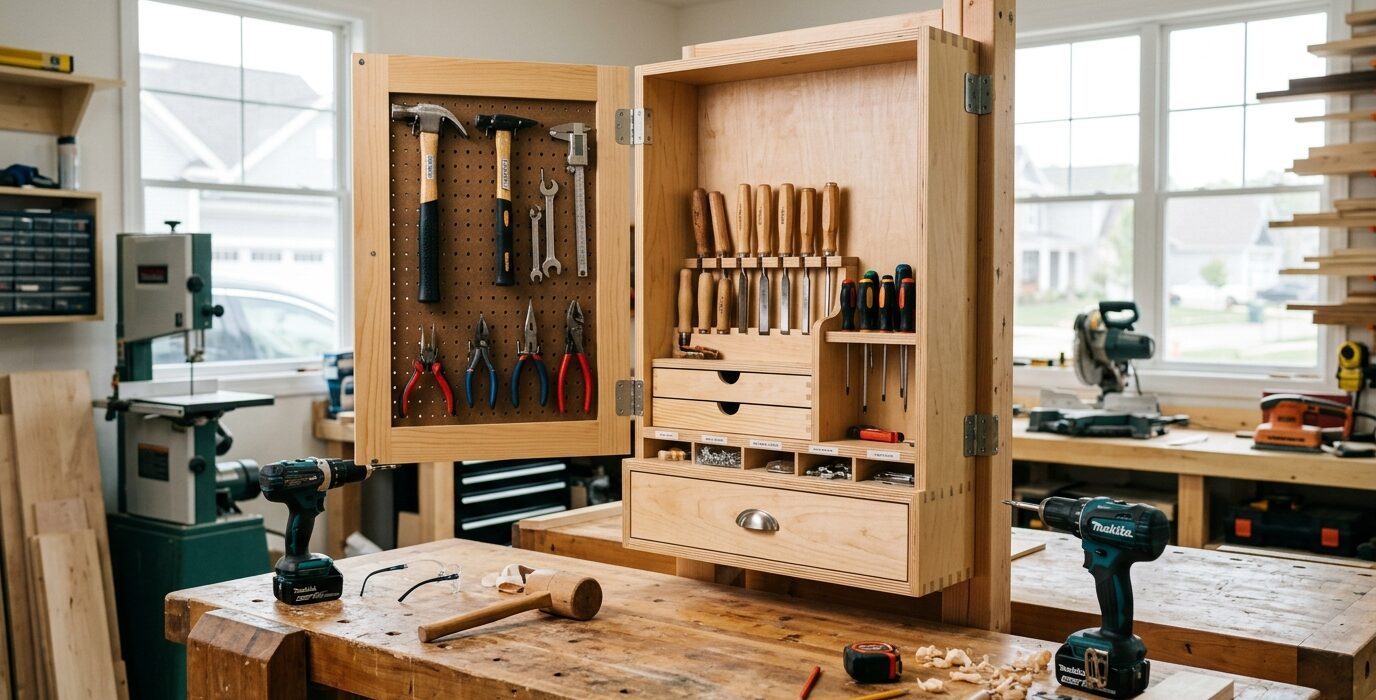
A Sheet Goods Cabinet That Makes 4×8 Sheets Accessible
Sheet goods – plywood, MDF, melamine – are the most awkward material to store in a home shop. Too large and heavy to stack horizontally in most spaces, they must stand vertically. But vertical storage without support means leaning slabs of plywood that tip, warp, or fall. A proper sheet goods cabinet keeps full and partial sheets vertical, accessible, and sorted by type – without taking up an excessive amount of floor space.
Design Overview
The most practical sheet goods cabinet for a home shop is a simple vertical divider system – several angled or vertical slots that keep sheets separated and prevent them from leaning against each other and warping. The cabinet should be positioned so you can slide a sheet straight out without hitting anything. Wall-mounted casters on the floor in front of the cabinet let you lean sheets against the wall while the casters prevent floor contact.
Materials
- 2×4 lumber for the frame
- 3/4-inch plywood for the back panel and any fixed dividers
- Lag screws for wall mounting
- PVC pipe or steel pipe for the floor casters (optional)
Step 1 – Choose the Location

The sheet goods cabinet must be positioned where you can slide a 4-foot wide sheet out from the storage slot and turn it without hitting any machine or wall. Measure the required clearance carefully – this is usually more than people expect. A corner of the garage near the door is often the best location: the door opening provides the extraction clearance needed.
Step 2 – Build the Vertical Frame
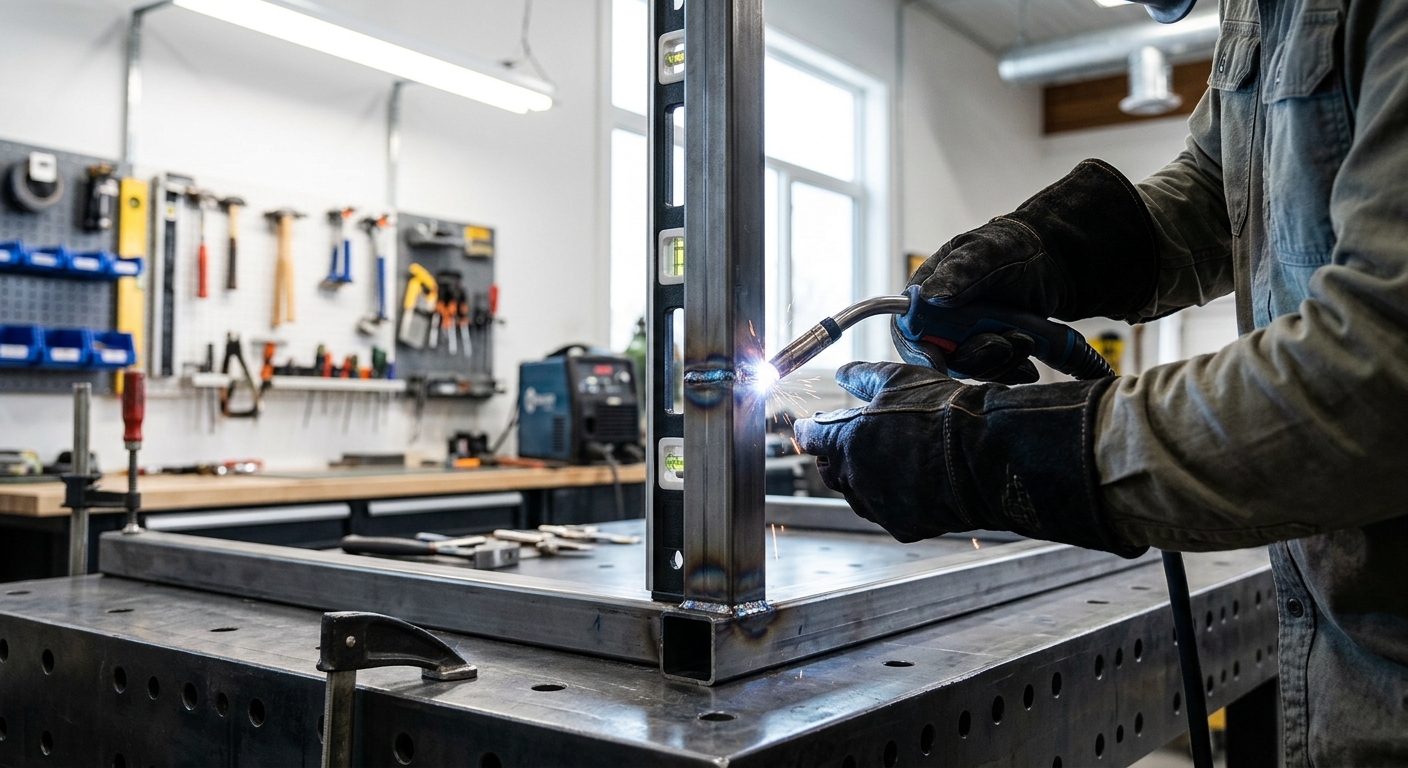
Build a 2×4 frame that attaches to the wall studs. The frame extends 30 to 36 inches from the wall (to hold sheets without them tilting) and is 48 inches wide (to hold full sheets across the width). Install diagonal 2×4 bracing in the lower half of the frame so sheets can’t kick out at the bottom.
Step 3 – Install the Dividers
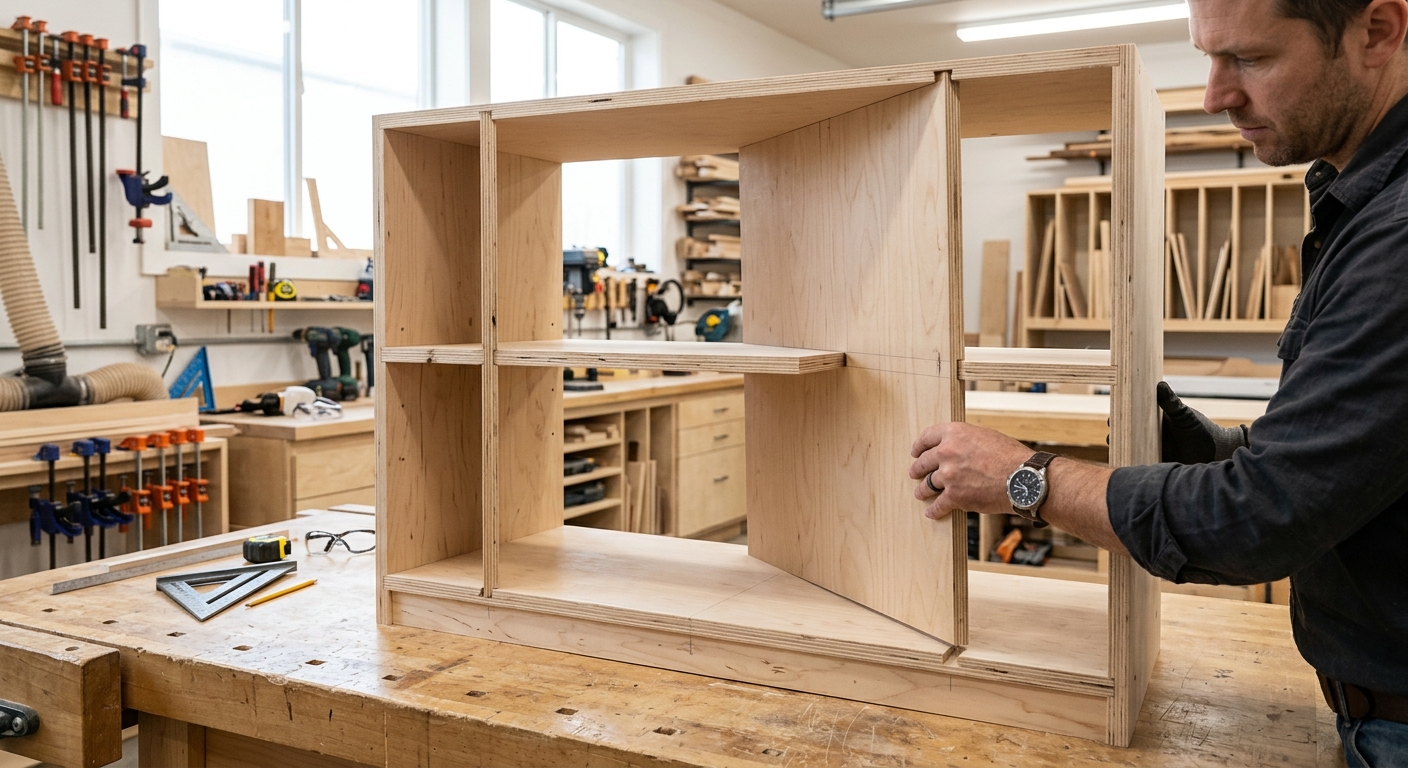
Add vertical 3/4-inch plywood dividers inside the frame to create separate slots for different sheet goods – one slot for 3/4-inch plywood, one for 1/2-inch, one for MDF, one for melamine, etc. Space dividers 4 to 6 inches apart – enough to slide a sheet in and out without tight clearances.
Step 4 – Add Floor Protection
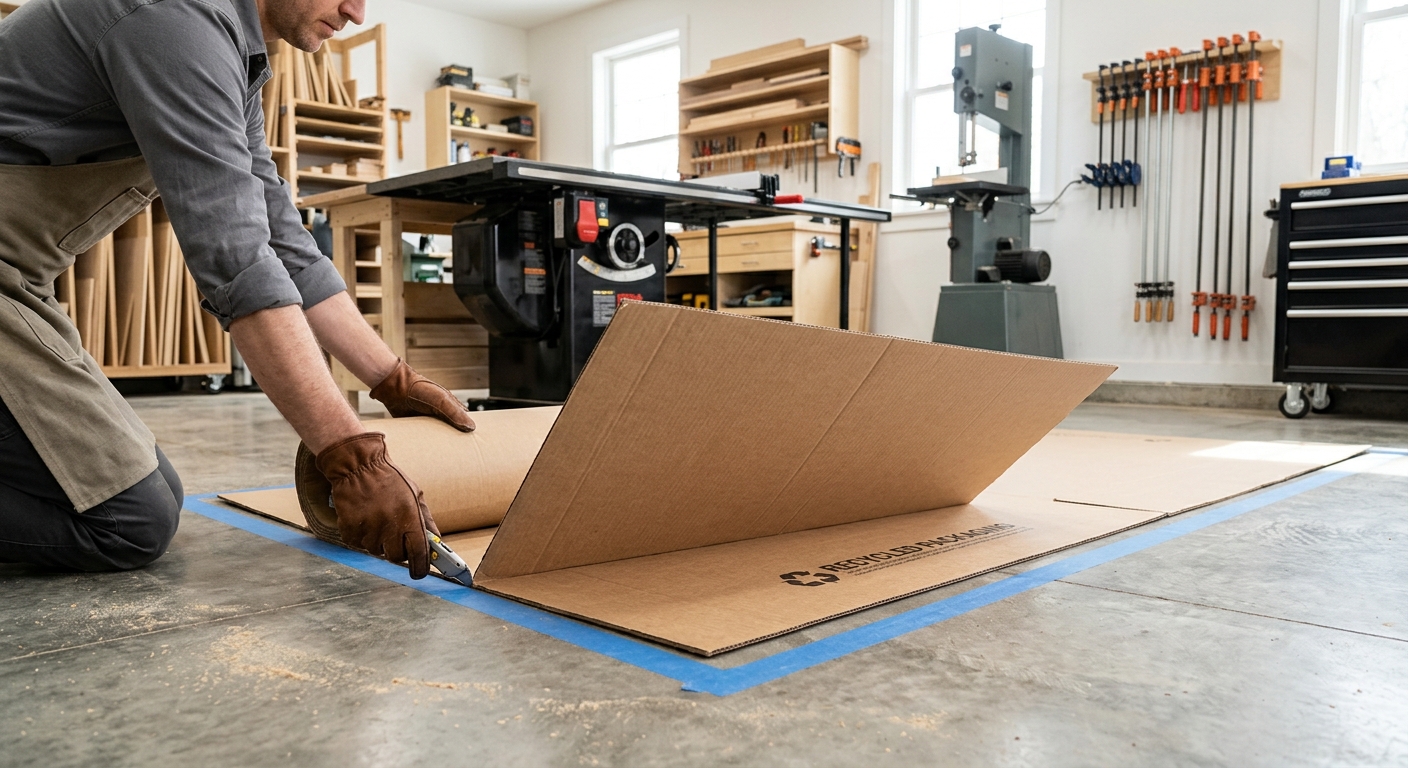
The bottom edges of sheet goods rest on the floor. Install horizontal wooden cleats or PVC pipe sections on the floor inside the cabinet to keep sheets slightly elevated and off cold, damp concrete. This prevents moisture absorption at the sheet edges.
FAQ
How do I handle partial sheets? Build a separate bay in the cabinet for partial sheets, sorted by width of the widest face. Partial sheets that are narrower than 24 inches can often stand in a narrower slot or against the side of the main cabinet.
Can this attach directly to drywall? No – attach only to wall studs with lag screws. A loaded sheet goods cabinet can weigh 400 to 600 pounds. Drywall anchors will pull out under that load.