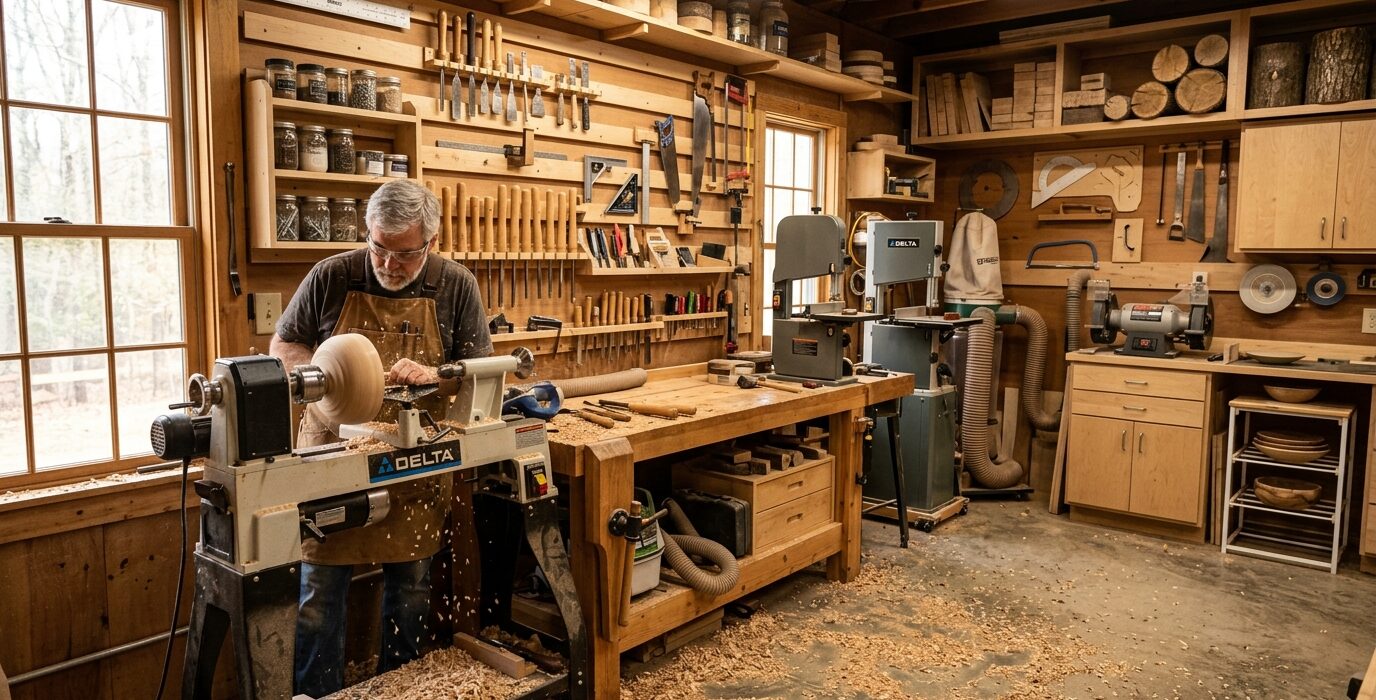
A Lathe, 12 Feet of Bench Space, and a World of Round Parts
Turning is a different craft than flat-work woodworking. The tools are different, the workflow is different, and the shop layout needs to reflect that. This turning studio tour covers a 14-by-20-foot dedicated space with a full-size lathe as the centerpiece, proper tool storage for gouges and chisels, a sharpening station within arm’s reach, and the dust and chip management systems that make long turning sessions actually enjoyable instead of just messy.
The Lathe Setup
The lathe is a mid-size swing-over-bed model positioned in the center of the room, parallel to the long wall. This placement allows the turner to work from either side of the piece and gives clear access around the entire machine. The lathe sits on a torsion box base the owner built from 3/4-inch MDF – dead flat, heavy, and vibration-damping. The lathe’s feet are bolted through the base into the concrete floor. There is no rocking or vibration even with out-of-balance bowl blanks.
Tool Storage
Every turning tool needs to be within reach without taking your eyes off the spinning wood. The tool storage solution here is a wall-mounted rack directly behind the lathe – a 2-by-6-foot French cleat panel with custom holders for each tool. Gouges lie in horizontal V-blocks that show the flute and make them easy to grab. Parting tools hang vertically. The system means every tool has a home and it takes two seconds to return it when you switch tools.
Sharpening Station
The sharpening station is 18 inches from the lathe’s headstock – intentionally close. A slow-speed grinder with a CBN wheel on the left side and a leather strop on the right handle the full sharpening workflow. A Oneway Wolverine jig system mounts permanently to the grinder. The owner sharpens every 10 to 15 minutes during a turning session, so having the sharpening station this close removes all friction from doing it often enough.
Dust and Chip Management
Turning produces chips, not fine dust – which means a standard shop vacuum handles cleanup better than a dust collector in most situations. A 16-gallon wet/dry vac with a 2.5-inch hose sits on a rolling cart and can be positioned anywhere around the lathe. For fine sanding dust generated when sanding on the lathe, a dedicated air filtration unit mounted above the lathe runs during all sanding operations. The combination keeps air quality manageable during long sessions.
Wood Storage
Bowl blanks and spindle stock are stored on open shelves along the back wall. Blanks are stickered on shelves so air can circulate. The owner uses a moisture meter before turning any blank – anything above 15 percent gets set aside for more drying time. Wet-turned bowls in progress sit on wire shelving in a separate corner with a box fan circulating air around them during initial drying.
Key Lessons
- The proximity of sharpening to the lathe is the single most important layout decision in this shop. When sharpening is inconvenient, people skip it. Sharp tools in turning aren’t optional.
- Face shield, not safety glasses. The turning community is uniform on this. A full face shield protects eyes and face from a catch or a piece that lets go.
- The torsion box base for the lathe cost about 4 hours to build and dramatically reduced vibration at high speeds. Worth it for any lathe that will handle large bowl blanks.
FAQ
What size lathe do I need to start?
A midi lathe with a 12-inch swing and 16 inches between centers handles 90 percent of what beginning turners want to make. Full-size lathes are worth the investment when you’re regularly turning bowls larger than 12 inches in diameter.
How do I manage the mess in a turning studio?
Chips are inevitable. The best approach is to sweep between blanks rather than at the end of the session. A chip guard behind the lathe catches most of the debris. Rubber mats on the floor make standing comfortable and chips easy to sweep up.